
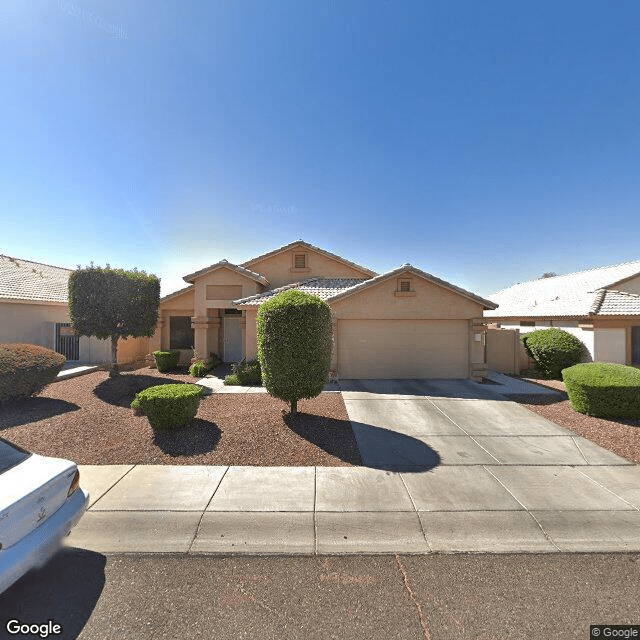
5231 W Kaler Circle, Glendale, AZ 85301
To contact a resident: (623) 847-6070
For more information about senior living options: (866) 208-4318
Gloriane ACH Costs & Pricing
Gloriane Adult Care Home (ACH) offers competitive pricing compared to the broader market in Maricopa County and across Arizona. For those seeking a semi-private room, Gloriane ACH charges $2,500 per month, which is notably lower than the county average of $2,801 and the state average of $2,820. Similarly, for private accommodations, Gloriane's monthly fee of $3,000 stands out against Maricopa County's average of $3,318 and Arizona's average of $3,345. These cost-effective options not only provide families with affordability but also reflect Gloriane ACH's commitment to delivering high-quality care without compromising on comfort or service.
| Floor plans | Gloriane ACH | Maricopa County | Arizona |
|---|---|---|---|
| Semi-Private | $2,500 | $2,801 | $2,820 |
| Private | $3,000 | $3,318 | $3,345 |
Senior living communities with a similar price nearby
-
from +$300 / mo
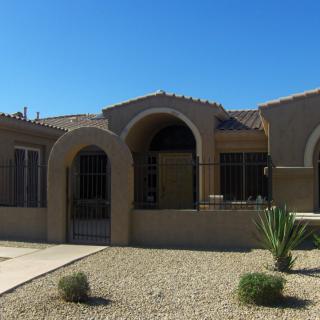
Pinnacle Peak Assisted Living
$2,800 to $3,100 / month18.2 miles away -
from +$125 / mo

The Eldercare Home Of Tempe
$2,625 to $3,412 / month19.5 miles away -
from +$450 / mo
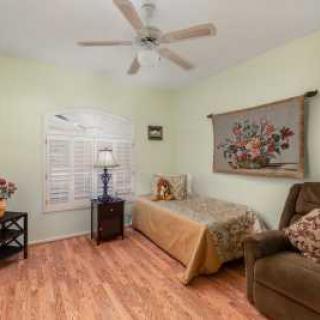
Endeavor AL I
$2,950 to $4,200 / month13.2 miles away -
from +$400 / mo
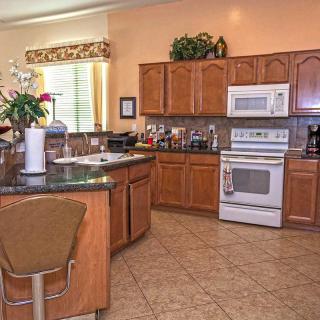
Royal Paradise Care
$2,900 to $3,800 / month11.5 miles away -
from -$100 / mo
Golden Touch One Adult Care Home
$2,400 to $5,800 / month24.1 miles away
Overall Review of Gloriane ACH
Pros
 The place is great, and the staff take good care of patients.
- The five-resident home is a bit small, but it is well cared for.
Cons
 The five-resident home is a bit small.
Review
Gloriane ACH in Glendale, AZ is best suited for seniors who want a warm, intimate, home-like setting where care is highly personal and consistently delivered. The standout truth from its operating ethos is a high-touch approach: residents are “well taken care of,” and the environment feels clean, calm, and comfortably predictable. This community works best for families who prioritize vigilant daily oversight, easy access to caregivers, and a setting where staff can develop real familiarity with each person’s routine, preferences, and medications. It is not a sprawling campus with busy common areas, but a small, human-centered home that prioritizes relationship and safety.
The strongest pro is the level of care that shines through in practice. The staff who interact with residents leave little doubt that attention to individual needs is genuine, not perfunctory. A smaller home often translates into more consistent caregiver assignment, quicker responses to calls, and less friction when coordinating daily activities, meals, and mobility assistance. In Gloriane ACH, residents benefit from a tight-knit caregiving team that can tailor schedules and routines to the person rather than to a template. For families who fear being lost in the shuffle of a larger facility, that tight, hands-on approach is a meaningful reassurance.
Yet the most conspicuous con is the very attribute that makes the place feel intimate: its small footprint. A five-resident home, by design, cannot match the spatial breadth or the wide array of on-site amenities that larger assisted living communities offer. The living spaces are compact, and the available common areas are limited compared with bigger campuses. This can constrain social programming, exercise offerings, or the ability to host larger family visitations without feeling crowded. Prospective residents who thrive on busy activity calendars or who require extensive communal facilities may find this setting too modest to meet those expectations.
Nevertheless, the pros offset some of these drawbacks in practical, meaningful ways. The intimate size combines with high caregiver engagement to deliver safety and reliability that families often crave. The likelihood of missed medications or delayed assistance drops when staff can see residents in more direct, frequent touchpoints. Continuity of care matters, and Gloriane ACH’s structure supports steady, predictable routines, which can reduce confusion for residents and ease caregivers’ planning. In scenarios where a resident’s needs are stable and modest, this model can deliver excellent quality of life with a true sense of home.
For families weighing options, the decision hinges on priorities. Those who value a serene, low-key environment with highly attentive care will likely prize Gloriane ACH’s strengths and accept the limited space as the trade-off for personalized attention. Conversely, individuals seeking broader social ecosystems, more expansive common areas, or robust on-site services such as extensive rehab programs or memory-care corridors should consider alternatives with larger footprints and richer activity menus. This is not a place to choose for someone who needs frequent, intensive medical oversight or rapid, high-capacity programming.
In practical terms, a thoughtful next step is to visit with a checklist in hand: ask about staffing ratios during peak hours, how shifts are allocated for holidays, and what a typical day looks like from wake to lights-out. Inquire about meal planning, dietary accommodations, housekeeping frequency, and how activities are curated for residents at different mobility levels. Confirm what levels of care are included and what can be scaled up if needs increase. If these dynamics align with the resident’s temperament and care requirements, Gloriane ACH offers a compelling, well-executed option. If not, a larger community with more extensive amenities and programs may serve better in the long run.
 Board and Care Home
 Cats allowed
 Dogs allowed
 Private
 Phoenix Sky Harbor International (12 miles away)
 Diabetic care




 A Detailed Examination of Nursing Home Costs Across the U.S.
 Exploring Nonmedical Home Care: Understanding Services, Costs, and Financial Approaches
 Engaging Brain Games and Innovative Apps to Keep Senior Minds Active