

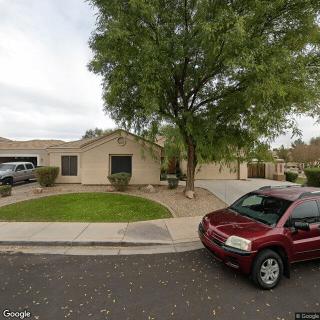
3903 E. Douglas Loop, Gilbert, AZ 85234
To contact a resident: (480) 235-7145
For more information about senior living options: (866) 208-4318
Maria's Adult Foster Care Home Costs & Pricing
Maria's Adult Foster Care Home offers a competitive rate for its private rooms, charging $1,800 per month. This is significantly lower than the average costs in Maricopa County, which stand at approximately $3,318, and even more favorable when compared to the broader state average of $3,345 in Arizona. By providing quality care at a more accessible price point, Maria's facility not only meets the needs of residents but also delivers substantial savings for families seeking affordable options for adult foster care. The value offered here reflects a commitment to both care and affordability in an increasingly challenging landscape for healthcare costs.
| Floor plans | Maria's Adult Foster Care Home | Maricopa County | Arizona |
|---|---|---|---|
| Private | $1,800 | $3,318 | $3,345 |
Senior living communities with a similar price nearby
-
from +$145 / mo

Home Instead - Fountain Hills, AZ
$1,945 to $3,525 / month16.9 miles away -
from +$61 / mo

Endeavor Senior In-Home - Mesa
$1,861 / month5.3 miles away -
from +$200 / mo

Garcia's Assisted Living Home LLC
$2,000 / month18.4 miles away -
from +$200 / mo

Santo Nino Villas 2
$2,000 to $2,300 / month7.0 miles away -
from +$200 / mo

Martha Bonilla Care Loving Home
$2,000 to $2,200 / month8.1 miles away
Overall Review of Maria's Adult Foster Care Home
Pros
 The staff are amazing.
- They demonstrate exceptional compassion toward patients in their care.
- Their care reflects a genuine commitment to patient well-being.
Review
Maria's Adult Foster Care Home in Gilbert, AZ is best suited for families seeking a small, home-like environment where seniors receive intensely personal attention from a stable, caring team. The setting favors residents who value continuity of relationships with caregivers, prefer consistent daily routines, and thrive on intimate peer interactions rather than a large-scale, institutional feel. Given the two five-star experiences, this community appears especially well-matched to seniors who do not require frequent, high-intensity medical interventions and who benefit from highly individualized oversight, flexible scheduling, and a family-like cadence.
From the shared feedback, the standout attribute is the staff. The phrasing "Most amazing staff" and gratitude for compassion signal care that goes beyond the basics, caregivers who notice subtle changes, provide reassurance, and engage with residents in meaningful ways. For families who worry about isolation or impersonal treatment in larger facilities, this environment promises warmth, attentiveness, and a level of responsiveness that small homes can deliver. The emotional climate, then, becomes a core value, with staff acting as the primary driver of daily quality of life.
Alternatives should be considered by families whose loved ones require more robust medical oversight or a broader spectrum of programming. While the reviews laud compassion, they do not illuminate the facility's capacity for skilled nursing, on-site therapy, or highly structured activities. If a resident has complex medication needs, regular IVs, wound care, or requires frequent coordination with external healthcare providers, a larger assisted living or a dedicated memory-care community with an established medical staff may be more appropriate. Additionally, if a transition to a broader continuum of care is anticipated, families will want to compare options that guarantee more predictable coverage on weekends and holidays.
Nevertheless, the strongest pro, the staff's compassionate engagement, plays a pivotal role in offsetting typical small-home limitations. When caregivers know residents personally, care plans can be adjusted in real time, reducing confusion and anxiety. Family members gain confidence from visible accountability and quick problem-solving, which translates into lower stress during transitions or health scares. The intimate environment also supports safer, more personalized monitoring; residents often experience smoother daily rhythms, less suspicion, and more proactive symptom awareness. In short, excellence in human touch can compensate for narrower clinical capabilities, provided expectations align with what this setting can deliver.
To determine fit, prospective families should pursue a structured due-diligence process. Request a detailed overview of staff-to-resident ratios, typical shifts, and who handles medical needs and emergencies. Inquire about licensing, caregiver training, and how care plans are developed and updated, especially for conditions like diabetes, dementia, or mobility limitations. Tour the home at different times of day, meet several caregivers, and observe how routines are carried out, how meals are prepared, and how residents interact. Clarify costs, what is included, and whether there are add-ons for specialized services. The aim is a clear, candid picture of what daily life will feel like and who will be supervising it long-term.
Overall conclusion: Maria's Adult Foster Care Home stands out for its extraordinary, compassionate staff and intimate, person-centered approach. For families prioritizing warmth, continuity, and a high-touch caregiving style in a small community, this option deserves serious consideration. The limited public feedback, two five-star reviews, suggests strong satisfaction, but due diligence remains essential: verify current staffing, speak with current residents’ families, and see a live operation before committing. When alignment exists between what the home delivers and the resident’s medical and social needs, this model offers a compelling path to safer, happier days at home.
 Board and Care Home
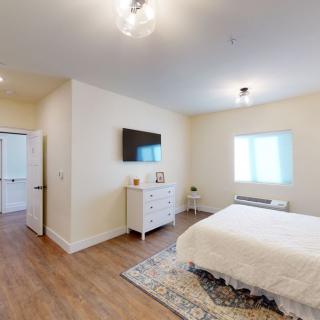
 Private
 Private bathrooms
 Respite or short term stays offered
 Phoenix Sky Harbor International (18 miles away)
 Diabetic care
 High acuity care
 Christian services





 Navigating Medicare Coverage for In-Home Care Services
 In-Home Care Costs in 2025: A Detailed State-by-State Exploration
 Understanding Home Health Care: A Comprehensive Guide