
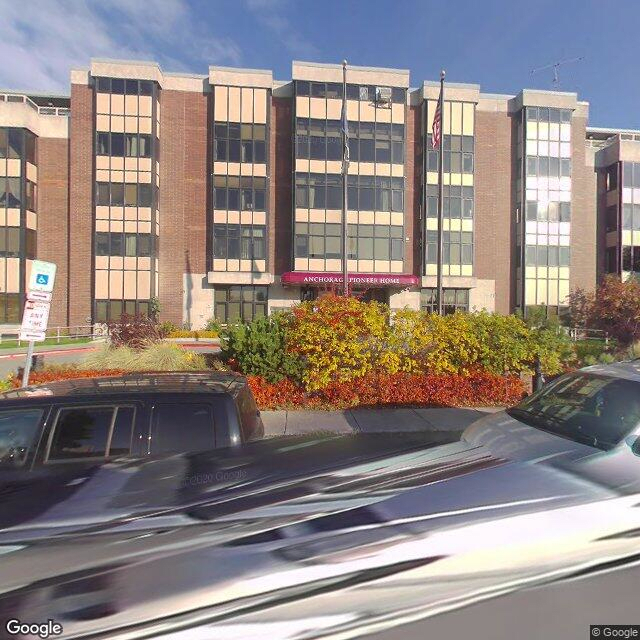
923 West 11th Avenue, Anchorage, AK 99501
For more information about senior living options: (866) 208-4318
Overall Review of Pioneers' Home I
Pros
 The staff are great and the environment is friendly.
- The staff are welcoming to families and provide regular updates.
- Residents are cared for appropriately by professional and kind staff.
- The facility is clean and the rooms are neatly maintained.
- There is a garden and a park for relaxation.
- The center offers a library with spiritual books and a variety of indoor games.
- The staff readily helps residents and encourages them to share their opinions.
- A sense of love and happiness is evident among residents, and many would wholeheartedly recommend the nursing home.
Cons
 The facility is short-staffed and offers few activities.
- There are dangerously aggressive individuals throughout the building.
- Budget cuts and poor leadership have turned the place into a madhouse.
- A violent resident on ankle monitoring was allowed to live there and reportedly caused a rampage, damaging equipment.
- There is confusion about who is making decisions for the facility, implying mismanagement.
- It is a scary place to live for elderly residents, and outsiders are advised not to place their relatives there or support the state entity.
Review
Pioneers' Home I in Anchorage is best suited for families seeking a cost-conscious, hands-on nursing-care setting where dependable staff interaction and consistent family communication take priority over modern amenities or a vibrant activity calendar. The community works best for residents who are comfortable in an older, straightforward building and who value steady routines, clear updates to relatives, and a calm, familiar atmosphere. It is not the right fit for those who expect high-end finishes, frequent structured activities, or extensive security features. For seniors whose needs are primarily daily care with reliable staff, this option can feel practical and approachable.
Families should consider alternatives if prioritizing cutting-edge facilities, robust safety controls, or a rich program of activities is non-negotiable. Those facing risks from aggressive behaviors, or who require specialized security and supervision, may find the environment inadequate. Private-pay or independently run settings often deliver more modern interiors and broader enrichment options, while larger skilled-nursing campuses may offer more specialized memory-care supports or higher staffing ratios. For residents with higher cognitive or behavioral challenges, a facility with dedicated memory-care units and tighter risk management may prove essential.
On the positive side, the strongest pro offers real value: staff are frequently described as welcoming and attentive, with ongoing updates to families that build trust. The care teams appear to operate with professionalism and a genuine sense of duty. The building’s upkeep is consistently noted as clean, and the campus provides accessible amenities that support social and spiritual life, gardens and a park for outdoor time, a chapel and salon, a small shop, a library with spiritual materials, and ample indoor games. Residents are described as able to converse openly and engage in activities at a modest, doable pace, which can translate into a sense of belonging and mutual respect among peers.
However, the principal cons are equally hard to ignore. Short-staffing and leadership questions recur across reviews, producing doubts about responsiveness during peak times. An especially troubling report describes a violent incident involving a person living in the home, raising legitimate concerns about safety controls and risk management. The facility’s age shows in the infrastructure and atmosphere, and activity programming tends to be limited. Ongoing remodeling contributes to a sense of disruption, and plans for special events can be derailed by other factors. Taken together, these factors undermine the consistency and vibrancy that some families expect from a community setting.
The key tension, staff warmth and reliability versus safety and modernization gaps, drives the decision. When the priority is steady, personable caregiving and straightforward daily life, the pros can offset the cons to a meaningful degree. The staff’s willingness to engage, reassure, and communicate can mitigate some of the anxiety that comes with an older building and fewer activities. Yet safety concerns and leadership uncertainty can erode trust and heighten the burden on family members who must rely on the facility to manage challenging behaviors and maintain a secure environment.
For families weighing next steps, approach this decision with a clear checklist. Schedule a live visit during a typical day, and observe caregiver-resident interactions, call responses, and the staff-to-resident ratio. Request the most recent safety incidents and the current risk-management plan, plus details on leadership stability and turnover. Inquire about the remodel timetable, day-to-day activity options, and how family updates are delivered. Compare these findings with nearby alternatives that offer newer facilities, stronger staffing evidence, and more extensive activity programs. The choice hinges on balancing the comfort of reliable staff and affordable care against the priorities of safety, enrichment, and modern living environments.
 168 resident community capacity
 Studio apartments
 Assisted Living
 Memory Care
 Activities on-site
 Air-conditioning
 Beauty salon
 Cable or satellite TV
 Computer center
 Devotional services off-site
 Dining room
 Financial aid
 Fitness room
 Fully furnished
 Gaming room
 Garden
 Housekeeping services
 Indoor common areas
 Kitchenette
 Laundry
 Move-in coordination
 Outdoor space
 Private bathrooms
 Respite or short term stays offered
 Restaurant-style dining
 Small library
 Telephone
 Wellness center
 Wi-Fi/high-speed internet available
 Ted Stevens Anchorage International (4 miles away)
 Community operated transportation
 24-hour call system
 Ambulatory care
 Assistance with bathing
 Assistance with dressing
 Assistance with transfers
 Blood work
 Diabetes diet
 Diabetic care
 Medication management
 Special dietary restrictions
 Walking wheelchair assistance
 Concierge services
 Cooking club
 Educational speakers / life long learning
 Planned day trips
 English

 An In-Depth Look at Reminiscence Therapy in Dementia Care
 Dementia-Related Hallucinations: Causes, Experiences, and Practical Approaches
 Illuminating Insights About Alzheimer's Disease: Ten Crucial Realities