

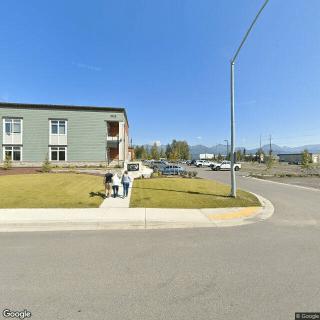
337 E. 4th Ave, Anchorage, AK 99501
To contact a resident: (907) 279-0310
For more information about senior living options: (866) 208-4318
Marlow Manor Downtown Costs & Pricing
Marlow Manor Downtown offers competitive pricing for its residential units when compared to both the Anchorage Municipality and broader Alaska averages. For a studio apartment, residents can expect to pay $3,800 per month, which is notably lower than the Anchorage average of $4,599 and the state average of $4,197. Similarly, the one-bedroom option at Marlow Manor is priced at $4,800, offering substantial savings compared to the municipality's average of $5,236 and remaining slightly above the state average of $4,951. These cost advantages position Marlow Manor Downtown as an attractive choice for those seeking quality housing in a vibrant location without straining their budget.
| Floor plans | Marlow Manor Downtown | Anchorage Municipality | Alaska |
|---|---|---|---|
| Studio | $3,800 | $4,599 | $4,197 |
| 1 Bedroom | $4,800 | $5,236 | $4,951 |
Assisted Living communities with a similar price nearby
-
from +$220 / mo

Avelina's Assisted Living Home 2
$4,020 / month2.4 miles away -
from -$500 / mo
Midnight Sun Alh
$3,300 to $3,990 / month4.1 miles away -
from -$366 / mo
Hope Sandy Place
$3,434 to $4,120 / month5.5 miles away -
from +$700 / mo

Alpha Omega ALH
$4,500 to $5,500 / month4.9 miles away -
from -$700 / mo
House Of Peace
$3,100 / month4.8 miles away
Overall Review of Marlow Manor Downtown
Pros
 The staff and volunteers at Marlow are absolutely the best.
- Her mother has been there for three years and is well cared for.
- Marlow is described as the dream team of assisted living providers.
Review
Marlow Manor Downtown is best suited for families seeking a warm, relationship-driven assisted living experience in downtown Anchorage. This community targets seniors who prize consistent, person-centered care over a broad menu of high-tech amenities. The strongest signal here is stability: a mother has been there for three years, and the staff, along with volunteers, are described as absolutely the best. The designation “dream team of assisted living providers” signals a culture where caregivers know residents well, advocate for their comfort, and maintain a steady routine. For families who measure success by daily assurance, knowing a loved one is known, watched over, and engaged, Marlow Manor offers a compelling match.
From the start, the core advantage is the caregiving culture. Long-tenured staff and active volunteers translate into relationships that endure and deepen, not just tasks that get checked off. Residents are not merely supervised; they are supported with attentiveness that shows up in meals, chats, reminders, and gentle oversight of health needs. The three-year tenure of a resident’s mother is a tangible example of how continuity reduces confusion and builds trust with both residents and families. The “dream team” framing captures a level of teamwork, caregivers, kitchen and activities staff, and volunteers, that tends to create predictable days and a sense of security, even amid the ordinary bumps of aging. This isn’t a generic program; it’s a relational approach that takes daily life seriously.
However, families should consider alternatives if the loved one requires higher medical acuity or specialized memory care. Assisted living, as presented here, centers on daily life support and companionship rather than on constant, hospital-style oversight. For residents who anticipate needing heavy medical management, frequent skilled nursing, or a dedicated memory-care environment, facilities with strong clinical staffing or dementia-specific units may be more appropriate. The downtown location can be a boon for access and engagement, but it also suggests the potential trade-off of hubbub and parking realities that some families may prefer to avoid. A clear picture emerges only after in-person conversations about care plans and response times.
Still, the strongest pros, stable staffing, genuine engagement, and a culture of care, partially offset any lack of disclosed details about medical protocols or the breadth of programming. Consistent caregivers who know residents well tend to catch subtle shifts in health and mood earlier, reducing crisis-driven moves. Volunteers extend the reach of care, offering social lubrication and activity variety that counteracts isolation. When a family weighs cost against the assurance of dependable daily routines, the value becomes tangible: less turnover, fewer anxious transitions, and more predictable expectations for both resident and family. The result is a practical, outcomes-focused justification for choosing this setting when relational safety and daily reliability matter most.
To decide, visitors should press for specifics during tours: caregiver-to-resident ratios on each shift, how caregivers rotate, and whether residents have opportunities to engage in meaningful activities that align with interests. Ask about how meal quality and dining safety are managed, how medication is organized, and how quickly staff respond to call bells. Involve the resident in conversations about independence, privacy, and preferred routines. Family members should also explore how volunteers participate in programming and how the community handles changes in health status over time. These details illuminate whether the “dream team” experience translates into day-to-day reliability for a given loved one.
In sum, Marlow Manor Downtown stands out for its people-centric approach and sustained staff engagement. It is a strong choice for seniors who want a familiar, well-supported daily life and for families who value visible, compassionate caregiving over gadget-laden amenities. Those who expect robust medical oversight, complex dementia care, or highly structured clinical programming should consider alternatives that foreground those services. For the right resident, this community delivers reassurance in a tangible way, the kind of reassurance that makes a long-term placement workable and a family’s peace of mind enduring.
 Assisted Living
 Cats allowed
 Dogs allowed
 Activities on-site
 Devotional services off-site
 Indoor common areas
 Ted Stevens Anchorage International (5 miles away)
 Ambulatory care
 Diabetic care
 Meals provided

 8 Key Indicators That Suggest It May Be Time to Transition from Assisted Living to Skilled Nursing Care
 Vibrant Senior Living: A Comprehensive Guide for Active Older Adults
 When to Transition from Assisted Living to Memory Care: Key Indicators, Steps, and Finding the Right Community