
110 Fairfax Road, St Albans, VT 05478
For more information about senior living options: (866) 208-4318
Franklin County Rehab Center Costs & Pricing
The Franklin County Rehab Center offers competitive monthly rates that reflect the unique needs of its residents while providing quality care. For instance, a studio at the center is priced at $4,020, which is significantly lower than the county average of $4,660 and well below the state average of $5,259. Similarly, the one-bedroom options come in at $4,665, slightly below Franklin County's average but more favorable compared to state figures. Semi-private rooms are priced identically to the county's rate of $4,871 and are still more economical than Vermont's overall average. In contrast, private rooms at Franklin County Rehab Center are considerably less expensive at $5,411 compared to both Franklin County's $7,131 and Vermont's lower rate of $4,251. The center also offers two-bedroom accommodations for $5,925, aligning with the county's rates yet remaining slightly above the state's average. Overall, these pricing strategies not only highlight affordability but also emphasize a commitment to providing accessible rehabilitation services within the community.
| Floor plans | Franklin County Rehab Center | Franklin County | Vermont |
|---|---|---|---|
| Studio | $4,020 | $4,660 | $5,259 |
| 1 Bedroom | $4,665 | $5,333 | $4,901 |
| Semi-Private | $4,871 | $4,871 | $5,174 |
| Private | $5,411 | $7,131 | $4,251 |
| 2 Bedrooms | $5,925 | $5,925 | $5,322 |
Skilled Nursing Facilities with a similar price nearby
-
from -$520 / mo
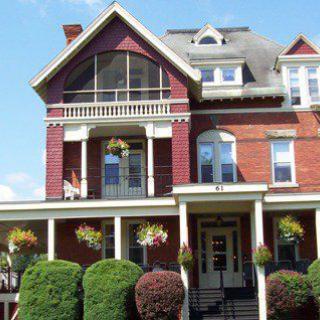
Samuel F. Vilas Home
$3,500 to $4,300 / month20.8 miles away -
About the same

Green Mountain Nursing And Rehabilitation
$4,057 to $5,274 / month20.8 miles away
Overall Review of Franklin County Rehab Center
Pros
 It is the best long-term facility in St. Albans.
- It is best to visit a loved one often.
- The staff are, for the most part, caring.
- The meals are good.
Cons
 They mistreated the patient.
 - They drugged him so much he couldn’t participate in therapy.
- They did not have a good communication plan.
- They blamed the patient and insisted it was him and his behaviors.
- They were unprofessional and not trained well.
- Nurses couldn’t see that he was in distress.
- They sent him to the emergency room miles away instead of a closer hospital.
- They wrote disparaging remarks about him.
- They claimed the reviews were misleading and warned not to believe the hype.
Review
Franklin County Rehab Center in St Albans is best suited for seniors whose families can provide vigilant oversight while the resident benefits from a steady, supervised environment. The community works well for residents who value routine, predictable meals, and a generally approachable care team. It serves as a practical long‑term option where ongoing supervision and structured daily activity help sustain mood and social engagement, provided expectations align with a rehab‑leaning, custodial model rather than high‑acuity medical care.
Those with heavy medical needs should consider alternatives. The reviews point to serious concerns about medication practices, distress recognition, and communication when emergencies arise. A facility with on‑site physicians, tighter clinical protocols, and fast, clear escalation plans would better support residents who require proactive medical management or rapid ER coordination. Families prioritizing transparent, consistent medical decision‑making may prefer options with a stronger track record in handling polypharmacy, seizures, and heart‑rate issues.
Two notable positives anchor the decision: staff who are generally caring and meals that support appetite and morale. This creates a humane, home‑like atmosphere that helps residents feel seen and comfortable, especially during extended stays. Yet these strengths are undermined when care decisions are delayed or obscured, and when habits of miscommunication or using medications to “compliance” override clinical judgment. The contrast between occasional warmth and a troubling incident of sedation and blame undermines trust and raises red flags for families tracking safety.
Pros do not fully offset the main drawbacks. Reliable social programming and nutritious meals cannot compensate for inconsistent medical oversight or a readiness to attribute distress to patient behavior rather than medical needs. When a facility sends a patient to the ER miles away instead of addressing the issue locally, or permits drug regimens that impede therapy, the core value proposition of a rehab‑center locale, timely, patient‑centered care, falters. For families, this means risk tolerance matters: if medical complexity is anticipated, this center should not be the sole caregiver in place, unless a robust external plan is in place.
Guidance for evaluating the option: demand a formal, written protocol for medication management, consent, and escalation, including clear lines of responsibility and who documents changes. Inquire about on‑site nursing coverage, availability of a physician or advanced practitioner, and expected response times to crises, with concrete examples. During tours, speak with frontline staff about daily routines, therapy access, and how emergencies are communicated to families. If choosing this center, insist on a designated family liaison and scheduled updates after significant events. Consider cross‑checking with nearby facilities known for stronger clinical governance to benchmark performance.
Bottom line: Franklin County Rehab Center can accommodate residents seeking steady daily structure, predictable meals, and a caring daytime presence, with family involvement playing a pivotal role in care quality. It is not the clear choice for those with high medical acuity, fragile post‑acute needs, or a history of distressing medical mismanagement. The decision should hinge on whether a credible plan for medical oversight and transparent, timely communication can be demonstrated before admission. If such safeguards cannot be secured, exploring alternatives with more robust clinical infrastructure is advised, along with a contingency plan for transition if needs escalate.
 64 resident community capacity
 Skilled Nursing Facility
 Air-conditioning
 Beauty salon
 Cable or satellite TV
 Computer center
 Dining room
 Fitness room
 Fully furnished
 Gaming room
 Garden
 Housekeeping services
 Kitchenette
 Move-in coordination
 Outdoor space
 Private bathrooms
 Restaurant-style dining
 Small library
 Telephone
 Wellness center
 Wi-Fi/high-speed internet available
 Burlington International (23 miles away)
 Community operated transportation
 12-16 hour nursing
 24-hour call system
 Activities of daily living assistance
 Assistance with bathing
 Assistance with dressing
 Assistance with transfers
 Diabetes diet
 Medication management
 Mental wellness program
 Special dietary restrictions
 Concierge services
 Planned day trips


 Navigating the Financial Road to Nursing Home Care: In-Depth Guidance and Resources
 Supportive Employee Benefits That Help Caregivers Attain Better Work-Life Harmony
 Top Cars for Senior Drivers and Essential Safety Innovations