

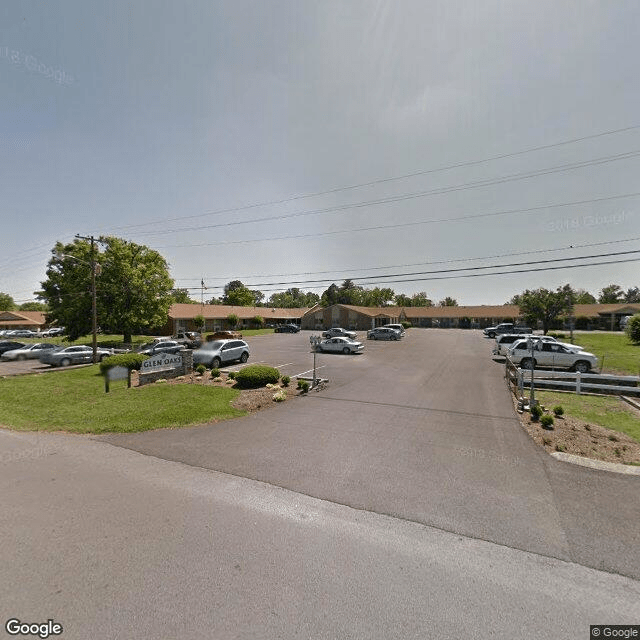
1101 Glen Oaks Road, Shelbyville, TN 37160
To contact a resident: (931) 684-8340
For more information about senior living options: (866) 208-4318
Glen Oaks Health And Rehabilitation Costs & Pricing
At Glen Oaks Health And Rehabilitation, the monthly costs for care reflect a higher investment compared to averages in Rutherford County and across Tennessee. Specifically, semi-private rooms are priced at $4,620, significantly above the county average of $3,307 and the state average of $3,162. For those seeking more privacy, private rooms at Glen Oaks are available for $4,770, which again surpasses both local and state rates; Rutherford County's average is $3,365 while Tennessee's stands at $3,696. This pricing structure suggests a commitment to providing quality care and specialized services that may justify the premium compared to nearby alternatives.
| Floor plans | Glen Oaks Health And Rehabilitation | Rutherford County | Tennessee |
|---|---|---|---|
| Semi-Private | $4,620 | $3,307 | $3,162 |
| Private | $4,770 | $3,365 | $3,696 |
Overall Review of Glen Oaks Health And Rehabilitation
Pros
 The staff at Glen Oaks is wonderful and hardworking.
- Residents receive wound care, physical therapy, and occupational therapy as part of their care.
- The care team monitors residents and ensures they never miss a meal.
- The social director helps families stay connected via FaceTime.
- The care at Glen Oaks is exceptional, according to family members.
- Families would not consider placing loved ones anywhere else and prefer Glen Oaks.
- The staff is very nice and the nurses are great.
- The rooms are clean and the facility is a very nice place.
- The food is good and the staff is friendly.
- Glen Oaks is one of the top nursing homes in the area with attentive staff.
- The activities program is engaging, with exercise, art, and bingo.
- The facility is clean, well maintained, and residents feel welcomed.
Cons
 A friend who stayed at Glen Oaks for a little over a week had a fall and required ER admission, leaving with injuries described as horrible.
- Some of the patient’s clothes were not returned.
- The staff were noted as sometimes needing more nurses.
- The facility’s distance made it difficult for family to visit.
Review
Glen Oaks Health and Rehabilitation is best suited for seniors who need skilled nursing with a strong rehab focus and reliable daily routines. The facility consistently delivers wound care, physical and occupational therapy, and monitored meals, backed by a staff that families describe as hardworking and attentive. Residents benefit from an environment that emphasizes hands-on care, clean and well-kept surroundings, and opportunities for social engagement through activities and a social director who helps families stay connected. This is a setting where rehab plans are executed with clear professionalism, and where patients can expect steady supervision, regular progress, and a sense of being treated with dignity.
That said, families should consider alternatives if proximity to loved ones or the need for very high nurse staffing is critical. Several reviews note distance as a practical barrier for regular visits, and one review describes a situation that raises questions about fall prevention and staffing levels. For families who must be within a short drive or who require near-constant round-the-clock nursing oversight, it may be wise to compare other local skilled nursing facilities or to explore home health or assisted-living-based rehab options. Likewise, if memory care or highly specialized long-term care beyond standard skilled nursing is needed, alternative communities with dedicated memory-care units could be a better fit.
The strongest pros at Glen Oaks offset most of the potential drawbacks when the focus is on rehab intensity, safety-conscious operations, and daily quality of life. The facility earns praise for professional, capable staff who attend to wounds, mobility, and daily meals without neglect. Residents repeatedly highlight clean rooms, consistent cleanliness, and environments that feel orderly and well managed. The presence of a robust activity program and a socially engaged atmosphere helps mitigate the risk of isolation, while the quality of food and the welcoming tone upon entry reinforce a sense that residents are valued. Taken together, these attributes create a solid foundation for recovery and daily living.
Nevertheless, the negative experiences deserve serious consideration. A review recounts a fall resulting in injuries after a relatively short stay, underscoring a real concern about safety and the sufficiency of monitoring in some moments of the care cycle. While this appears to be an isolated incident in the overall stream of impressions, it signals a need for prospective families to probe fall-prevention protocols, nurse-to-patient ratios, environmental safety, and the transparency of incident reporting. Another practical nuisance cited by a family member is the occasional loss of personal items or clothes, a reminder that small operational gaps can occur in a busy facility. These issues do not negate the overall quality of care, but they do warrant due diligence.
For families visiting Glen Oaks, a focused tour can be enlightening. Inquire about the cadence of medication rounds, the cadence of therapy sessions, and how quickly a resident’s plan is adjusted in response to progress or setbacks. Ask about how the social director coordinates family communication, what the daily schedule looks like for rehab versus long-term stays, and how meals accommodate dietary restrictions and personal preferences. Confirm logistics around personal belongings, laundry handling, and quiet spaces for family visits. These practical checks, combined with a clear understanding of staffing levels and safety practices, will help determine whether Glen Oaks aligns with the specific needs of a loved one.
 130 resident community capacity
 Skilled Nursing Facility
 Activities on-site
 Air-conditioning
 Beauty salon
 Cable or satellite TV
 Computer center
 Devotional services off-site
 Dining room
 Fitness room
 Fully furnished
 Gaming room
 Garden
 Housekeeping services
 Indoor common areas
 Kitchenette
 Move-in coordination
 Outdoor space
 Private
 Private bathrooms
 Restaurant-style dining
 Small library
 Telephone
 Wellness center
 Wi-Fi/high-speed internet available
 Community operated transportation
 12-16 hour nursing
 24-hour call system
 Ambulatory care
 Assistance with bathing
 Assistance with dressing
 Assistance with transfers
 Diabetes diet
 Diabetic care
 Medication management
 Mental wellness program
 Special dietary restrictions
 Concierge services
 Planned day trips

 Comprehensive Guide to Blood Pressure Charts for Older Adults: Understanding Normal and High Readings by Age
 Financing Long-Term Nursing Home Care Through Social Security: A Thorough Exploration
 Essential Knowledge on Pneumonia in Older Adults