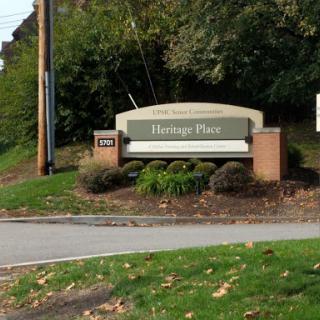
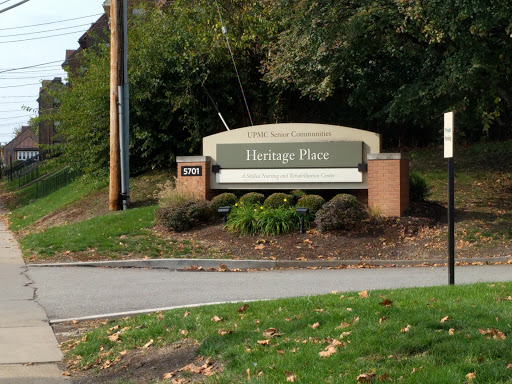

5701 Phillips Avenue, Pittsburgh, PA 15217
For more information about senior living options: (866) 208-4318
Overall Review of Upmc Heritage Place
Pros
 The Heritage Shadyside is very nice.
- The whole atmosphere is one of wanting to help.
- They have a chef, so the food looks wonderful, smells good, and has been very edible.
- There aren’t any complaints from the people about the food.
- They have a lot of activities and lots of bingo, which everyone loves.
- They’ve had people come in, like musicians, and they had someone bring a dog to visit.
- They just have a variety of things going on.
- Everyone is very helpful.
- When he’s in the wheelchair, and he’s wheeling some place and they see him, they’ll help him.
- It’s unbelievably well run.
- The staff was very caring.
- The staff at Heritage was very helpful and never had anything negative to show to the visitors and were always very nice to both the patients and their visitors.
- The facilities were well kept.
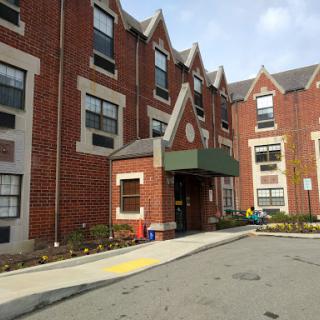
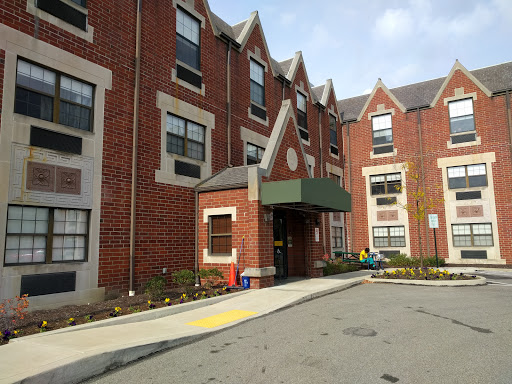
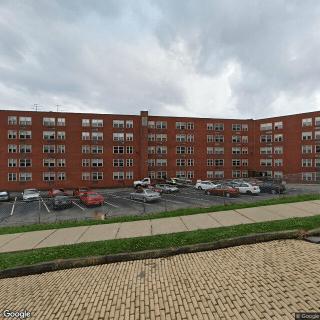
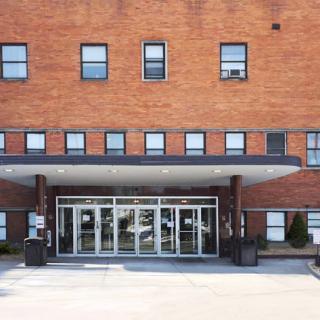
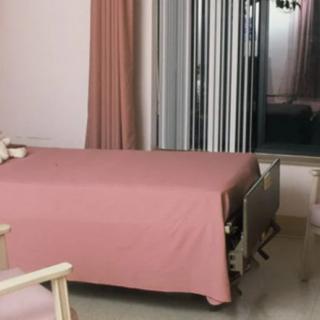
- They were very modern and did not give the impression of a hospital environment at all.
- The commons rooms were well lit and beautifully painted.
- The parts of Heritage that were devoted to hospital care were state of the art.
- The location is one of the best parts of Heritage.
- It is centrally located in the city so relatives of the patients are always close by.
- All in all, the reviewer would recommend Heritage Nursing Home for all of the reasons listed above.
- My Grandmother absolutely loves it and so does her family.
- The nurses were pretty good.
- The physical therapists were kind enough to take things slowly with their patients.
- They offered words of encouragement to the client as he/she walked up and down the halls.
Cons
 The room was filthy, with a week’s worth of dust on the floor and windows so dirty that nothing could be seen through them, and the facility’s odor was horrendous.
- The staff wouldn’t assist the resident to walk, leaving her to soil her pants or use a bedpan.
- An unprotected dialysis port was exposed, raising fears of infection in such a dirty environment, and UPMC should be ashamed.
- The place looked dirtier than slums.
- Some orderlies were pushing food into seniors’ mouths while watching soap operas, causing food to miss mouths and fall into laps.
- Meals were pushed too quickly, and the patients couldn’t keep up.
- An orderly lifted a patient by the arms, risking a broken bone or dislocation.
- The night-shift staff was unpleasant and hostile, and the rest of the staff was unpleasant, unhelpful, and not caring.
Review
Upmc Heritage Place in Pittsburgh is best suited for families seeking a centrally located skilled-nursing option with robust rehabilitative and hospital-level medical resources, where proximity to medical specialists and convenient family visitation are a meaningful part of daily care. The community can support residents who need ongoing therapy, wound care, dialysis-related oversight, and other complex medical services, without forcing families to travel far for visits. It is not the right fit for those who insist on immaculate housekeeping as a baseline standard every day, or for families who require consistently gentle, ultra-private daily care from start to finish. Those considerations should steer the search toward alternatives.
The reviews point to a core tension: strong clinical potential and caring moments exist, but daily operations can fluctuate in ways that matter to families. Prospective residents who value access to medical staff, therapy teams, and the ability to stay connected with relatives due to a central city location will find meaningful upside. Several accounts praise well-kept common areas, modern touches, and parts of the staff who are attentive and supportive. When the care plan stays within the expected hospital-adjacent workflow, residents can benefit from the continuity of medical attention and the availability of therapists who encourage progress and independence.
Conversely, the most serious red flags revolve around cleanliness and how daily routines are executed on the ground. One visit documented rooms that felt dirty, with odors and dust, and a patient port left exposed in a way that raised infection concerns. Feeding practices described as rushed or poorly executed on some shifts are troubling, and there are explicit reports of staff using force or rough handling in tense moments. Night-shift behavior was notably labeled as hostile in at least one account, and the impression of inconsistent care between shifts makes reliability a key risk for families to weigh. Double-room arrangements further complicate comfort for residents who value privacy and quiet.
These cons do not cancel the potential benefits, but they do limit one’s willingness to accept risk without scrutiny. The facility’s strengths, central Pittsburgh location, accessible hospital-adjacent care, and a solid therapy workforce, can offset some concerns for families prioritizing medical stability and rehabilitation over pristine housekeeping. When care teams function smoothly, the hospital-like components can offer reassurance: a resident with complex needs has a better chance at timely interventions, coordinated rehab, and a familiar medical rhythm that keeps risk to a minimum. The best-case scenario is a well-cordoned care environment where the therapists are consistently encouraging, the nurses are responsive, and the physical plant supports both dignity and safety.
For families evaluating options, the decisive factor rests on what is non-negotiable in daily living. If the emphasis is on medical acuity, therapy intensity, and convenient access for visits, Heritage Place presents a credible option, provided the specific location within the campus is assessed for cleanliness, staff ratios, and responsiveness. If pristine cleanliness, warm daily caregiving, and guaranteed calm, respectful treatment at all hours are must-haves, alternatives deserve serious consideration, whether within the same network or with other providers who demonstrate steadier daily performance. Tour dynamics should focus on housekeeping workflows, the frequency of room cleaning, evidence of pest control and odor management, and the paths of accountability when concerns arise.
Ultimately, the decision hinges on balance and risk tolerance. Heritage Place can deliver competent medical care and meaningful rehab in a central, visit-friendly setting, but families should enter with a clear eye on room configuration, consistency of day-to-day caregiving, and tangible plans for addressing any cleanliness or staffing concerns. Conduct thorough on-site assessments, ask pointed questions about staffing patterns across shifts, request current housekeeping schedules, and review any recent quality-improvement or incident-resolution data. If those assurances align with the family’s expectations, Heritage Place can be a strong fit for a resident who needs skilled care in a city-center environment. If not, it is prudent to pursue alternatives that prioritize impeccable cleanliness and uniformly compassionate daily care across all hours.
 143 resident community capacity
 Skilled Nursing Facility
 Air-conditioning
 Beauty salon
 Cable or satellite TV
 Computer center
 Dining room
 Fitness room
 Fully furnished
 Gaming room
 Garden
 Housekeeping services
 Kitchenette
 Move-in coordination
 Outdoor space
 Private bathrooms
 Restaurant-style dining
 Small library
 Telephone
 Wellness center
 Wi-Fi/high-speed internet available
 Pittsburgh International (17 miles away)
 Community operated transportation
 12-16 hour nursing
 24-hour call system
 Activities of daily living assistance
 Assistance with bathing
 Assistance with dressing
 Assistance with transfers
 Diabetes diet
 Medication management
 Mental wellness program
 Special dietary restrictions
 Concierge services
 Planned day trips



 Recognizing the Journey: Understanding and Navigating Anticipatory Grief
 Encouraging Participation in Adult Day Care: A Guide to Supporting a Hesitant Parent
 Comprehensive Exploration of Living Wills and Other Advance Directives