
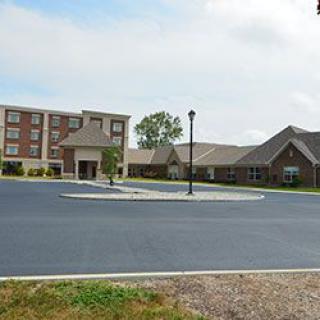
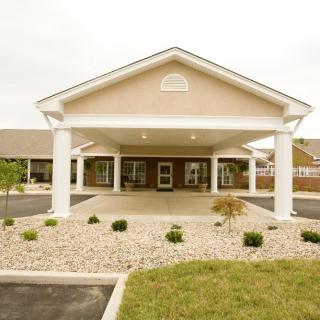
723 S Shoop Ave, Wauseon, OH 43567
To contact a resident: (419) 335-2017
For more information about senior living options: (866) 208-4318
Overall Review of Fulton Manor Nursing Home
Pros
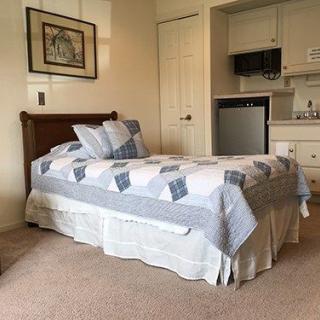
 The room was always cleaned.
- The nursing staff were accommodating when asked for something.
- The staff at Fulton Manor form a great team that works together to provide the care their patients need.
- They are kind and caring to the patients and their families.
- The facility is a blessing to the community.
- The staff treated the grandmother like family and gave her excellent care.
Cons
 There was confusion about her care upon arrival at Fulton Manor.
- The problems began after she was assigned a room.
- Her blood sugar was never checked before meals to determine insulin dosage.
- She was kept on five liters of oxygen to maintain her oxygen level.
- An early morning finding showed the oxygen hadn’t been turned on all night.
- A nurse questioned why their nursing care wasn’t being used.
- She went from walking and talking to bedridden within two days.
- The manor doctor was seen only once.
Review
Fulton Manor Nursing Home in Wauseon is best suited for families seeking a warm, community-minded environment where care teams operate like an extended family. The operation emphasizes integrated care, with administrators, licensed nurses, CNAs, dietitians, therapists, and support staff coordinating to keep daily routines stable. Reported experiences point to accessible, compassionate care and a willingness to accommodate individual preferences. Residents benefit from continuity, caregivers who know medical histories, likes, and habits, which translates into smoother transitions between therapy, meals, and activities. For families prioritizing hands-on attention, transparent communication, and a cohesive caregiving culture, Fulton Manor provides a practical, human-centered home base rather than a sterile, impersonal setting.
Nevertheless, the facility should be compared with alternatives when the priority is unwavering, hospital-level medical oversight. A negative account describes gaps in acute care during a recent admission: insulin dosing not verified before meals, oxygen not activated, and a rapid decline leading to hospice transfer. For residents with complex diabetes management or fragile oxygenation, a setting with higher nurse-to-resident ratios, regular physician rounds, and explicit safety protocols may be more appropriate. Prospective families should verify daily rounds by a licensed clinician, insist on a clear care plan, and demand visibility around oxygen administration, glucose monitoring cadence, and rapid escalation procedures before committing.
Where Fulton Manor shines is in its people. The team-wide professionalism, from the administrator to nurses, aides, kitchen staff, and therapists, creates a cohesive, responsive environment. Residents typically experience prompt assistance, tailored rehab goals, and coordinated meals that respect dietary needs. The kitchen and support staff emerge as particular strengths, contributing to a family-like atmosphere that extends beyond clinical care. Families consistently praise warmth, reliability, and teamwork that translate into practical comfort: consistent medication reminders, predictable activity schedules, and genuine engagement with residents’ daily lives.
Yet the troubling account underscores the critical reality: medical vigilance matters. The described lapse, care confusion at admission, missed insulin dosing, and oxygen not being turned on through the night, illustrates how quickly a vulnerable resident can deteriorate when monitoring falters. This invites a hard look at care plan communication, accountability for critical tasks, and the reliability of nurse response. It is not enough to rely on strong personal relationships; formal protocols, continuous bedside monitoring, and a clear escalation path must be in place. Families should view this as a safety risk flag and probe the facility’s standards and practice reminders to prevent recurrence.
When weighed against these concerns, Fulton Manor’s strengths create meaningful counterbalances. A united care team, transparent caregiving approach, and administration that prioritizes collaboration help catch issues early, coordinate therapies, and keep loved ones engaged. The rehab-oriented focus, dietetic support, and social programming support broader well-being, not merely custodial care. To maximize safety, families should secure a detailed, written care plan with defined nurse assignments, daily clinician rounds, and explicit oxygen and diabetes management protocols. Request to observe a shift handoff, review the QA/QAPI framework, and confirm staffing levels across shifts. Taken together, these safeguards help preserve the positives while addressing the risk of lapses.
Bottom line: Fulton Manor is a solid choice for families who want a compassionate, community-driven environment with dependable daily living support and rehabilitative services. It is less suitable for those whose top priority is constant, hospital-grade medical oversight and perfectly predictable clinical outcomes. If choosing Fulton Manor, approach with a plan: establish clear lines of communication, insist on concrete safety protocols, and maintain regular check-ins with the administrator and care team. For families prepared to engage proactively and monitor care closely, Fulton Manor can deliver a comforting, home-like setting where residents feel known, valued, and well supported.
 Skilled Nursing Facility
 Toledo Express (17 miles away)


 In-Home Care Costs in 2025: A Detailed State-by-State Exploration
 Understanding Home Health Care: A Comprehensive Guide
 Home Health Care Demystified: A Comprehensive Guide for Families and Caregivers