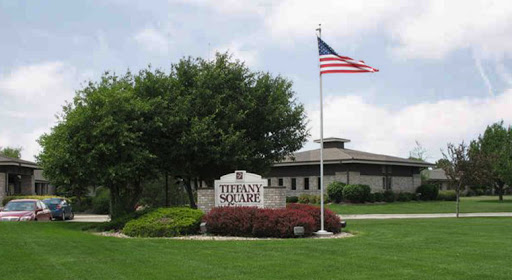

3119 West Faidley Avenue, Grand Island, NE 68803
For more information about senior living options: (866) 208-4318
Overall Review of Tiffany Square
Pros
 The staff at Tiffany's Square are very helpful and pleasant to residents and their families.
- The staff work hard to welcome new residents and are available to extended families.
- The facility provides outstanding care that helps residents rehab and return home.
- Residents are made to feel welcome and the care quality is highly regarded by families.
- The property and its care are highly recommended by families for their loved ones.
Cons
 The upper management doesn’t care about residents and only favors certain employees, ignoring others and not getting both sides of stories.
- They place residents in hoyers on the toilet, which is hard to manage and can risk injury to the resident or caregiver.
- If a resident isn’t wealthy, certain residents get ignored.
- They promise things in writing but end up acting nice and telling families what they want to hear until it’s time to go.
- There were concerns that meds and equipment were left behind at the old facility, with a bucket sitting on the ground.
Review
Tiffany Square in Grand Island is best suited for families seeking a rehab-oriented living option where direct-care staff are consistently engaged and relatives can be actively involved in daily care decisions. The community tends to excel when the primary goal is post-acute recovery, after a fall or hospitalization, along with a living environment that supports hands-on participation from family members. Residents who need therapy services and a structured path back to independence often find reliable momentum here, helped by staff who are described as pleasant and responsive. However, this facility may not be the ideal pick for those who demand unwavering administrative transparency, uniformly applied policies, and constant senior-management visibility in day-to-day operations.
Several accounts praise the warmth and accessibility of the caregiving team. In particular, families report that staff welcome new residents warmly and keep extended relatives in the loop, making the transition less stressful. Rehab moments stand out: a resident who fractured a hip benefited from attentive care that supported a solid recovery trajectory, enabling a return home sooner than expected. The consistency of supportive words and practical help from frontline workers appears to be the strongest pillar, with multiple stories of loved ones feeling valued, cared for, and included in ongoing care decisions. For families with special needs residents, Tiffany Square has also been described as a place where relatives feel heard and involved.
Yet the picture is not uniformly positive, and administrative leadership emerges as the most fragile link. Several reviews allege that upper management can appear detached from daily resident needs, showing favoritism toward certain staff and not always presenting both sides of a story. The safety implications are hard to ignore, including reports about repositioning residents on equipment that may carry risk and concerns about the adequacy of safety gear or supplies. One review hints at gaps in accountability by noting items left behind or oversight lapses that complicate care coordination, as well as perceptions that some residents experience uneven attention depending on status or wealth. Taken together, these concerns crystallize into a caution about governance at the facility.
Still, the favorable elements, tangible rehab success, reliable frontline care, and proactive family involvement, can offset many of the drawbacks for families focused on recovery goals. When therapy milestones are met and a resident returns home with improved function, the overall value proposition strengthens. The staff's willingness to engage relatives and the sense that caregivers are invested in each outcome provide a meaningful buffer against occasional missteps in administration. The gap between what is promised in writing and what is experienced can be narrowed by clear communication and visible accountability, but the offset depends on the family's tolerance for administrative variability and on the resident’s specific recovery timeline.
For those who should consider alternatives, focus on factors such as leadership consistency, transparency, and equitable treatment across residents. If administrative responsiveness is a priority, or if safety and med-management oversight are non-negotiable, it makes sense to compare other options with demonstrations of stronger governance and standardized procedures. Potential residents who require a highly predictable environment, or whose families cannot be consistently involved in care decisions, may find Tiffany Square less stable than preferred. In short, Tiffany Square is a solid choice for recovery-focused care, but it requires a careful look at governance and safety assurances before committing.
Practical due diligence should include requesting a current care plan, asking for direct access to the administrator, and observing care in multiple shifts to gauge consistency. Families should seek written policies on safety equipment use, medication handling, and incident reporting, and verify staffing ratios during peak activity periods. A trial period or staged transition can help align expectations with real-world operations. By anchoring the decision to concrete goals, recovery speed, family involvement, and reliable frontline care, while calibrating expectations about administration and safety oversight, Tiffany Square can fit well for the right match.
 103 resident community capacity
 Skilled Nursing Facility
 Air-conditioning
 Beauty salon
 Cable or satellite TV
 Computer center
 Dining room
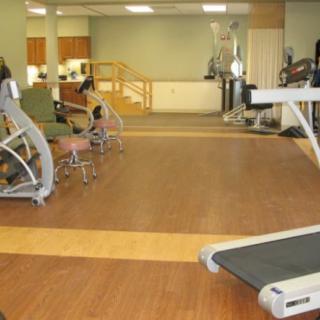
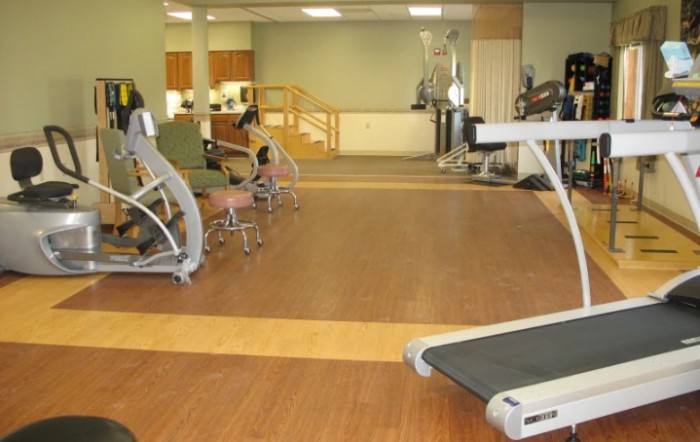
 Fitness room
 Fully furnished
 Gaming room
 Garden
 Housekeeping services
 Kitchenette
 Move-in coordination
 Outdoor space
 Private bathrooms
 Restaurant-style dining
 Small library
 Telephone
 Wellness center
 Wi-Fi/high-speed internet available
 Central Nebraska Regional (5 miles away)
 Community operated transportation
 12-16 hour nursing
 24-hour call system
 Activities of daily living assistance
 Assistance with bathing
 Assistance with dressing
 Assistance with transfers
 Diabetes diet
 Medication management
 Mental wellness program
 Special dietary restrictions
 Concierge services
 Planned day trips








 Navigating Medicare Coverage for In-Home Care Services
 In-Home Care Costs in 2025: A Detailed State-by-State Exploration
 Understanding Home Health Care: A Comprehensive Guide