For more information about senior living options: (866) 208-4318
3.1 from 56 reviews
5 stars
25
4 stars
5
3 stars
2
2 stars
1
1 stars
23
Pilgrim Rehabilitation and Skilled Nursing Costs & Pricing
Pilgrim Rehabilitation and Skilled Nursing offers competitive pricing in comparison to local and state averages. For a semi-private room, the monthly cost is $10,200, significantly higher than the averages of $5,800 in Essex County and $5,805 across Massachusetts. When it comes to private rooms, Pilgrim's fee of $10,950 again stands apart from the county's average of $6,771 and the state average of $6,090. This discrepancy may reflect Pilgrim's commitment to providing high-quality care and specialized services that cater to individual needs. While the costs are notably higher than those in surrounding areas, they may be justified by the enhanced level of care that residents can expect at this facility.
Floor plans
Pilgrim Rehabilitation and Skilled Nursing
Essex County
Massachusetts
Semi-Private
$10,200
$5,800
$5,805
Private
$10,950
$6,771
$6,090
Skilled Nursing Facilities with a similar price nearby
Overall Review of Pilgrim Rehabilitation and Skilled Nursing
differentiator11 reviews mention this
Rehab therapy supports recovery
Physical and occupational therapy are a major reason families choose Pilgrim for rehab progress.
Multiple residents and families describe strong PT/OT support, including therapists who are encouraging and knowledgeable during stays. Several reviews also connect the therapy experience to better daily functioning, from practicing mobility and transfers to working toward independence. Reviews about complex medical situations still highlight therapists and the rehab plan as part of why care felt effective.
caveat8 reviews mention this
Dining quality is mixed
Dining results vary, with some praising the food and others calling it poor for recovery.
A subset of reviews highlight the food as excellent, even singling out chefs and describing homemade-style meals. Others report dissatisfaction, including comments that food can feel institutional, portions or preparation don’t match dietary needs, or meals are not supportive of recovery. Taken together, residents’ experiences with dining don’t fall into one consistent direction.
caveat5 reviews mention this
Call-button response is inconsistent
Residents and visitors report that getting timely help after pressing for assistance can be hit or miss.
Several reviews describe long waits for bathroom or bedside help after lights or call buttons were used. In the most negative accounts, residents mention being uncomfortable for extended periods and feeling ignored even while calling out. A few other experiences also describe delays when staff couldn’t be reached quickly, making responsiveness a recurring concern.
caveat14 reviews mention this
Cleanliness holds ups and concerns
Reviews point to both generally clean rooms and recurring hygiene and odor complaints.
Some reviews specifically praise the facility as clean, well maintained, and tidy, with people describing cleanliness alongside respectful care. Others report strong odor concerns, including urine smells, and describe rooms or care situations they felt were not kept clean enough. Across reviews, cleanliness is an area where experiences vary meaningfully.
How we summarize
Counts show how many written reviews mention each theme; a review can touch several themes, and only frequently mentioned themes are displayed.
Features
Types of Care
Skilled Nursing Facility
Amenities
Activities on-site
Beautician on-site
Devotional services off-site
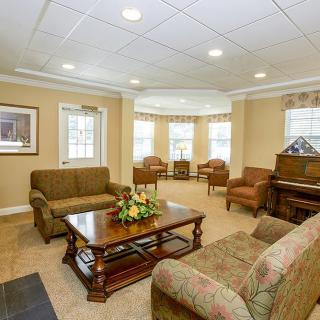
Indoor common areas
Outdoor common areas
Private
Wheelchair accessible showers
Transportation
Gen Edw L Logan International (12 miles away)
Care Services
Ambulatory care
High acuity care
Dining
Meals provided
Vegetarian
Activities
Activities on-site
Devotional activities offsite
Nearby Places of Interest
This part of Peabody, Massachusetts, offers a convenient and diverse range of amenities for seniors looking to settle in the area. With multiple hospitals and physician offices nearby, residents have access to quality healthcare services within a short distance. There are also various dining options ranging from casual eateries like Taco Bell and Wendy's to upscale restaurants like The Cheesecake Factory and Sylvan Street Grille. For those who enjoy a caffeine fix, there are several cafes such as Starbucks and Jaho Coffee & Tea within a few miles. Additionally, seniors can enjoy outdoor activities at nearby parks like Salem Common and Independence Park, as well as easy access to transportation through the MBTA Salem Station. Places of worship like St Richard Catholic Church and Temple B'Nai Abraham provide spiritual support for those seeking it. Overall, this part of Peabody offers a well-rounded community with amenities that cater to the needs of seniors looking for a comfortable living environment.
Hospitals
Childrens Hospital Peabody (0.3 miles)
Danvers State Hospital (3.8 miles)
Beverly Hospital (4.8 miles)
Northeast Hospital Corporation (5.1 miles)
Physicians
Microsurgical Eye Consultants (0.4 miles)
Harvard Vanguard Medical Associates - Peabody-Lynnfield (0.6 miles)
Lahey Clinic Peabody (0.8 miles)
Sports Medicine North (0.8 miles)
NS Physicians Group (2.1 miles)
Eye Center of the North Shore (2.5 miles)
The New England Facial and Cosmetic Surgery Center (3.2 miles)
Restaurants
Su Chang's (0.6 miles)
The Cheesecake Factory (1 miles)
Sylvan Street Grille (1.4 miles)
Taco Bell (1.5 miles)
Kelly's Roast Beef (1.6 miles)
Mexicali Cantina Grill (1.6 miles)
Wendy's (1.9 miles)
Pharmacies
CVS Pharmacy (0.8 miles)
Walgreens (1.5 miles)
CVS Pharmacy (1.9 miles)
CVS Pharmacy (1.9 miles)
CVS Pharmacy (2.3 miles)
Walgreens (2.4 miles)
Walgreens (2.5 miles)
Cafes
Starbucks (1.3 miles)
Perfecto's Caffe (1.7 miles)
Starbucks (3.2 miles)
Starbucks (3.3 miles)
Jaho Coffee & Tea (3.5 miles)
Starbucks (3.8 miles)
Panera Bread (4.3 miles)
Parks
Salem Dog Park (2.8 miles)
Salem Common (3.4 miles)
Salem Maritime National Historic Site (3.6 miles)
Independence Park (4.1 miles)
Winter Island Park (4.4 miles)
Crocker Park (5.7 miles)
Middlesex Fells Reservation (6.3 miles)
Places of Worship
St Richard Catholic Church (2.9 miles)
Danvers Church Of The Nazarene (3.9 miles)
First Church Nursery School (4.5 miles)
Temple B'Nai Abraham (4.9 miles)
The Church of Jesus Christ of Latter-day Saints (5 miles)
Pilgrim Rehabilitation and Skilled Nursing offers competitive pricing in comparison to local and state averages. For a semi-private room, the monthly cost is $10,200, significantly higher than the averages of $5,800 in Essex County and $5,805 across Massachusetts. When it comes to private rooms, Pilgrim's fee of $10,950 again stands apart from the county's average of $6,771 and the state average of $6,090. This discrepancy may reflect Pilgrim's commitment to providing high-quality care and specialized services that cater to individual needs. While the costs are notably higher than those in surrounding areas, they may be justified by the enhanced level of care that residents can expect at this facility.
Home health nursing is an expanding field where licensed professionals provide specialized medical care in patients' homes, addressing the needs of an aging population through personalized services like assessments and medication management. Effective collaboration with healthcare teams, cultural sensitivity, and quality assurance measures are essential for fostering trust and ensuring positive patient outcomes.
Medicare covers in-home health care services, which are medical and provided by licensed professionals under a physician's supervision, whereas non-medical personal assistance is generally not covered unless part of a broader skilled care plan. Eligibility for benefits depends on being homebound and needing intermittent skilled services from a Medicare-certified agency, with specific coverage limitations and additional resources available for navigating options.
In-home care is increasingly sought after by older adults for maintaining independence, with average private home care rates in 2025 varying by state and service type, reflecting geographical and local labor market influences. As demand rises, families are considering funding options like Medicaid waivers and long-term care insurance to manage costs effectively while ensuring quality care.
Get PricingAsk A QuestionSchedule A TourContact Senior Advisor
By clicking submit, you agree to our Partner's Terms of Use. You
also consent to receive calls and texts, which may be autodialed, from our Partner. Your consent is not a condition to
using our Partner's service. Please visit our Partner's Privacy Policy for information about their privacy practices.

 Skilled Nursing Facility
 Activities on-site
 Beautician on-site
 Devotional services off-site
 Indoor common areas
 Outdoor common areas
 Private
 Wheelchair accessible showers
 Gen Edw L Logan International (12 miles away)
 Ambulatory care
 High acuity care
 Meals provided
 Attentive, compassionate staff contributing to a peaceful environment.
 Exploring the World of Home Health Nurses: Qualifications, Roles, and Hiring Tips
 Navigating Medicare Coverage for In-Home Care Services
 In-Home Care Costs in 2025: A Detailed State-by-State Exploration