
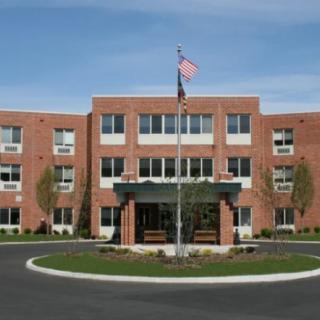
10301 Christie Rd NE, Cumberland, MD 21502
To contact a resident: (301) 724-1400
For more information about senior living options: (866) 208-4318
Overall Review of Devlin Manor Health Care Center
Pros
 The staff were helpful and patients seemed to be in good moods.
- Devlin Manor has been a huge help.
- The staff are great, attentive, and kind, taking very good care of residents and remembering their names and details.
- Therapy and care were good.
- The rehab department and nursing staff provided great care; the aides were compassionate.
- The staff went above and beyond in care, communication, and advocacy for residents.
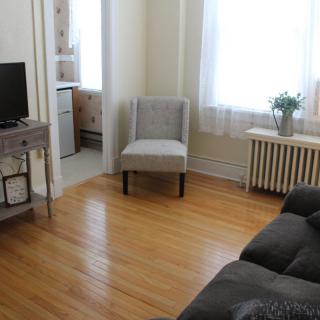
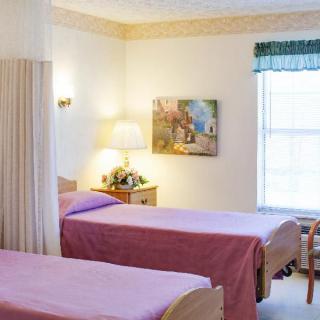
- The staff treated family members like their own and were supportive and caring; the rooms were extremely clean.
- The facility takes great care of its residents and staff.
- The staff provide activities like bingo and live music for residents' enjoyment.
Cons
 Only two or three staff members were polite; the rest were constantly rude and rough with patients.
- The facility is horrible and does not deserve even one star.
- The nursing home fails to answer call lights when GNAs are busy and the nurses ignore them.
- The manager is very unprofessional and staff display creepy behavior toward patients.
- The family was not informed about a resident's death and received the news rudely.
- The staff appeared to give up on a patient, leaving her in bed all day and night.
- The facility accepts patients without comprehensive medical reviews and uses them as boarding until new arrangements can be made.
- The facility would not be recommended to anyone.
Review
Devlin Manor Health Care Center in Cumberland, MD is best suited for seniors who need post-acute rehabilitation and ongoing nursing care and who value a warm, family-like staff culture. It works well for residents who respond to aides and nurses who remember names, engage in daily activities, and create a sense of community. Families that want to participate in care planning and attend on-site events often find the atmosphere supportive. This is not a place to seek flawless consistency across every shift, however; when reliability and rigorous, round-the-clock responsiveness are non-negotiables, alternatives should be explored.
Those who may want to consider other options include families prioritizing uniformly exceptional customer service and transparent, proactive administration. Several reviews flag instances of rude or disengaged conduct from some staff or management, and others describe delayed responses to patient needs or family communications. For residents with very high acuity or complex medical needs requiring constant, highly coordinated oversight, the variability in day-to-day responsiveness can be a decisive factor. In short, if seamless communication and unflagging attentiveness are essential, look beyond Devlin Manor.
On the plus side, the strongest advantages center on compassionate, stable caregiving and real-world rehab outcomes. Multiple accounts praise staff for remembering residents’ details, staying on top of care, and providing meaningful activities, bingo, live music, and family-accessible events. The rehab experiences cited include successful recoveries after strokes or major procedures, with dedicated nurses and aides delivering attentive support. Clean rooms and a genuine sense of family-like concern from certain teams among the staff also stand out as meaningful positives that can offset some gaps in other domains when families stay engaged and monitor progress closely.
Yet the negatives cannot be dismissed. Several reviews describe episodes of poor communication, with some families learning of serious events late or receiving curt, unsympathetic responses from leadership. Reports of lights not being answered promptly by aides or nurses on busy shifts paint a troubling picture of workflow gaps that can affect safety and comfort. There is also a recurrent theme about inconsistent staff behavior and management style, including perceptions of unprofessional conduct by a supervisor in at least one instance. For families new to the facility, these experiences emphasize the need for clear expectations, regular check-ins, and explicit escalation paths.
Practically, families evaluating Devlin Manor should probe the facility’s therapy schedules, caregiver ratios, and the admission/transition process. Ask how admissions are vetted for medical complexity, how ongoing medical reviews are conducted, and what protocols exist for timely family updates after significant events. Visit with both the rehab team and the front-line caregivers, and request a direct point of contact for daily concerns. If possible, review recent sample care plans and ask about how activity programming is customized to individual interests and rehabilitation goals. These steps help illuminate whether the positives, the caring staff, rehab successes, and homelike environment, will reliably outweigh the reported consistency and communication challenges.
Ultimately, Devlin Manor presents a clear trade-off. It is a viable choice for families seeking hands-on rehab attention, strong caregiver relationships, and an engaged, community-focused setting. Yet it requires a readiness to navigate uneven experiences with staff responsiveness and administration. For those with loved ones who can thrive on ongoing, proactive communication and who can advocate effectively, Devlin Manor can deliver meaningful rehabilitation and daily life quality. For others prioritizing uniform responsiveness and flawless, transparent operations, it pays to compare alternatives with more consistent service records before committing.
 Skilled Nursing Facility





 Understanding the Nuances of Palliative Care and Hospice: A Comprehensive Exploration
 Is In-Home Healthcare Tax Deductible? Your Comprehensive Guide
 Nurturing Well-Being Through Gardening: A Detailed Guide for Senior Enthusiasts