
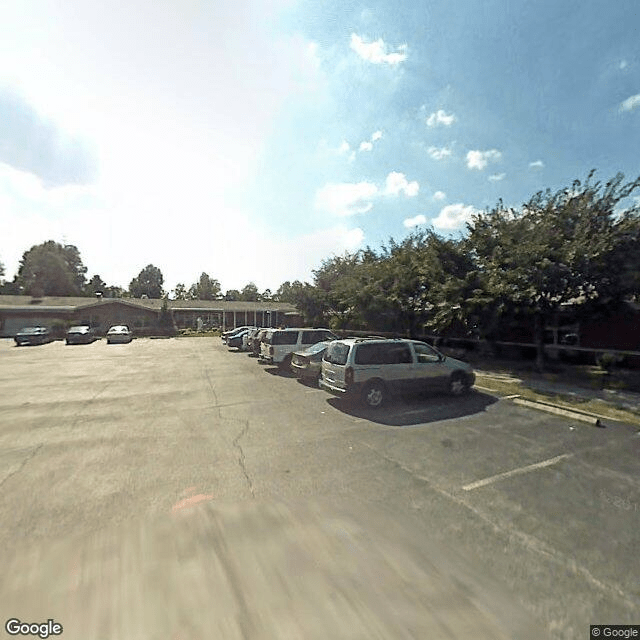
300 Berry Avenue, Versailles, KY 40383
For more information about senior living options: (866) 208-4318
Overall Review of Taylor Manor Nursing Home
Pros
 Taylor Manor is described as a wonderful facility with wonderful people, and its small size allows for better care.
- The facility is very clean and free of disturbing smells.
- The environment is peaceful and has a homey atmosphere.
- The staff are caring and compassionate, and residents are happy there.
- The grounds feature beautiful gardens where families can visit and spend time outdoors.
- Residents in semi-private rooms have ample space and privacy, with their own sides of the room.
Cons
 They can't get in to see family members; there is no rehabilitation program, and staying there is very costly.
- The staff treat patients very poorly.
- Visitors are not allowed inside due to COVID restrictions.
- They would recommend finding a facility with a better therapy program rather than Taylor Manor.
Review
Taylor Manor Nursing Home in Versailles, KY is best suited for families seeking a small, intimate, home-like environment where caregiving feels personal and consistent. The facility’s small footprint translates into attentive, neighborly service, with residents often able to maintain a sense of privacy even in semi-private rooms that feel more personal than larger complexes. The environment emphasizes togetherness, meals and activities are communal, but there is space within each resident’s area for personal belongings and moments of quiet. The setting includes pleasant gardens and outdoor options for visits, which fosters a calm, peaceful daily rhythm that many families value when choosing long-term care.
This community may not be the right fit for everyone, and certain realities push families to consider alternatives. For residents who require robust on-site rehabilitation or intensive therapy programs, Taylor Manor’s offerings are not aligned with that need. The pricing cited by some families also raises concerns for those operating on tight budgets or comparing value across options. Finally, families prioritizing frequent, unencumbered access to loved ones may want to compare facilities with more flexible visitation or clearer, ongoing care programming, as some reviewers noted mixed experiences with access and staff responsiveness.
The strongest positives here work in tandem to offset potential drawbacks for the right resident. A small, cohesive staff model tends to translate into visible warmth and reliability: caregivers who seem genuinely invested in each resident’s well‑being, a clean, odor‑free environment, and a atmosphere that feels like a cared-for home rather than a hospital wing. Residents can enjoy private space within semi-private rooms, which preserves personal routines and personal electronics use, while still benefiting from the social fabric of daily meals and group activities. The garden and outdoor spaces extend the home-like feel beyond four walls, enabling family visits in a calm, contained setting that many families find reassuring.
Despite the positives, several concrete drawbacks deserve careful weighting. The absence of a formal rehabilitation program is a meaningful limitation for residents who will need ongoing therapy to regain or maintain function. Cost is another reality that can overshadow otherwise favorable impressions, pressing families to scrutinize what is included in the rate and whether long-term affordability is realistic. Reports from a minority of reviewers raise red flags about how some patients are treated, or how receptive the staff are to concerns, underscoring the importance of a firsthand visit and candid conversations with the care team. Additionally, a few families described limited avenues for immediate family access, a factor that can be decisive for those who want close, daily connections with loved ones.
In practice, Taylor Manor serves best when the priority is a small, homelike ambiance with high-touch, compassionate care. For families prioritizing caregiving warmth, cleanliness, and a peaceful daily routine, the pros strongly support a positive outcome and can outweigh the absence of robust therapy options and the higher price tag. Conversely, those who need aggressive rehabilitation services on site, or who cannot tolerate higher costs, should look carefully at alternatives that offer stronger therapy pipelines and clearer, more flexible visitation or financial structures. A decisive approach involves visiting the facility, asking pointed questions about therapy availability, cost details, and caregiver training, and then weighing those concrete factors against the resident’s clinical needs and family expectations. In the right match, Taylor Manor stands out as a thoughtful, well-kept home that delivers personal attention in a way that larger centers often cannot.
 82 resident community capacity
 Skilled Nursing Facility
 Air-conditioning
 Beauty salon
 Cable or satellite TV
 Computer center
 Dining room
 Fitness room
 Fully furnished
 Gaming room
 Garden
 Housekeeping services
 Kitchenette
 Move-in coordination
 Outdoor space
 Private bathrooms
 Restaurant-style dining
 Small library
 Telephone
 Wellness center
 Wi-Fi/high-speed internet available
 Blue Grass (6 miles away)
 Community operated transportation
 12-16 hour nursing
 24-hour call system
 Activities of daily living assistance
 Assistance with bathing
 Assistance with dressing
 Assistance with transfers
 Diabetes diet
 Medication management
 Mental wellness program
 Special dietary restrictions
 Concierge services
 Planned day trips







 Financing Long-Term Nursing Home Care Through Social Security: A Thorough Exploration
 Essential Knowledge on Pneumonia in Older Adults
 Exploring Palliative Care in the Home: A Comprehensive Overview