














2013 Midwest Road, Oak Brook, IL 60521
For more information about senior living options: (866) 208-4318
Overall Review of Oak Brook Care
Pros
 The facility is very clean.
- The staff are friendly and helpful.
- It has onsite amenities, including a library, an outdoor terrace, and a family-accessible kitchen.
- Rehabilitation results are impressive, with residents improving mobility and speech.
- The rooms are comfortable and nicely decorated.
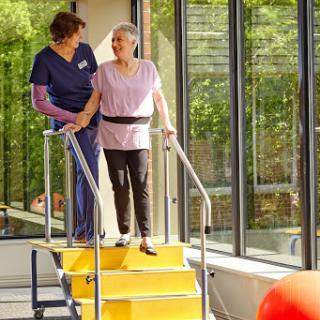
- The therapy departments (PT, OT, Speech) are exceptional.
- The food is consistently good and palatable.
- There are numerous activities for residents that change periodically.
Cons
 The decor is very tired.
- The skilled nursing area is not staffed well, and it can take about 40 minutes for a bell to be answered.
- Administration is not responsive to complaints.
- There is no single staff member for progress updates; staff rotate frequently, leaving residents with different aides and nurses.
- The food is not flavorful and has a mass-produced quality.
- The rooms are depressing with extremely poor views.
- The majority of the nurses just want to pass out pills and do nothing else; aides do not help each other and callers wait a long time for assistance.
- Some staff are lazy or neglectful, leaving residents without help and even in wet diapers.
Review
Oak Brook Care is best suited for seniors who are oriented toward rehabilitation and transition, with families who value a clean, well-kept environment, accessible amenities, and an active, program-filled setting. This community can be a solid choice for those entering short-term rehab with the goal of building strength and mobility, and for families seeking a facility that offers onsite therapy, a library, outdoor space, and a family-facing kitchen. When the plan centers on moving from acute care into longer-term care with an emphasis on recovery, Oak Brook Care can deliver meaningful gains and a pleasant surroundings that support daily living.
Yet, potential residents should understand who may want alternatives. The most consistent concerns across reviews target longevity and predictability of care. If long-term stays require a single, accountable point of contact and highly reliable, nonstop attention from a stable staff, Oak Brook Care may fall short. Understaffing, frequent staff turnover, and uneven responsiveness from administration recur in feedback, with several accounts describing delays in call lights being answered and inconsistent care updates. Families seeking a tightly coordinated, transparent long-term caregiving relationship will want to compare other options where a dedicated case manager or consistent team is standard.
On the upside, the facility’s strengths align with practical rehab goals. Cleanliness stands out in multiple accounts, and the onsite amenities, well-maintained grounds, an inviting activity calendar, and spaces that families can access, help residents stay engaged. Therapy plays a pivotal role here: when physical therapy, occupational therapy, and speech services are delivered by motivated professionals, recovery pathways can be rapid and noticeable, producing tangible movements and improved communication. The rehab emphasis is reinforced by a shopping list of capable specialists who visit rather than an overextended, overburdened in-house team. For families prioritizing visible progress in mobility and function, this is the strongest argument in Oak Brook Care’s favor.
The principal drawbacks temper the optimism. A recurring theme centers on staffing instability and administrative friction that undermine consistency. Residents may encounter rotating aides and nurses, which makes it harder to establish a trusted care routine or receive continuous progress updates. Discharge planning and discharge communication appear uneven, and in some reviews, claims of disorganization and misalignment between departments suggest that information does not flow as smoothly as it should. While the therapy departments often shine, the broader caregiving environment can feel ad hoc, especially for those requiring steady, stable long-term supervision.
Despite the drawbacks, the pros can offset the cons for families whose priority is robust rehabilitation in a clean, welcoming setting. The strongest takeaway is that rehab outcomes, especially when the therapy team is engaged and consistent, can translate into real functional gains that shorten hospital-to-home timelines. The environment itself supports recovery, with pleasant rooms and active programming that helps residents stay motivated. The caveat is that those gains rely on securing reliable care coordination during the stay; without that, the benefits risk being blunted by communication gaps and uneven caregiving.
For families weighing decisions, a practical approach is essential. If rehab, functional improvement, and a pleasant, activity-rich setting top the list, Oak Brook Care warrants serious consideration, paired with a rigorous, front-loaded assessment of staffing stability and a clear plan for ongoing communication. Prospective buyers should request a dedicated point person for care updates, inquire about current staff ratios, and verify how discharge planning is managed. It is wise to compare with nearby options, such as Oakbrook Healthcare Centre, that may offer different strengths in administration or long-term care delivery. In the end, choose Oak Brook Care if rehab momentum and a tidy, engaged environment align with the resident’s goals and a family’s capacity to navigate potential administrative bumps.
 156 resident community capacity
 Skilled Nursing Facility
 Air-conditioning
 Beauty salon
 Cable or satellite TV
 Computer center
 Dining room
 Fitness room
 Fully furnished
 Gaming room
 Garden
 Housekeeping services
 Kitchenette
 Move-in coordination
 Outdoor space
 Private bathrooms
 Restaurant-style dining
 Small library
 Telephone
 Wellness center
 Wi-Fi/high-speed internet available
 Chicago O'Hare International (10 miles away)
 Community operated transportation
 12-16 hour nursing
 24-hour call system
 Activities of daily living assistance
 Assistance with bathing
 Assistance with dressing
 Assistance with transfers
 Diabetes diet
 Medication management
 Mental wellness program
 Special dietary restrictions
 Concierge services
 Planned day trips








 Skilled Nursing Facilities vs. Nursing Homes: Making Sense of the Differences
 A Detailed Examination of Nursing Home Costs Across the U.S.
 Exploring Nonmedical Home Care: Understanding Services, Costs, and Financial Approaches