Orchards Of Cascadia offers a range of room options that reflect its premium services and amenities, positioned above the average costs found in both Canyon County and across Idaho. For a semi-private room, residents can expect to pay $4,620 per month, which is significantly higher than the regional average of $2,997 in Canyon County and $3,026 throughout Idaho. Similarly, private rooms at Orchards Of Cascadia are priced at $5,130 monthly, surpassing the local averages of $4,217 in Canyon County and $3,906 statewide. While these costs indicate a higher investment for residents at Orchards Of Cascadia, they often correlate with enhanced care quality and an enriched living environment that many families find worth the additional expense.
Floor plans
Orchards Of Cascadia
Canyon County
Idaho
Semi-Private
$4,620
$2,997
$3,026
Private
$5,130
$4,217
$3,906
Skilled Nursing Facilities with a similar price nearby
Residents and families frequently describe attentive, respectful care from nurses and CNAs.
Many reviews emphasize kindness, respect, and dignity, with several people naming specific nurses or CNAs who helped them feel supported. A number of reviewers also mention that staff were helpful day to day, including with mobility and daily routines, and that the facility felt clean. At the same time, a smaller set of reviews raises serious concerns about how staff responded when help was needed.
differentiator14 reviews mention this
Therapy and rehab stand out
Rehabilitation therapy is repeatedly described as effective and focused on recovery goals.
Several residents and family members describe therapy teams that helped improve mobility after hospital or home decline, and they credit therapists with measurable progress. Reviews also call out speech, occupational, and physical therapy as part of the rehab experience, with staff described as patient and consistent. A few negative reviews mention delays getting started with therapy or not encouraging therapy, but the more common theme is that rehab support helped people move forward.
caveat12 reviews mention this
Food quality is a mixed point
Dining quality comes up often, ranging from enjoyable meals to complaints about taste and portions.
Some reviewers say meals were good, enjoyable, or that their loved one seemed satisfied with food and diet control. Others describe the food as not very good or lacking flavor, and a few complaints focus on portion size or difficulty getting help at mealtimes. Even among positive experiences, communication about meals and assistance comes up, suggesting dining is an area where expectations can vary.
caveat10 reviews mention this
Staffing and response times vary
Some reviews report delays, short staffing, or care not arriving when requested.
While many comments are positive about the care team, several reviews describe problems with responsiveness, including long waits for assistance and missed or inconsistent care. A few reviews go further, alleging neglect-related issues such as not providing help with hygiene or inadequate attention to medical needs. These concerns also show up alongside mentions of short staffing, which may help explain why experiences aren’t uniform across reviewers.
caveat2 reviews mention this
Pricing is contested in reviews
Pricing feedback is mixed, with some reviewers saying it’s better and others calling it misleading.
One review contrasts the community favorably with a prior place by noting better prices. Another reviewer disputes the advertised pricing and ties costs to the level of care they experienced. Overall, pricing comes up less often than daily-care themes, but the two mentions pull in opposite directions.
common2 reviews mention this
Grounds include a park-like feel
Reviews highlight an outdoor, park-like atmosphere around the nursing home.
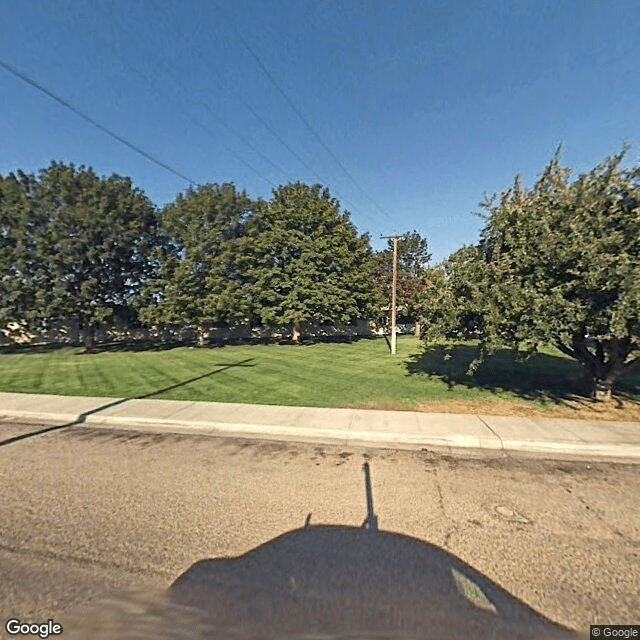
A couple of reviewers describe the community’s setting positively, including references to park-like surroundings. That aligns with the nearby presence of Lions Park, which is close by. Not every review discusses the grounds in detail, but when it is mentioned, the outside space stands out as a steady positive.
How we summarize
Counts show how many written reviews mention each theme; a review can touch several themes, and only frequently mentioned themes are displayed.
Features
Housing
100 resident community capacity
Types of Care
Skilled Nursing Facility
Amenities
Activities off-site
Activities on-site
Air-conditioning
Beautician on-site
Beauty salon
Cable or satellite TV
Computer center
Dining room
Fitness room
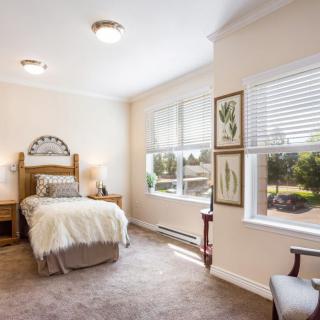
Fully furnished
Gaming room
Garden
Housekeeping services
Indoor common areas
Kitchenette
Move-in coordination
Outdoor common areas
Outdoor space
Private
Private bathrooms
Restaurant-style dining
Small library
Telephone
Wellness center
Wi-Fi/high-speed internet available
Transportation
Boise Air Terminal (18 miles away)
Community operated transportation
Transportation arrangement
Transportation arrangement (non-medical)
Transportation to doctors appointments
Care Services
12-16 hour nursing
24-hour call system
24-hour supervision
Activities of daily living assistance
Assistance with bathing
Assistance with dressing
Assistance with transfers
Diabetes diet
Meal preparation and service
Medication management
Mental wellness program
Special dietary restrictions
Dining
Diabetes diet
Meals provided
Restaurant style dining
Special dietary restrictions
Activities
Activities off-site
Activities on-site
Community-sponsored activities
Concierge services
Fitness programs
Planned day trips
Resident-run activities
Scheduled daily activities
Nearby Places of Interest
This area of Nampa, Idaho offers a variety of amenities and services that may be beneficial for senior living. With multiple parks nearby, such as Lions Park and The Park, there are opportunities for outdoor recreation and relaxation. Additionally, there is easy access to several restaurants, cafes, pharmacies, hospitals, physicians offices, and places of worship within a few miles radius. This provides convenience for daily needs and healthcare services. The presence of diverse religious institutions also offers spiritual support and community connections. Overall, this part of Nampa appears to be a well-equipped and potentially suitable location for seniors looking for a comfortable and convenient living environment.
Parks
Lions Park (0.2 miles)
The Park (6.4 miles)
Restaurants
McDonald's (0.6 miles)
Taco Bell (1.1 miles)
Applebee's (1.2 miles)
Domino's Pizza (1.4 miles)
TGI Friday's (1.5 miles)
The Habit Burger Grill (1.5 miles)
Stella's Ice Cream (1.5 miles)
Hospitals
Davita Healthcare (0.9 miles)
St Luke's Center for Breast Imaging (2 miles)
Cafes
Starbucks (1.1 miles)
Espressoly Yours (1.3 miles)
Dutch Bros Coffee (1.6 miles)
Flying M Coffee Garage (1.6 miles)
Dutch Bros Coffee (1.9 miles)
Starbucks (2.4 miles)
Moxie Java (3 miles)
Pharmacies
Albertsons Pharmacy (1.4 miles)
Walgreens (1.5 miles)
CVS Pharmacy (1.5 miles)
Walmart Pharmacy (2 miles)
Caremark Rx (2.4 miles)
Good Neighbor Pharmacy (2.5 miles)
Walgreens (2.9 miles)
Physicians
Saint Alphonsus Medical Group Family Medicine (1.4 miles)
Chatterbox Pediatric Therapy Center (1.4 miles)
St Luke's Clinic Family Medicine: Nampa, W St Luke's Dr (2 miles)
St Luke's Clinic Occupational Health (2 miles)
St Luke's Clinic Obstetrics and Gynecology (2.1 miles)
Primary Health Medical Group - South Nampa (2.2 miles)
Robert Buxton, DO (2.4 miles)
Places of Worship
College Church of the Nazarene (2 miles)
Church of Jesus Christ of Latter Day Saints (2 miles)
Orchards Of Cascadia offers a range of room options that reflect its premium services and amenities, positioned above the average costs found in both Canyon County and across Idaho. For a semi-private room, residents can expect to pay $4,620 per month, which is significantly higher than the regional average of $2,997 in Canyon County and $3,026 throughout Idaho. Similarly, private rooms at Orchards Of Cascadia are priced at $5,130 monthly, surpassing the local averages of $4,217 in Canyon County and $3,906 statewide. While these costs indicate a higher investment for residents at Orchards Of Cascadia, they often correlate with enhanced care quality and an enriched living environment that many families find worth the additional expense.
Hospice care focuses on providing comfort and support for individuals nearing the end of life, with Medicare Part A covering services like nursing care and counseling for patients with a terminal illness and a life expectancy of six months or less. While most hospice services are low-cost for eligible patients, families should be aware that certain expenses, such as room and board, may not be covered.
Caregiver burnout is a common issue resulting from the intense physical, emotional, and mental demands of caregiving, leading to symptoms like fatigue and social withdrawal. To prevent burnout, caregivers should recognize early warning signs and implement self-care strategies, seek support, and prioritize their own well-being alongside that of those they care for.
Caregiver exhaustion, or burnout, stems from the relentless demands of caregiving, leading to emotional and physical depletion characterized by stress, frustration, and neglect of personal needs. Addressing this burden is essential to prevent long-term consequences, with early recognition and support being crucial for caregivers to maintain balance and implement self-care.
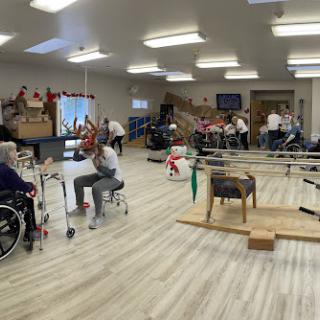
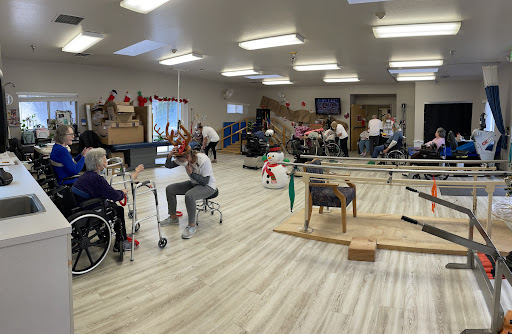
Exercise Equipment, Healthcare, Rehabilitation, Physical Therapy, and Therapy Room
Get PricingAsk A QuestionSchedule A TourContact Senior Advisor
By clicking submit, you agree to our Partner's Terms of Use. You
also consent to receive calls and texts, which may be autodialed, from our Partner. Your consent is not a condition to
using our Partner's service. Please visit our Partner's Privacy Policy for information about their privacy practices.



 100 resident community capacity
 Skilled Nursing Facility
 Activities off-site
 Air-conditioning
 Beautician on-site
 Cable or satellite TV
 Computer center
 Dining room
 Fitness room
 Fully furnished
 Gaming room
 Garden
 Housekeeping services
 Indoor common areas
 Kitchenette
 Move-in coordination
 Outdoor common areas
 Private
 Private bathrooms
 Restaurant-style dining
 Small library
 Telephone
 Wellness center
 Wi-Fi/high-speed internet available
 Boise Air Terminal (18 miles away)
 Community operated transportation
 12-16 hour nursing
 24-hour call system
 Assistance with bathing
 Assistance with dressing
 Assistance with transfers
 Diabetes diet
 Medication management
 Mental wellness program
 Special dietary restrictions
 Concierge services
 Planned day trips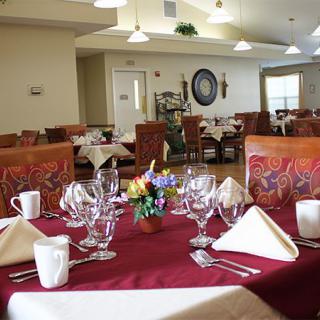
 Small, friendly community with personalized care and engaging activities.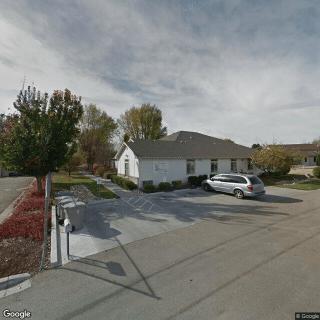


 Comprehensive Guide to Medicare Coverage for Hospice Care
 Caring for Those Who Care: Recognizing, Understanding, and Overcoming Caregiver Burnout
 Caregiver Exhaustion: Recognizing the Signs and Restoring Your Well-Being