For more information about senior living options: (866) 208-4318
3.8 from 106 reviews
5 stars
65
4 stars
9
3 stars
4
2 stars
0
1 stars
28
Jacksonville Nursing And Rehab Center Costs & Pricing
Jacksonville Nursing and Rehab Center offers competitive pricing for its accommodations compared to the broader market in Duval County and across Florida. For a studio room, residents can expect rates ranging from $2,395 to $5,295 per month, which is notably lower than the county average of $3,660 and the state average of $3,823. This range provides flexibility depending on individual needs and preferences. Meanwhile, the one-bedroom option is priced at $3,695 per month, which aligns closely with Duval County's average of $3,639 but remains slightly below the statewide figure of $3,864. Overall, Jacksonville Nursing and Rehab Center presents a compelling choice for those seeking quality care in a cost-effective environment.
Floor plans
Jacksonville Nursing And Rehab Center
Duval County
Florida
Studio
$2,395 to $5,295
$3,660
$3,823
1 Bedroom
$3,695
$3,639
$3,864
Skilled Nursing Facilities with a similar price nearby
Overall Review of Jacksonville Nursing And Rehab Center
differentiator12 reviews mention this
Dining feels restaurant-style
Dining is repeatedly described as restaurant-style, with meals brought to residents.
Several reviews describe dining that feels more like going out to eat, with staff taking resident orders and serving them. Families also mention healthier choices, including low inflammatory or diabetes-focused options, and some point to fresh salads and fruit. A few other reviews criticize food as needing work or being disappointing, with one resident specifically calling out diabetic food quality.
common20 reviews mention this
Staff is described as caring
Residents and families often describe the staff as kind, helpful, and attentive.
Across many reviews, families highlight friendly, cheerful staff and say concerns are addressed with genuine care. Multiple mentions also describe staff members going above and beyond during rehab and day-to-day support. There are also complaints about being ignored or slow to respond in some situations, which contrasts with the more common reports of responsiveness.
common10 reviews mention this
Rehab therapy supports recovery
Rehab therapy is a frequent focus, with many reviews describing meaningful progress.
Many reviews focus on physical, occupational, and speech therapy and describe getting back toward walking, eating, talking, or daily routines. Families of short-term rehab stays often credit the therapy team for recovery and preparation for returning home. A smaller number of reviews raise concerns about inconsistent help or therapy not being provided as expected.
common5 reviews mention this
Activities help residents stay engaged
Reviews commonly mention organized activities that keep residents engaged.
Residents and visitors describe planned activities and social events, including ice cream socials and karaoke. Several reviews add that staff help residents participate and that residents seem happy during these times. A few reviews do not focus on activities or report issues that would affect day-to-day experience, but engagement is a recurring positive theme.
caveat6 reviews mention this
Some describe serious cleanliness problems
A portion of reviews report unpleasant odors and pest or cleanliness issues.
While many reviews praise cleanliness, several mention roaches, strong odors, and dirty conditions such as bedding not being changed or feet needing showers. Other negative reviews describe rooms smelling of urine or overall filth, alongside concerns about neglected care in those same accounts. Because these issues appear in multiple reviews, cleanliness is a meaningful mixed point for prospective residents.
How we summarize
Counts show how many written reviews mention each theme; a review can touch several themes, and only frequently mentioned themes are displayed.
Features
Housing
163 resident community capacity
Types of Care
Skilled Nursing Facility
Amenities
Air-conditioning
Beauty salon
Cable or satellite TV
Computer center
Dining room
Fitness room
Fully furnished
Gaming room
Garden
Housekeeping services
Kitchenette
Move-in coordination
Outdoor space
Private bathrooms
Restaurant-style dining
Small library
Telephone
Wellness center
Wi-Fi/high-speed internet available
Transportation
Jacksonville International (4 miles away)
Community operated transportation
Transportation arrangement
Transportation arrangement (non-medical)
Transportation to doctors appointments
Care Services
12-16 hour nursing
24-hour call system
24-hour supervision
Activities of daily living assistance
Assistance with bathing
Assistance with dressing
Assistance with transfers
Diabetes diet
Meal preparation and service
Medication management
Mental wellness program
Special dietary restrictions
Dining
Diabetes diet
Special dietary restrictions
Activities
Community-sponsored activities
Concierge services
Fitness programs
Planned day trips
Resident-run activities
Scheduled daily activities
Videos
Nearby Places of Interest
Physicians
Baptist Primary Care (0.4 miles)
Baptist Primary Care (1.7 miles)
Family Care Partners (2.9 miles)
Coastal Spine and Pain (4 miles)
Oceanway Medical Center (4.5 miles)
Cardinal Health (5.1 miles)
Jax Vision Care (8.2 miles)
Restaurants
Waffle House (1 miles)
My Season Chicken and Ribs (1 miles)
Larry's Giant Subs (1 miles)
Wendy's (1.1 miles)
Wendy's (2.6 miles)
Chili's Too (4.1 miles)
Zaxby's (4.7 miles)
Pharmacies
Walgreens (1.1 miles)
Duval Pharmacy (1.7 miles)
Walgreens (3.3 miles)
Walgreens (3.3 miles)
Walgreens (4.1 miles)
Winn-Dixie (5.2 miles)
Walgreens (5.7 miles)
Places of Worship
Faith Baptist Church (1.2 miles)
St Patricks Catholic Church (6.4 miles)
Allen Chapel Ame Church (8 miles)
Riverside United Church of Christ (8.7 miles)
West Jacksonville Baptist Church (9.2 miles)
Church of Jesus Christ of Latter Day Saints (9.8 miles)
Transportation
Concourse C (4 miles)
Jacksonville International Airport (JAX) (4.1 miles)
Jacksonville Nursing and Rehab Center offers competitive pricing for its accommodations compared to the broader market in Duval County and across Florida. For a studio room, residents can expect rates ranging from $2,395 to $5,295 per month, which is notably lower than the county average of $3,660 and the state average of $3,823. This range provides flexibility depending on individual needs and preferences. Meanwhile, the one-bedroom option is priced at $3,695 per month, which aligns closely with Duval County's average of $3,639 but remains slightly below the statewide figure of $3,864. Overall, Jacksonville Nursing and Rehab Center presents a compelling choice for those seeking quality care in a cost-effective environment.
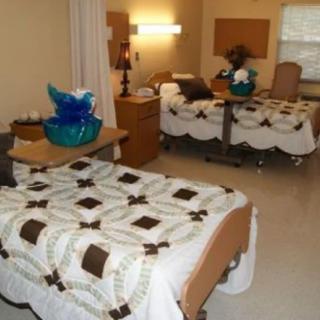
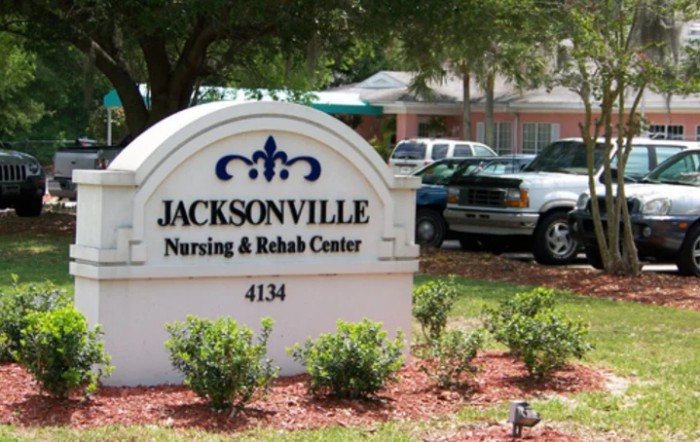
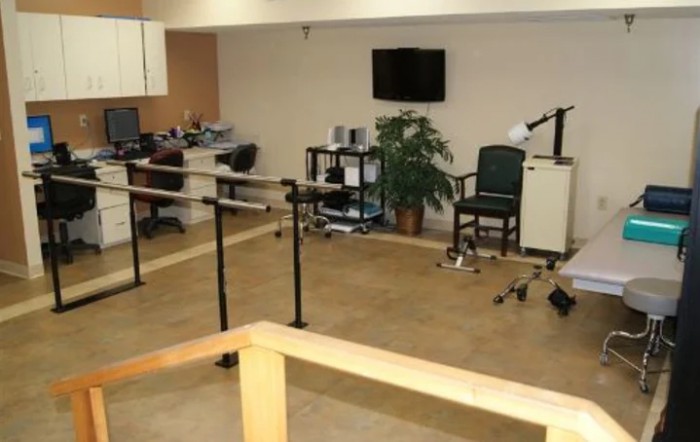
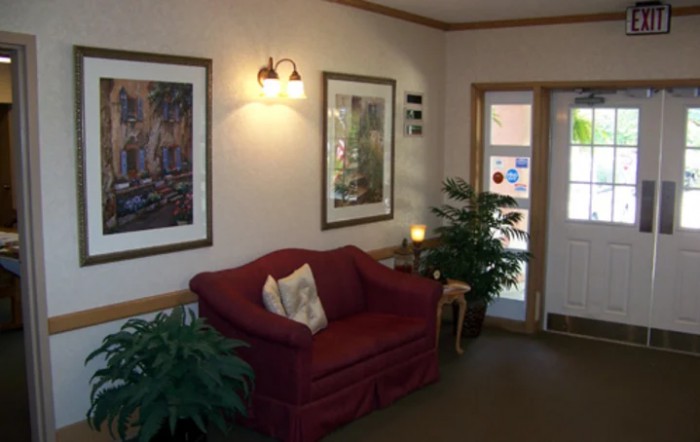
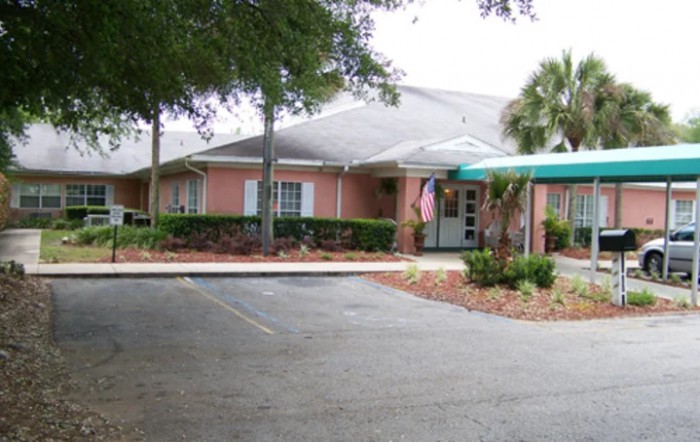
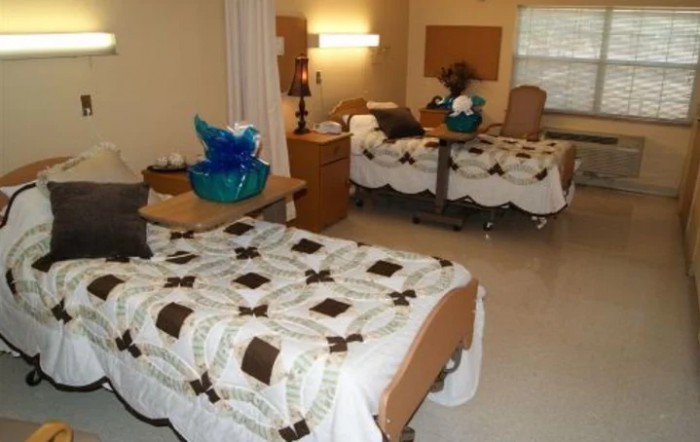
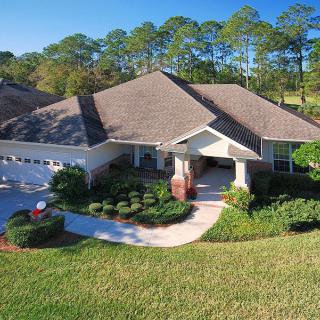
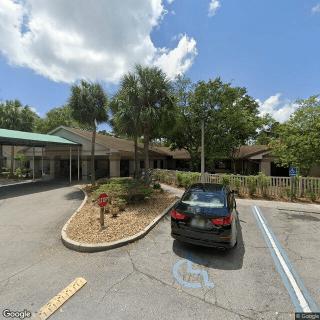
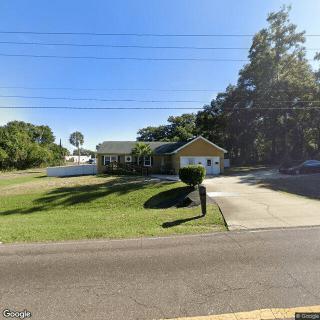
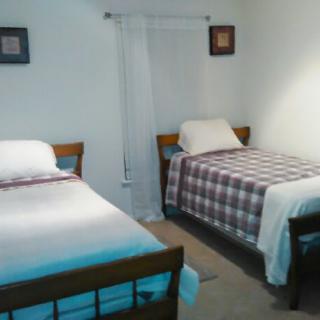
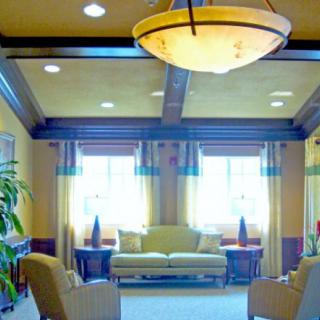
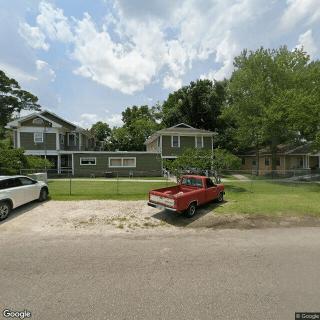
Jacksonville Nursing And Rehab Center on seniors.fyi includes 5 photos including images showing landscaping, interior decor, building, exterior, palm trees, awning, bedroom, nursing home, and more.
Nearby Communities
Lucas Caring Hands
Jacksonville, FL
4.8 from 4 reviews
$3,500 to $3,800 / month
Clean, well-maintained environment with attentive staff and on-site activities.
Laurel Oaks - ALF
Jacksonville, FL
3.7 from 34 reviews
Small, personalized ALF with memory care and comprehensive services (24-hour supervision, medication management, meals, daily activities).
Webly's AFH
Jacksonville, FL
$2,350 to $2,500 / month
Competitive pricing with private/semi-private rooms and on-site services (beautician, devotional) plus private bathrooms and nearby amenities.
Trout River Assisted Living
Jacksonville, FL
Intimate, personalized care with diabetes support and nearby health resources (pharmacies, physicians, dining).
A Loving Adult Family Care Home
Jacksonville, FL
$1,500 to $2,000 / month
Competitive pricing for semi-private and private rooms compared to county and state averages.
Lakeside Nursing And Rehabilitation Center
Jacksonville, FL
4.6 from 122 reviews
Attentive staff (CNA care) and a clean facility with satisfactory dining.
Better Days Senior Living
Jacksonville, FL
4.7 from 29 reviews
$3,500 to $4,500 / month
Beautiful, clean facility with caring staff and clear family communication.
Plymouth Home For Adults
Jacksonville, FL
2.4 from 7 reviews
Extensive amenities and active social programs with 24-hour supervision.
Riverside Presbyterian House
Jacksonville, FL
4.5 from 88 reviews
Central Riverside location with on-site amenities and a responsive staff supporting independent living.
The guide outlines the eligibility criteria for home health care services, emphasizing clinical requirements, insurance options, and application processes. It distinguishes between Medicare's strict and Medicaid's flexible qualifications while addressing challenges families may face in securing necessary care at home.
Elder abuse affects many older adults worldwide and includes physical, emotional, neglectful, and financial harm, with about one in six individuals over 60 experiencing abuse annually. Prevention and intervention strategies focus on awareness, support for caregivers, and mandatory reporting, while recovery necessitates comprehensive support for both physical and emotional needs.
The guide details ten essential responsibilities of senior caregivers, including personal care, mobility assistance, medication management, and emotional support, while emphasizing the importance of safety, nutrition, and maintaining a safe living environment to enhance seniors' quality of life and independence.
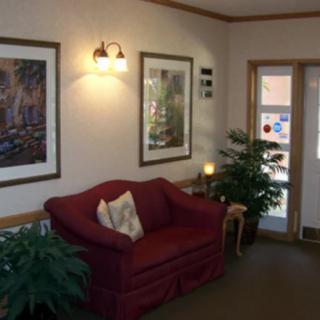
Living Room, Artwork, Indoor Plants, and Interior Decor
Landscaping
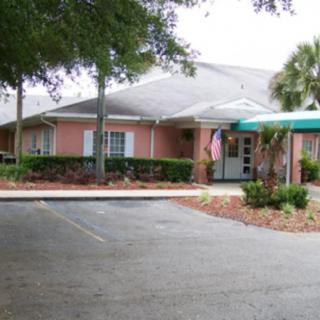
Building, Exterior, Palm Trees, and Awning
Exercise Equipment and Physical Therapy
Nursing Home
Get PricingAsk A QuestionSchedule A TourContact Senior Advisor
By clicking submit, you agree to our Partner's Terms of Use. You
also consent to receive calls and texts, which may be autodialed, from our Partner. Your consent is not a condition to
using our Partner's service. Please visit our Partner's Privacy Policy for information about their privacy practices.

 163 resident community capacity
 Skilled Nursing Facility
 Air-conditioning
 Beauty salon
 Cable or satellite TV
 Computer center
 Dining room
 Fitness room
 Fully furnished
 Gaming room
 Garden
 Housekeeping services
 Kitchenette
 Move-in coordination
 Outdoor space
 Private bathrooms
 Restaurant-style dining
 Small library
 Telephone
 Wellness center
 Wi-Fi/high-speed internet available
 Jacksonville International (4 miles away)
 Community operated transportation
 12-16 hour nursing
 24-hour call system
 Activities of daily living assistance
 Assistance with bathing
 Assistance with dressing
 Assistance with transfers
 Diabetes diet
 Medication management
 Mental wellness program
 Special dietary restrictions
 Concierge services
 Planned day trips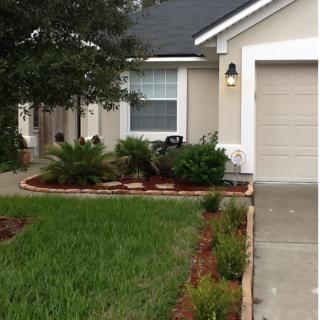
 Clean, well-maintained environment with attentive staff and on-site activities.

 Comprehensive Guide to Qualifying for Home Health Care Services
 Powerful Realities of Elder Abuse and the Most Effective Ways to Report It
 Ten Vital Duties of a Senior Caregiver: A Comprehensive Guide