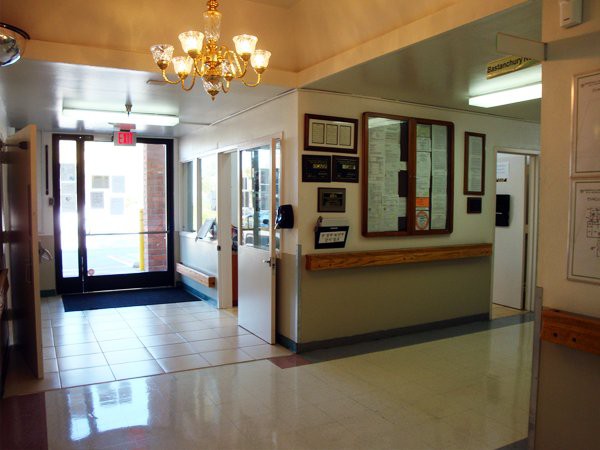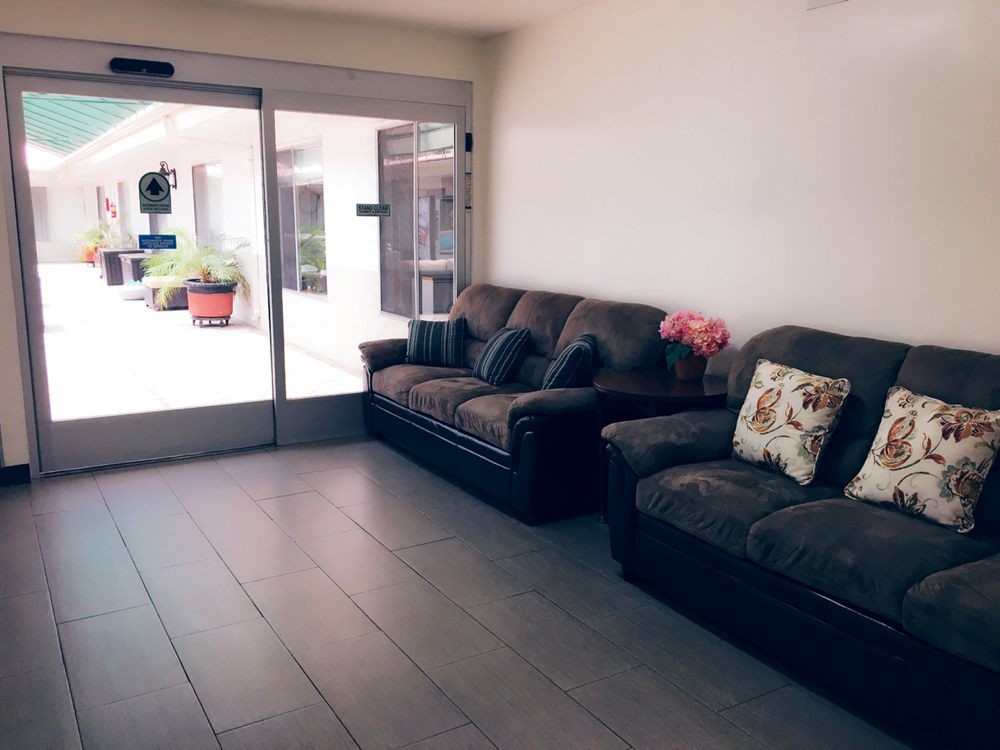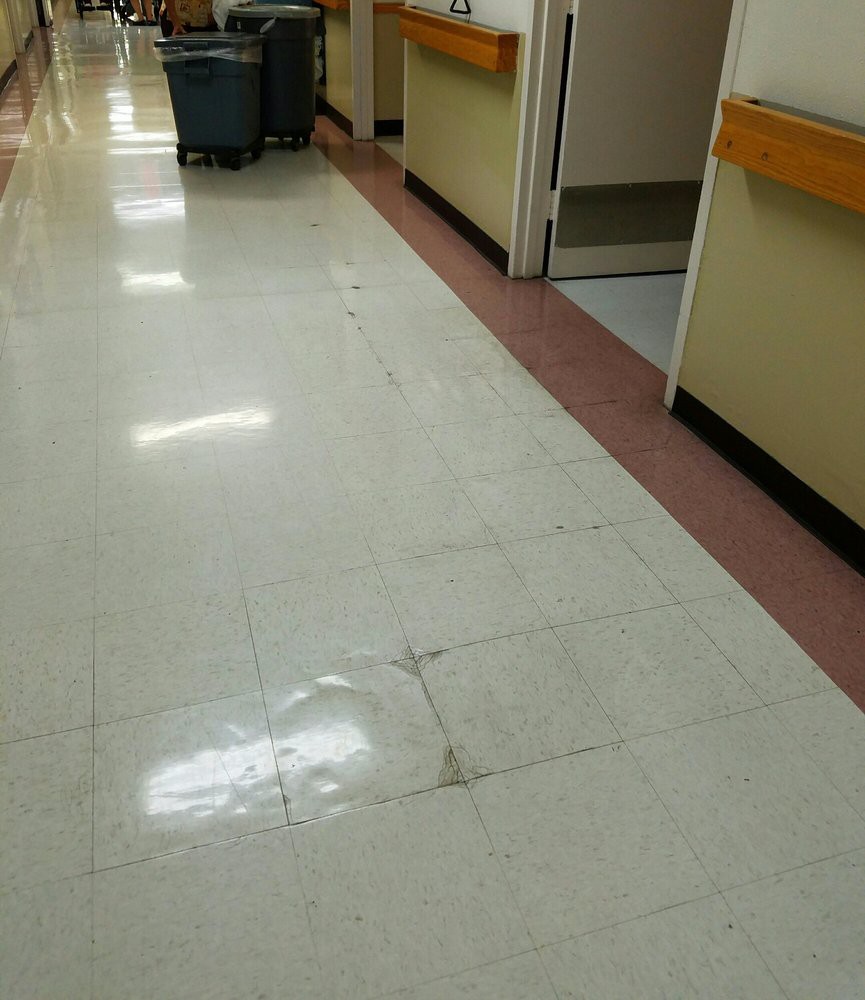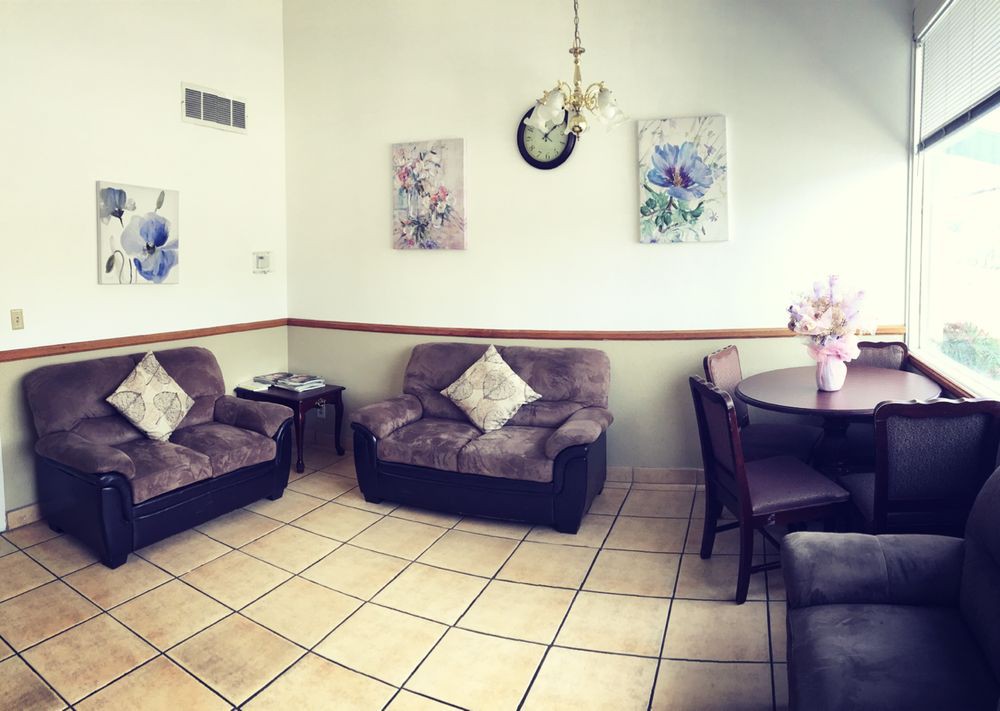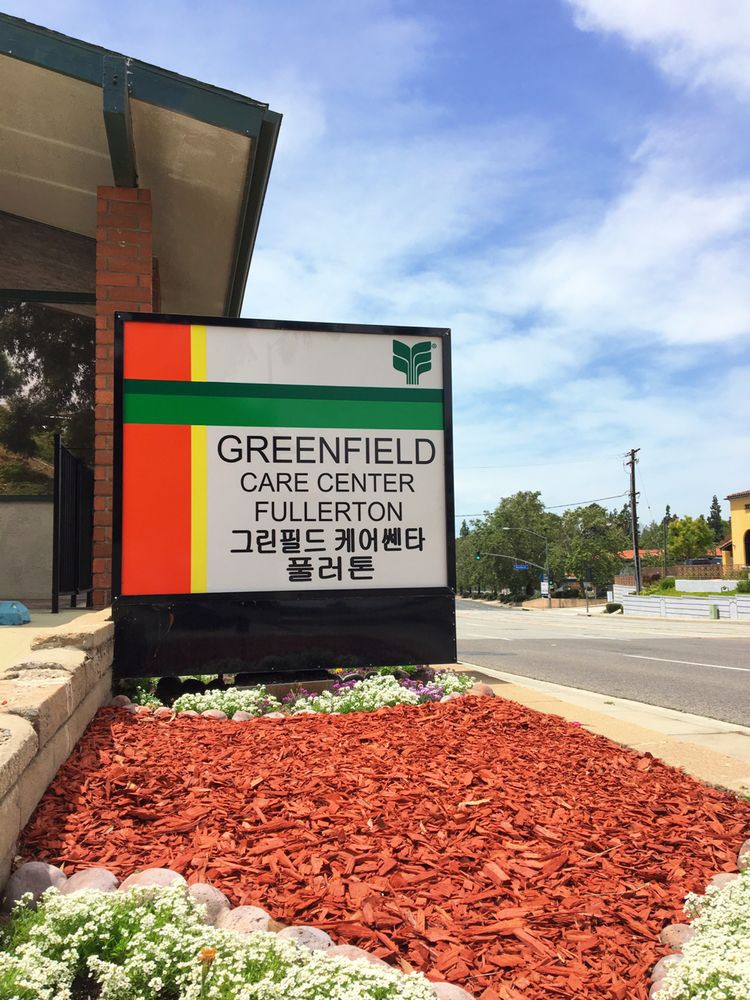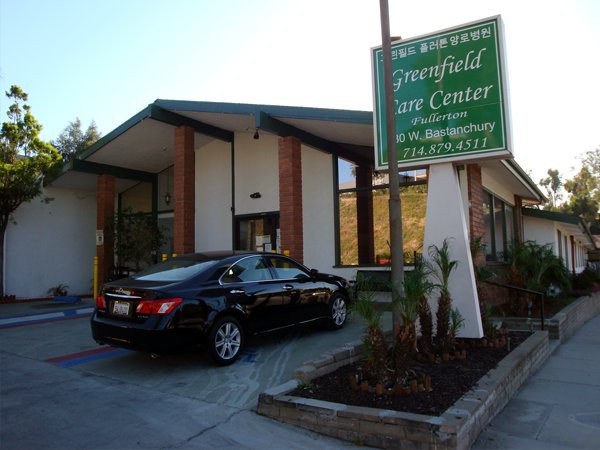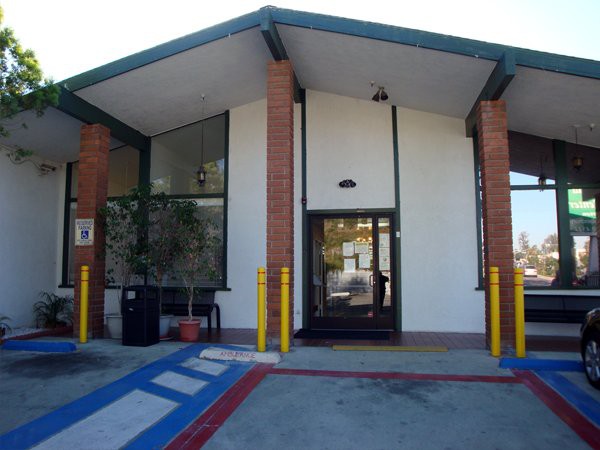
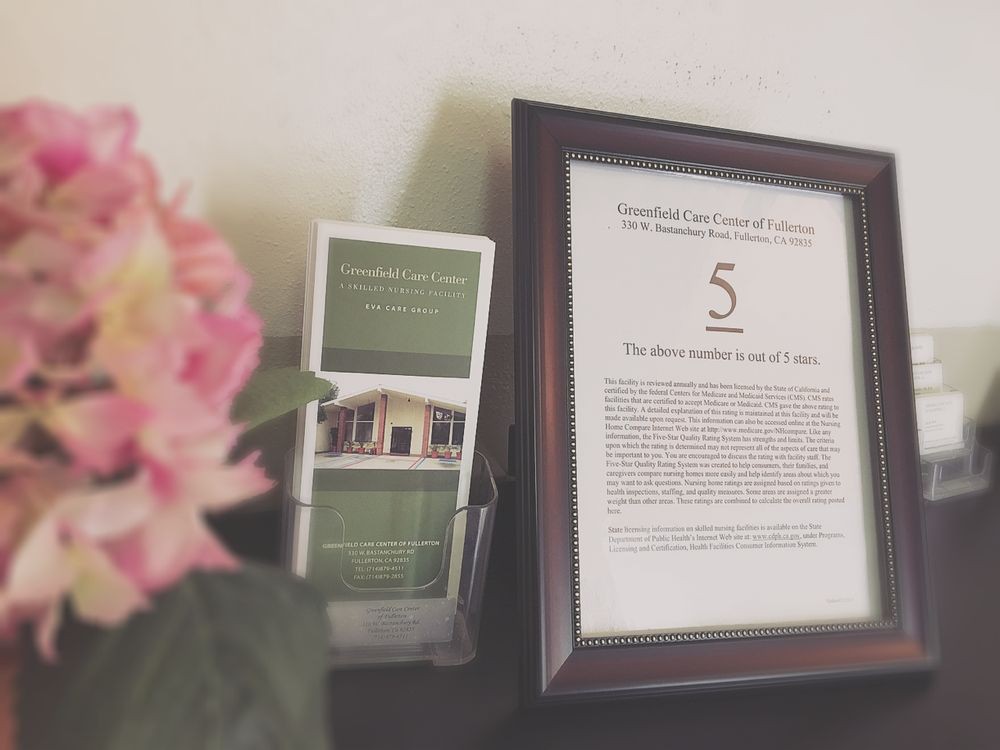

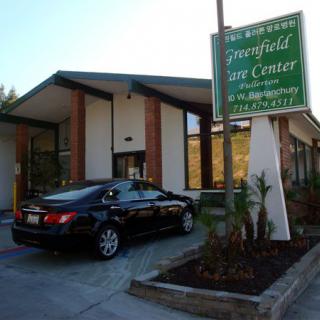

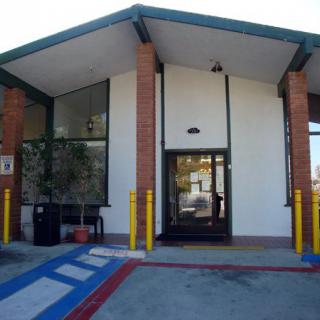
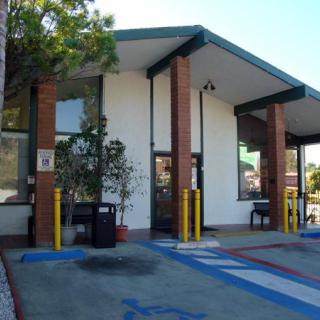
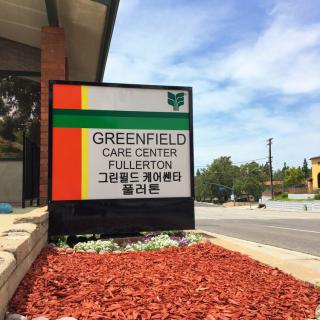
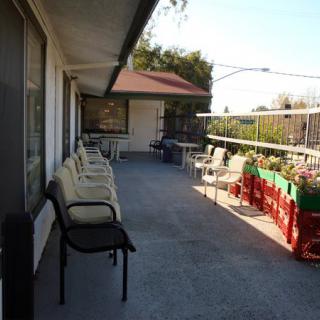
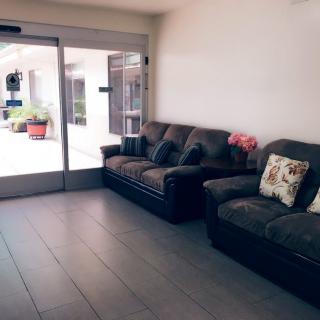
330 West Bastanchury Road, Fullerton, CA 92835
For more information about senior living options: (866) 208-4318
Overall Review of Greenfield Care Center Of Fullerton
Pros
 Sylvia's kind assistance helped the resident move in easily.
- The nurses and staff showed overflowing love and care every day.
- Staff visited frequently and cared for the resident as if they were their own parents.
- The director was deeply concerned with the resident's well-being and arranged rehabilitation.
- The staff were consistently kind and patient, helping bring the father home healthy and happy.
- The care made the last years of the father dignified and comfortable.
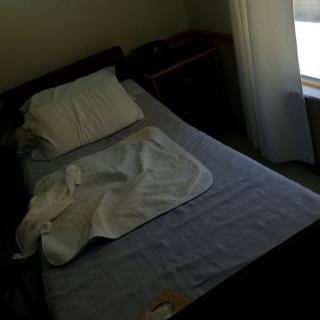
- The care prevented bed sores and diaper sores due to excellent care.
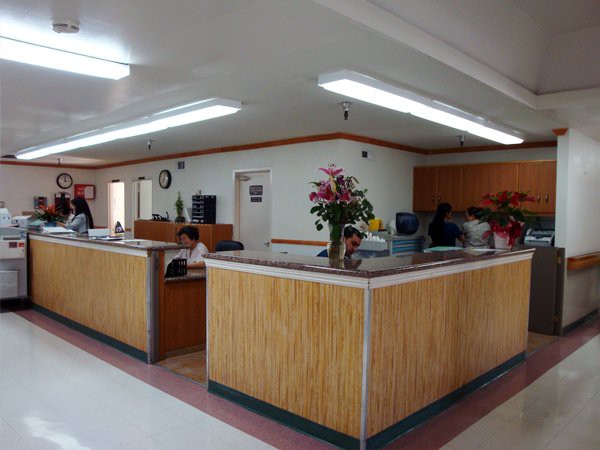
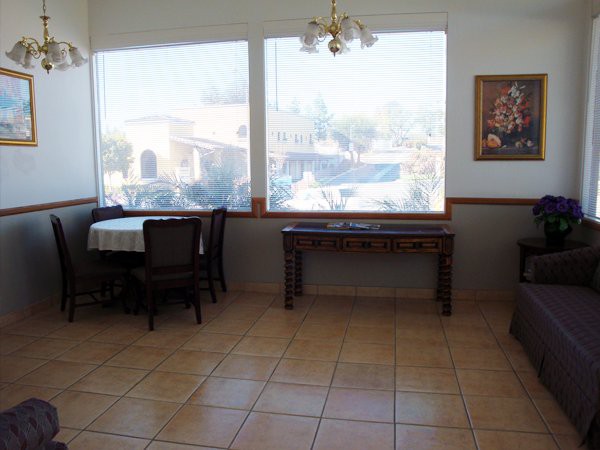
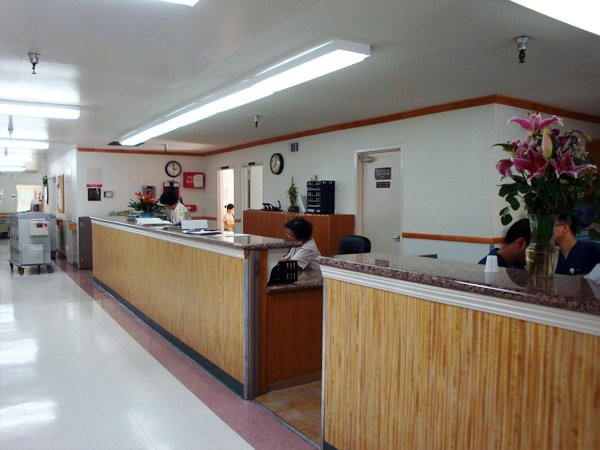
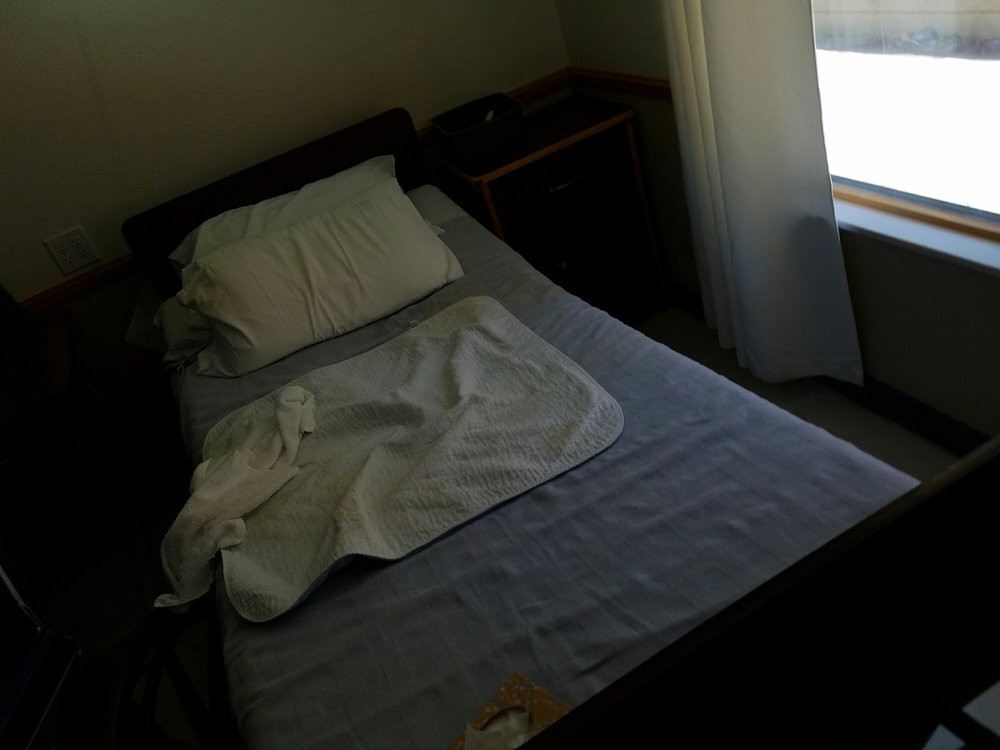
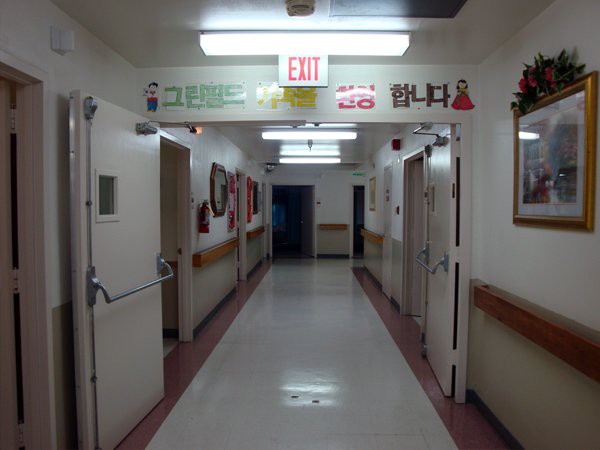
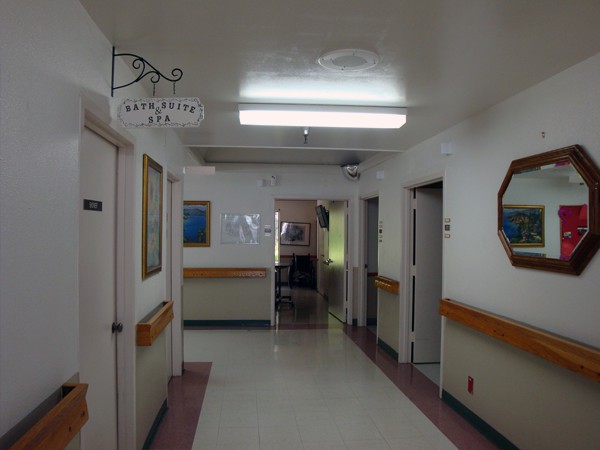
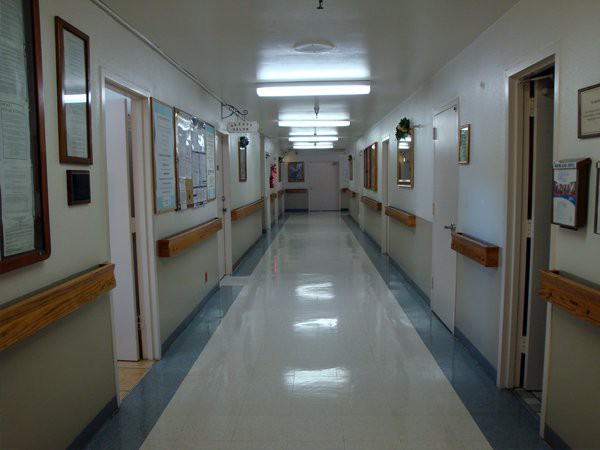
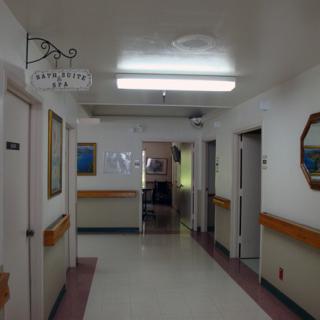
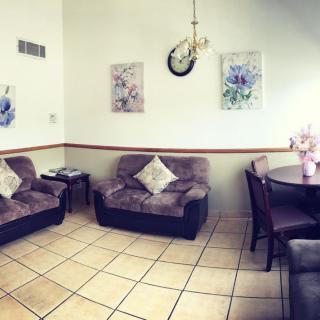
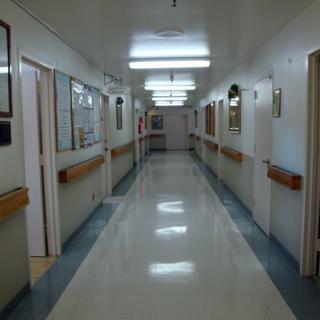
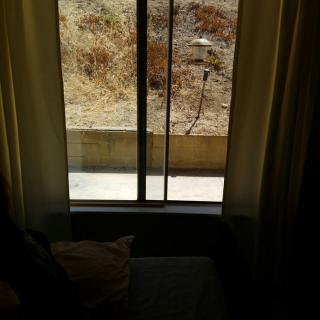
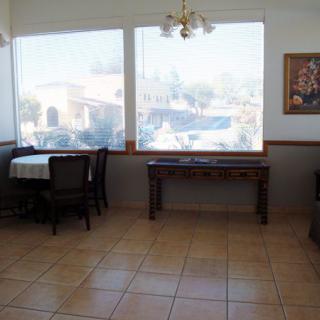
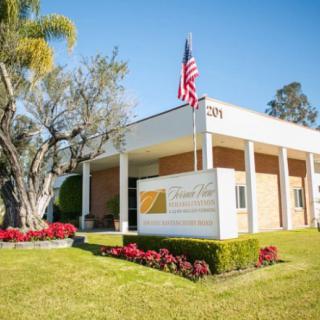
- The facility is excellent, clean, and well maintained.
- Ms. Sarah, the in-house social worker, is knowledgeable and provides pertinent advice.
- The center provides excellent hot meals and never misses medication times.
Cons
 The facility was described as a horrible place for seniors—dirty, smelly, uncaring, and slow to respond, making it unsafe for patients.
- Patients shouted for help as staff, hampered by language barriers, responded reluctantly after long delays.
- Staff were rude and disrespectful to the helpless patients.
- There was an incident in which a dead patient was carried out to the front entrance.
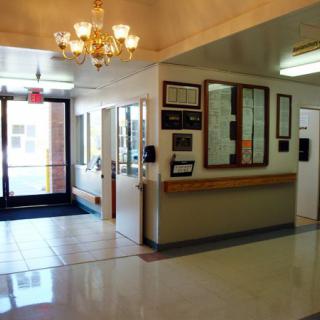
- The front desk was unattended, with no one to check in visitors or strangers, and staff did not advocate for a resident due to language barriers and age.
Review
Greenfield Care Center of Fullerton is best suited for families seeking a warm, hands-on convalescent and skilled-nursing environment where caregivers form ongoing relationships with residents and their families. The community tends to attract those who value daily accessibility to staff, a home-like atmosphere, and culturally familiar meals supported by a bilingual staff presence. This is not a rigid, purely clinical setting; it operates with an emphasis on involvement from leadership and front-line caregivers alike. For families prioritizing English-only communication, or needing uniformly rapid, around-the-clock clinical escalation, alternatives with more consistent language coverage and oversight should be considered.
On balance, the strongest positives center on compassionate, attentive care and engaged leadership. Multiple families praise the administrator’s accessibility and the dedication of nurses and aides who visit frequently and treat residents with genuine warmth. The in-house social worker is repeatedly singled out for practical guidance, helping families navigate rehab plans, discharge timelines, and daily decisions. Cleanliness and a well-maintained environment reinforce a sense of dignity and routine reliability. The facility’s willingness to tailor care around each resident’s needs, paired with accessible staff, helps offset anxieties about longer stays and complex medical needs.
Clinical capability and rehab are consistently highlighted as meaningful strengths. Families describe clear rehab pathways, with staff coordinating therapy and medical oversight that yield tangible progress for convalescent residents. Instances where residents regain strength after pneumonia or after injuries contribute to a perception of dependable medical management and discharge planning. This clinical backbone, combined with organized daily routines, creates a credible option for those whose loved ones require skilled nursing or post-acute rehab. Yet the overall strength of this aspect hinges on steady staffing and visible leadership across shifts.
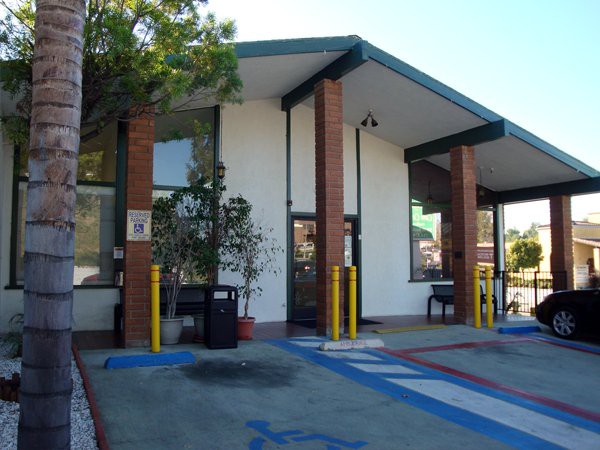
The facility experience is clearly a double-edged sword. On the positive side, many reviewers cite a clean, welcoming campus, practical parking, and a culture where Korean-speaking staff facilitate daily care and medication processes. Families repeatedly point to warm interactions and a responsive front line. However, dramatic counterexamples exist: a negative review portrays dirty conditions, slow response times, and pronounced language barriers that impede care, including concerns about safety and oversight. That spectrum shows that while the environment can be excellent, performance can be uneven, and language access may vary by shift.
That tension is the core reason to proceed with vigilance. For families whose top priorities are affection, visible caregiver involvement, and culturally resonant comfort, Greenfield offers substantial value, especially when leadership is approachable and care plans are actively coordinated. For those who cannot tolerate variability in nighttime responsiveness, or who require consistent English-language communication and strong, uniform safety culture at all hours, it is prudent to compare alternatives with more stable staffing patterns and language coverage. Prospective residents should insist on in-person tours, speak directly with the administrator and charge nurses, and observe night-shift dynamics to gauge whether the care environment aligns with safety thresholds and personal expectations.
Practical next steps include arranging multiple visits at different times, meeting key staff such as the administrator and nursing supervisor, and requesting candid candidacy for rehab planning and discharge workflows. Ask specifically about languages spoken by frontline aides, staffing ratios on evenings and weekends, and the process for escalating concerns outside regular hours. Request recent references from families with residents at similar care levels and review the menu and dining routines to confirm consistency with nutritional goals. If the aim is warmth, continuity, and hands-on involvement with dedicated leadership, Greenfield can be a strong fit; if the priority is consistently uniform safety and language-anchored communication, it pays to look at a wider field before deciding.
 99 resident community capacity
 Skilled Nursing Facility
 Air-conditioning
 Beauty salon
 Cable or satellite TV
 Computer center
 Dining room
 Fitness room
 Fully furnished
 Gaming room
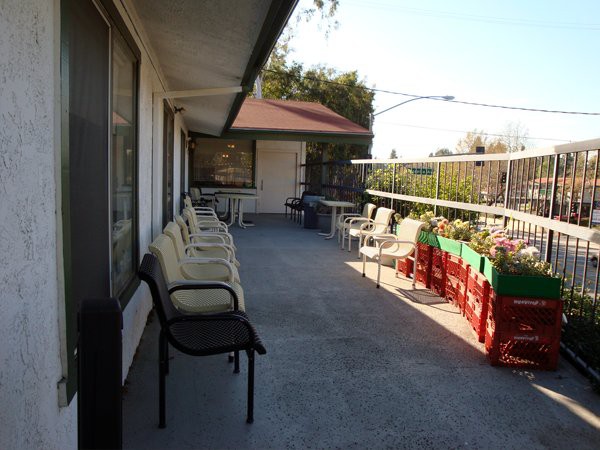
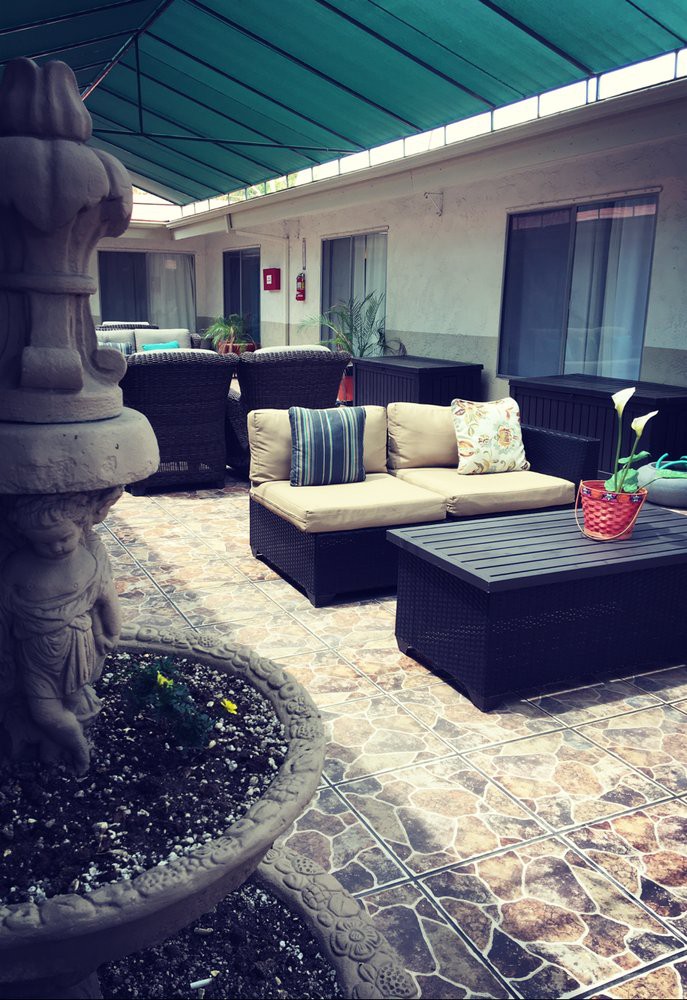
 Garden
 Housekeeping services
 Kitchenette
 Move-in coordination
 Outdoor space
 Private bathrooms
 Restaurant-style dining
 Small library
 Telephone
 Wellness center
 Wi-Fi/high-speed internet available
 Long Beach (Daugherty) (14 miles away)
 Community operated transportation
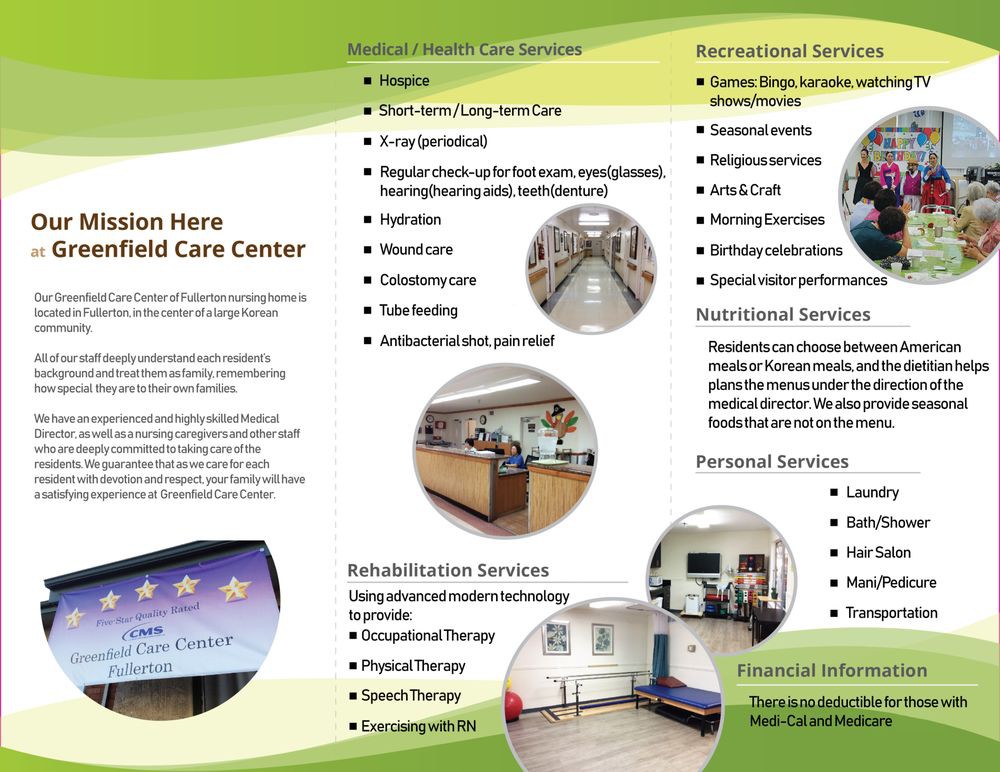
 12-16 hour nursing
 24-hour call system
 Activities of daily living assistance
 Assistance with bathing
 Assistance with dressing
 Assistance with transfers
 Diabetes diet
 Medication management
 Mental wellness program
 Special dietary restrictions
 Concierge services
 Planned day trips



 Fecal Incontinence in Older Adults: A Comprehensive Guide
 Recognizing the Journey: Understanding and Navigating Anticipatory Grief
 Encouraging Participation in Adult Day Care: A Guide to Supporting a Hesitant Parent