

6001 162nd Avenue NE, Vancouver, WA 98682
To contact a resident: (360) 882-2567
For more information about senior living options: (866) 208-4318
American Living Adult Family Home LLC Costs & Pricing
American Living Adult Family Home LLC offers competitive pricing for its residential care services in comparison to both Clark County and the broader Washington state market. With a monthly cost of $3,500 for both private rooms and studios, American Living's rates are significantly lower than the county average of $3,992 for private rooms and $3,882 for studios. Furthermore, when viewed against the state averages of $4,772 for a private room and $4,126 for a studio, American Living clearly positions itself as an affordable option without compromising on quality. This pricing strategy not only reflects a commitment to accessible care but also underscores their dedication to providing an inviting atmosphere for residents seeking adult family home services.
| Floor plans | American Living Adult Family Home LLC | Clark County | Washington |
|---|---|---|---|
| Private | $3,500 | $3,992 | $4,774 |
| Studio | $3,500 | $3,882 | $4,128 |
Memory care communities with a similar price nearby
-
from -$500 / mo
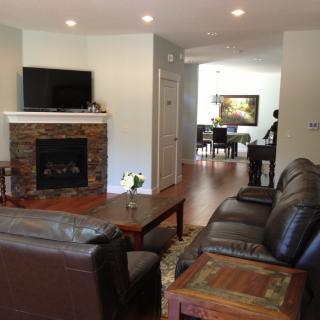
Elder Garden Care Home, LLC
$3,000 / month10.3 miles away -
About the same
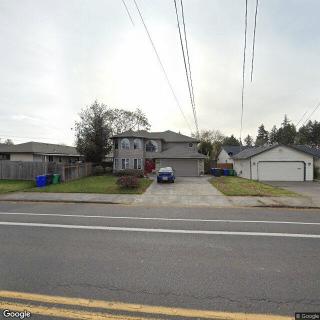
Northwest Home Health
$3,500 to $3,700 / month14.0 miles away -
from -$500 / mo
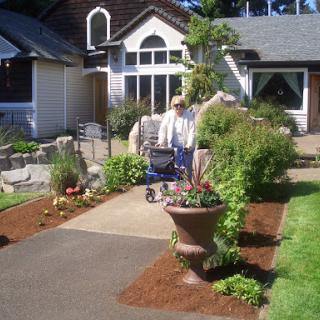
Rivercrest Adult Care
$3,000 to $3,700 / month23.2 miles away -
from +$500 / mo
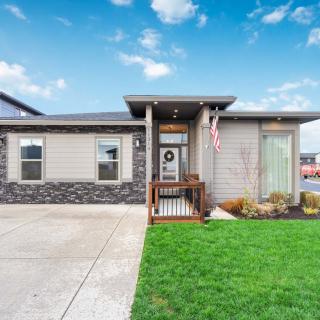
The Finest Care AFH, LLC
$4,000 to $5,500 / month1.6 miles away -
About the same
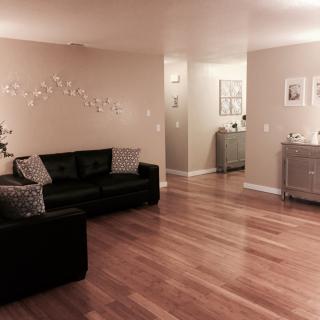
Grace Care Adult Foster Home
$3,500 / month12.1 miles away
Overall Review of American Living Adult Family Home LLC
Pros
 Loving Care provides amazing love and attentive care.
- The home feels warm, welcoming, and well-managed, more like a true home than a facility.
- The staff genuinely care for residents as individuals, with kindness, patience, and respect.
- The home is spotless and well-organized, prioritizing cleanliness and hygiene.
- A nurse is always on site, providing consistent medical oversight and prompt attention to health concerns.
- The atmosphere fosters a sense of community and happiness, with residents engaged.
- Residents are encouraged to participate in meal planning and meal prep, fostering dignity and inclusion.
- Homemade meals are prepared daily, contributing to a loving atmosphere.
- Families feel comfortable and safe with the service and would highly recommend Loving Care.
Cons
 The family described their search for suitable care as frustrating over several years.
- They noted that finding a care facility they could trust was not easy.
- The decision to place their elderly father in care was a difficult one.
- In an emergency, the family had only days to find a place for their mother, and the process involved a lot of research.
Review
This Vancouver, Washington community is best suited for families seeking a true home-like atmosphere where care feels personal and continuous. In the reviews, the home, the facility operated by American Living Adult Family Home LLC and commonly spoken of by families as Loving Care, emerges as a small, house-style setting rather than a clinical campus. It excels at creating daily life that resembles a family home: meals cooked on site, residents involved in meal planning, and a sense that staff members know each resident’s preferences, routines, and needs. For seniors who prioritize dignity, consistency, and social connection within a warm, intimate environment, this is a compelling option.
Those who may want to consider alternatives are families facing higher medical complexity or a desire for larger-scale programming. A facility of this size naturally concentrates resources in a more limited footprint, so families with residents requiring round-the-clock hospital-level monitoring, highly specialized memory care, or a broad slate of formal activities may find that a bigger community with dedicated clinics and multiple care teams better fits those needs. In short, for residents who need extensive, highly technical medical management or extensive dementia-specific infrastructure, a larger or more medically oriented setting could be a smarter fit.
The strongest positives are deeply practical and consistently highlighted across reviews. The environment feels clean, orderly, and genuinely home-like, which gives families confidence about day-to-day safety and hygiene. Staff are described as caring, patient, and respectful, qualities that transform routine care into attentive, individualized support. A nurse on site adds a crucial layer of medical oversight, ensuring health concerns are addressed promptly rather than deferred. Residents are not merely supervised; they are engaged in meaningful activities, meals become collaborative events, and residents are encouraged to participate in planning and even helping with meal preparation when appropriate. That combination, personal attention, clean surroundings, and a sense of purpose, appears to be the core strength.
Where the setting may pose trade-offs, it is in scale and resource breadth. The same small, homey environment that fosters close relationships can also limit the range of specialized services, equipment, and program variety found in larger communities. While a nurse is on staff, questions remain about the extent of around-the-clock coverage, access to specialists, or availability of advanced therapies that some families expect in higher-acuity situations. Prospective residents should confirm how care plans are structured for medical or mobility needs, and clarify what is possible within the home’s size and staffing model.
Yet the robust pros largely offset these potential constraints for families prioritizing warmth, dignity, and daily-life engagement. The safety net of a consistent, on-site nurse, coupled with deeply personal attention from a team that knows each resident, translates into predictable, compassionate care. Cleanliness and organization further reduce worry for families, while resident involvement in meals and social routines preserves a sense of purpose and belonging that can be hard to find in larger facilities. For many, these factors outweigh the absence of extensive medical amenities or broad programming.
In deciding, families should target this community if the priority is a nurturing, family-like home where staff are genuinely invested in each resident’s happiness and wellbeing. It’s a strong recommendation for seniors who thrive with intimate oversight, meaningful social engagement, and daily life that centers on comfort and dignity. Those with significant medical complexity, a need for 24/7 high-level clinical care, or specialized dementia programming may want to explore alternatives first, so that care needs and setting align from day one. Before choosing, request a clear discussion of staffing patterns, care planning processes, memory-care capabilities, room configurations, and meal-program specifics to ensure expectations meet reality.
 Board and Care Home
 Memory Care
 Cats allowed
 Dogs allowed
 Activities on-site
 Beautician on-site
 Devotional services on-site
 Indoor common areas
 Outdoor common areas
 Private
 Respite or short term stays offered
 Wheelchair accessible showers
 Portland International (7 miles away)
 Ambulatory care
 Diabetic care
 High acuity care
 Medication management
 Kosher




 Assisted Living and Memory Care: Understanding Their Core Differences
 Choosing the Right Senior Care: A Detailed Exploration of Assisted Living and Nursing Homes
 Safeguarding Your Memory Through the Golden Years: Eight Ways to Preserve Cognitive Health