

1312 N. Jackson Avenue, Tacoma, WA 98406
To contact a resident: (253) 759-3356
For more information about senior living options: (866) 208-4318
Narrows Place AFH Inc Costs & Pricing
Narrows Place AFH Inc offers competitive pricing for its residential care services, with a monthly cost of $4,500 for a semi-private room and $5,000 for a one-bedroom unit. When compared to the average costs in Pierce County, which stand at $4,264 for a semi-private room and $4,456 for a one-bedroom, Narrows Place positions itself slightly above the local market. However, these rates still align closely with the state averages of $4,267 and $4,632 respectively. This pricing reflects not only the quality of care provided but also the distinctive amenities and personalized services that Narrows Place strives to offer its residents.
| Floor plans | Narrows Place AFH Inc | Pierce County | Washington |
|---|---|---|---|
| Semi-Private | $4,500 | $4,264 | $4,272 |
| 1 Bedroom | $5,000 | $4,456 | $4,634 |
Memory care communities with a similar price nearby
-
from -$500 / mo

Riverton Home Care
$4,000 to $5,000 / month18.7 miles away -
from -$500 / mo
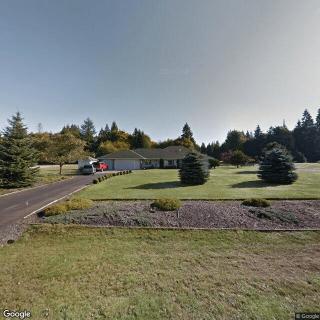
Canterwoods Estate AFH
$4,000 to $5,500 / month22.9 miles away -
from -$500 / mo
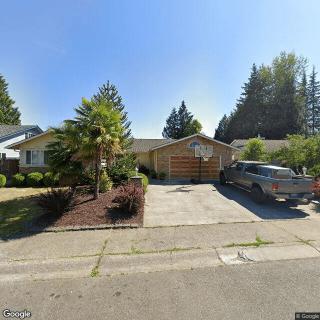
Gentle Care Home
$4,000 to $5,500 / month23.2 miles away -
from +$500 / mo

Peace and Pleasant Care Adult Family Home II
$5,000 to $6,000 / month15.8 miles away -
from -$195 / mo

Penrose Harbor at Heron's Key
$4,305 to $7,332 / month5.8 miles away
Overall Review of Narrows Place AFH Inc
Pros
 The staff’s friendliness is described as five plus.
- They truly treat people there like family.
- The food is described as great.
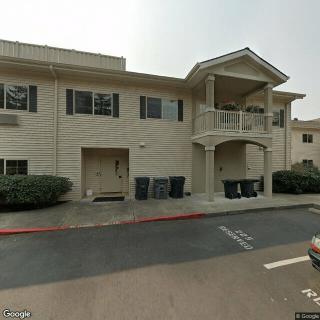
- There is plenty of parking.
- It is a well-run community that offers everything you could ask for.
Review
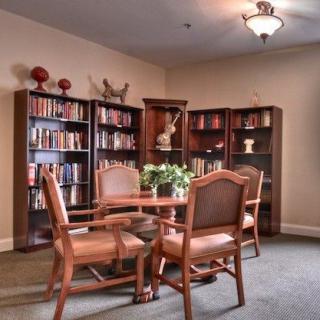
Narrows Place AFH Inc in Tacoma is best suited for seniors who prize a warm, intimate setting where staff genuinely treat residents like family, meals are well-regarded by visitors, and everyday logistics, such as parking, are straightforward. This community shines for families seeking a home-like atmosphere with consistent, personable care rather than a large, impersonal campus. It is especially appealing to residents who value predictable routines, easy in-and-out visits from relatives, and a sense of belonging fostered by small-scale operations. For someone who wants the comfort of a tightly knit staff-resident dynamic, this option stands out as a practical, low-stress choice.
Those weighing Narrows Place against alternatives should consider that a larger assisted living or memory-care facility may be more appropriate for residents with higher medical needs or specialized care requirements. If 24/7 on-site nursing, complex medication management, or a broader menu of memory-care programs are essential, then options with more extensive clinical staffing and structured programming deserve serious consideration. Families pursuing aggressive rehabilitation, frequent physician oversight, or highly dynamic activity calendars may find a bigger community better aligned with those expectations. Narrows Place excels where care feels personal; it may feel limiting where medical intensity is non-negotiable.
The strongest pros here, the staff’s warmth, the family-like culture, the quality of meals, and the easy parking, combine to create a reassuring living environment that can offset several potential drawbacks of a smaller operation. When residents are treated with genuine kindness and regularly engage with caregivers who know their preferences, the day-to-day experience becomes predictable and comforting. The dining experience, often cited as a highlight by family members, reinforces a sense of home, not institutional living. The practical logistics, such as plentiful parking for family visits, remove one common friction point for families trying to coordinate care and social time alike. Those elements collectively reduce stress and support continuity of care.
A closer look at potential drawbacks reveals a necessary consideration: the absence of explicit, widely publicized downsides in the available feedback. Families should probe for practical gaps during tours, levels of on-site medical oversight, availability of 24-hour staffing, access to physical therapy or specialized therapies, and the scope of memory-care support. Given the intimate scale, scheduling flexibility and activity variety may be more modest than on larger campuses. Yet the offset is clear in the immediate sense of trust and reliability; when staff know residents’ histories, preferences, and milestones, any gaps in resources feel smaller because the relationship quality helps compensate for the differences in capacity.
For decision-makers, the path to a confident choice includes concrete checks during visits: ask about staff-to-resident ratios across shifts; request a demonstration of the emergency call system; review care plans for medication management and any coordination with external providers; examine the dining program for menu rotation, dietary accommodations, and guest dining policies; and explore how visiting hours and family access are handled. It also helps to verify how activities are organized, whether there are regular social opportunities, mobility-friendly outings, and programs tailored to individual interests. This due diligence will clarify whether Narrows Place aligns with the resident’s desired pace, autonomy, and daily rhythm.
Bottom line: Narrows Place AFH Inc is a strong choice for seniors who value a warm, well-run, intimate setting where staff treat residents like family, meals feel thoughtfully prepared, and parking is convenient. It is particularly well-suited for those prioritizing personal attention, homey surroundings, and straightforward family involvement. For residents who require significant medical support, specialized memory-care services, or a more robust, destination-level activity program, alternatives should be explored. When a family seeks a practical, compassionate environment that minimizes relocation stress and maximizes daily comfort, Narrows Place deserves careful consideration, followed by a guided tour to confirm fit.
 Board and Care Home
 Memory Care
 Cats allowed
 Dogs allowed
 Activities off-site
 Bath tubs
 Beautician on-site
 Devotional services off-site
 Indoor common areas
 Outdoor common areas
 Private bathrooms
 Respite or short term stays offered
 Swimming pool / hot tub
 Wheelchair accessible showers
 Seattle-Tacoma International (17 miles away)
 Ambulatory care
 Diabetic care
 High acuity care
 Medication management
 Meals provided

 5 Early Indicators of Dementia and What You Can Do
 8 Important Indicators That Memory Care May Be Necessary
 Delving into the Inner World of Dementia: Insights into Thoughts and Awareness