
544 Chestnut St., Shelton, WA 98584
To contact a resident: (360) 426-5379
For more information about senior living options: (866) 208-4318
Golden Acres Ranch AFH Costs & Pricing
Golden Acres Ranch AFH offers competitive pricing for its residential care services in Mason County, Washington. For a semi-private room, residents can expect a monthly fee of $2,800, which is significantly lower than the county average of $3,932 and the state average of $4,267. Similarly, both private and studio accommodations are offered at a rate of $3,400, aligning closely with the county's costs of $3,633 for private rooms and outpacing the state's average of $4,772. This pricing structure highlights Golden Acres Ranch AFH as an economical choice for quality assisted living services while still providing comfortable living arrangements that cater to varying resident needs.
| Floor plans | Golden Acres Ranch AFH | Mason County | Washington |
|---|---|---|---|
| Semi-Private | $2,800 | $3,932 | $4,272 |
| Private | $3,400 | $3,633 | $4,774 |
| Studio | $3,400 | $3,581 | $4,128 |
Memory care communities with a similar price nearby
-
from +$525 / mo
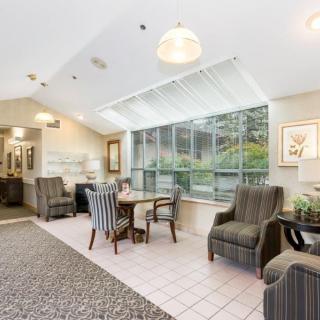
Alpine Way Continuing Care Community
$3,325 to $5,275 / month1.2 miles away -
from +$200 / mo
Heavenly Adult Home Care
$3,000 / month21.8 miles away -
from -$300 / mo
Kelly Adult Family Home
$2,500 to $3,000 / month22.1 miles away -
About the same
Mini-Oaks AFH LLC
$2,800 to $3,500 / month20.0 miles away -
from +$200 / mo

SIM Adult Family Home
$3,000 to $4,000 / month16.7 miles away
Overall Review of Golden Acres Ranch AFH
Pros
 She was well cared for and always seemed happy.
- She enjoyed swimming and riding the horses for years.
- She loved walking among the trees on sunny days.
- She loved homemade meals and could have snacks whenever she wanted.
- The staff were well trained and courteous.
- The owners live in the home and are friendly and available to answer questions.
- The pricing was very reasonable for the care she received compared to a nursing home.
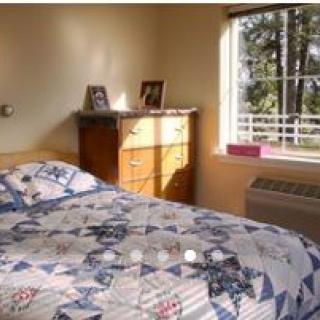
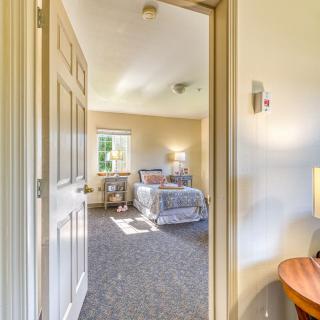
- She had a private room that was always clean and neat.
- She was always dressed nicely and her hair was fixed.
- A beautician came regularly to do nails and hair.
- She attended music programs and dinners on several occasions.
- The home provided music, singing, and activities for residents whenever they wanted to do projects.
Review
Golden Acres Ranch AFH is best suited for seniors who want a genuinely home-like setting where care feels personal, consistent, and deeply human. This community shines for residents who thrive on intimate attention, daily routines that resemble a family environment, and plenty of opportunities to stay engaged through outdoor and social activities. With your mother or loved one in a private, well-kept room, you gain a partner in care rather than a number, staff who appear committed, friendly, and highly attentive, and owners who live onsite and remain actively responsive. The combination of homemade meals, the ability to snack freely, and regular on-site services like a beautician reinforces daily life that feels predictable, comfortable, and dignified. The atmosphere favors steady companionship, dependable oversight, and consistent warmth, all anchored by a reasonable price point relative to traditional nursing homes.
Those weighing alternatives should consider options that offer more expansive clinical capabilities or a larger, more segmented program of care. If a senior requires around-the-clock skilled nursing, complex medical management, or a wider spectrum of therapies and medical staff, a larger facility with formal medical in-house resources may be preferable. Families prioritizing a bustling, highly structured activities calendar, multiple on-site specialists, or a setting with greater resident capacity and social variety might find an independent living or facility-based care environment more aligned with those goals. In essence, for residents with heightened medical needs or a preference for a broader professional network, a different model could deliver more comprehensive coverage.
The strongest pros here, private rooms that stay clean, consistently friendly and well-trained staff, and owners who actively participate in daily life, are not merely nice-to-haves but core drivers of reliability. The home-like structure naturally yields quicker problem resolution and more tailored attention, since caregivers and owners can observe subtle changes in a resident’s condition and respond promptly. The warmth is reinforced by ongoing social and cultural programming: regular music, singing, and activities, plus outings to dinners or community events, all of which help maintain a sense of purpose and belonging. The availability of a beautician for nails and hair, plus homemade meals and flexible snacking, supports dignity and comfort without driving up costs, making everyday life pleasant rather than transactional.
That same intimate, hands-on model can offset its potential limitations. The owners living in the home tends to translate into accountability and accessible questions at any time, reducing the likelihood of miscommunication or delay in addressing concerns. Staff courtesy and familiarity with residents’ routines foster trust, which in turn supports consistent mobility, mood, and engagement. The social fabric, outings, music programs, shared meals, means less isolation and more meaningful interaction, which is often the hinge between a resident thriving and merely aging. In short, the key advantages create a compelling value proposition for families seeking a soulful, low-key, cost-conscious alternative to larger facilities.
Nevertheless, the size and scope of an adult family home inevitably bring trade-offs. While the positive driver is the human-centered environment, there may be fewer on-site clinical resources, fewer therapy options, and a smaller pool of specialties compared with bigger communities. For residents who require 24/7 nursing coverage, intensive rehabilitation, or highly structured medical coordination, those gaps could become more pronounced. The occasional limits on who can provide certain services, or how quickly a specialized need can be met, should be weighed against the steady, reliable day-to-day care described by families who value the homelike setting.
In Shelton, Golden Acres Ranch AFH stands out as a thoughtful, affordable choice for families prioritizing warmth, personal attention, and a high quality of life in a small, genuinely caring community. It is a strong fit for residents who want to stay active, socialize meaningfully, and enjoy consistent, family-style oversight. For those whose priorities include robust medical services, expansive programming, or a larger, more conventional care ecosystem, alternatives with broader clinical resources deserve exploration. Prospective families should arrange visits, meet the owners and staff, and observe how care plans are developed and updated, then compare those impressions against the resident’s priorities, daily routines, and desired level of independence. A trial period, clear questions about staffing ratios, and confirmation of what therapies are available will help lock in whether this is the right next step.
 Board and Care Home
 Memory Care
 Cats allowed
 Dogs allowed
 Private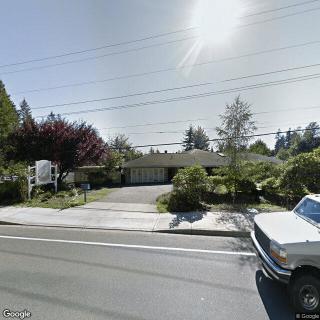

 Five Subtle Dementia Indicators to Observe: An In-Depth Guide to Understanding “Does My Mom Have Dementia?”
 Dementia, Paranoia, and Caregiver Guidance: Understanding the Connection
 Engaging Memory Care Activities That Enhance Quality of Life