
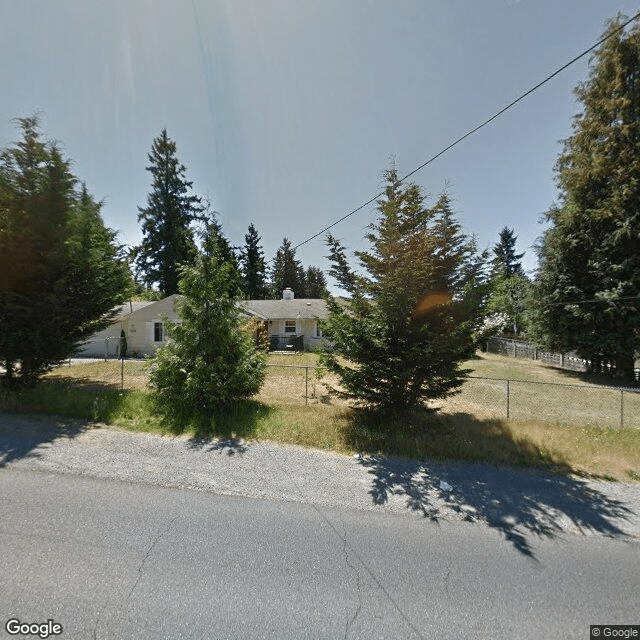
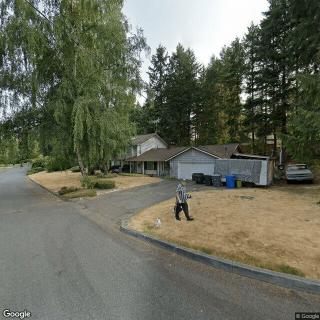
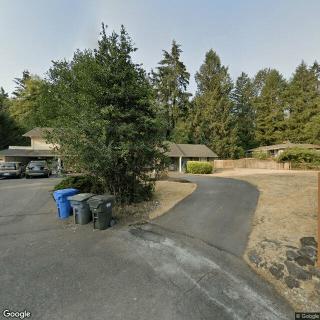
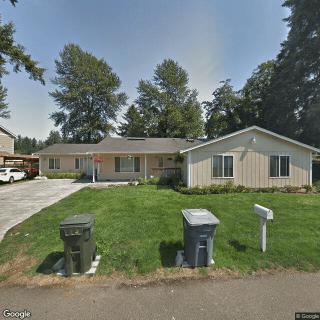
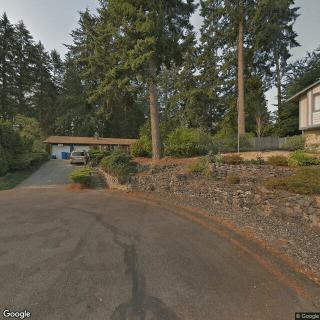
9104 104th ST SW, Lakewood, WA 98498
To contact a resident: (360) 551-6389
For more information about senior living options: (866) 208-4318
Great Care Manor Costs & Pricing
Great Care Manor offers competitive pricing for its residents, with costs significantly lower than both the county and state averages. For a semi-private room, Great Care Manor charges $3,000 per month, which is notably more affordable than the Pierce County average of $4,264 and the state average of $4,267. The same trend is observed for one-bedroom accommodations, where Great Care Manor's rate of $3,500 stands in stark contrast to the higher county and state figures of $4,456 and $4,632 respectively. Additionally, for private rooms, Great Care Manor maintains this cost advantage at $3,500 compared to Pierce County's average of $4,623 and the statewide average of $4,772. These pricing structures position Great Care Manor as a financially viable option for those seeking quality care in a comfortable environment.
| Floor plans | Great Care Manor | Pierce County | Washington |
|---|---|---|---|
| Semi-Private | $3,000 | $4,264 | $4,272 |
| 1 Bedroom | $3,500 | $4,456 | $4,634 |
| Private | $3,500 | $4,623 | $4,774 |
Memory care communities with a similar price nearby
-
About the same

Hummingbird Homecare
$3,000 / month16.4 miles away -
About the same
Home Care in Kent Inc.
$3,000 to $3,500 / month22.6 miles away -
from +$500 / mo

Twin Lakes Haven Adult Family Home
$3,500 to $8,000 / month14.1 miles away -
from +$500 / mo
Ahadi Care Adult Family Home
$3,500 to $4,000 / month13.8 miles away -
About the same
Meridian AFH II
$3,000 to $3,500 / month12.8 miles away
Overall Review of Great Care Manor
Pros
 The facility is clean and friendly.
- Great Care Manor has been doing a really awesome job.
- There have been no issues since moving there.
- They provide transportation to doctor appointments.
- They ensure she is getting her medications.
Cons
 They were unhappy with the previous facility where their mom stayed.
- They were not happy with the place their mom was at before.
Review
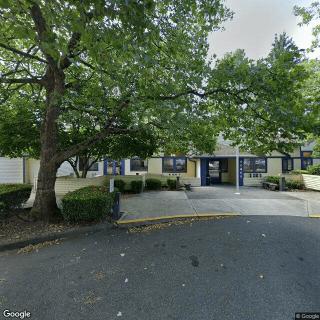
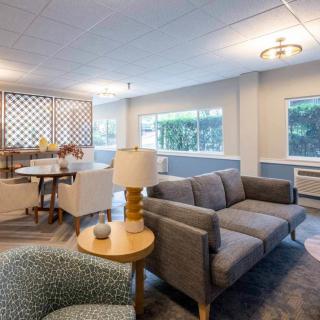
Great Care Manor in Lakewood, WA is best suited for families seeking a clean, approachable assisted-living option where medication oversight and transportation to medical appointments are consistently prioritized. The community clearly excels at delivering practical, day-to-day support in a low-stress environment. For seniors who need reliable help sticking to med regimens and who rely on dependable transport to doctors’ visits, this operation presents a dependable anchor. The emphasis on a tidy, welcoming setting combined with attentive, friendly staff makes it a sensible match for families that value predictable routines and straightforward care coordination.
Those evaluating alternatives should note who may want to look elsewhere. If life requires more specialized memory-care programming, broader on-site medical services, or a more robust calendar of social and recreational activities, other communities might be a better fit. Similarly, families prioritizing aggressive pricing, newer facilities with high-end amenities, or a community with a more bustling, activity-driven vibe may find better matches elsewhere. While the reviews paint a strong picture of dependable daily support, they do not address these deeper dimensions of care or cost, so diligence in comparing options remains essential.
The strongest pros are practical and high-leverage: cleanliness and a friendly, approachable staff culture, paired with reliable transportation to appointments and diligent medication management. The emphasis on keeping medications properly administered is specifically highlighted as crucial by families, and the transport provision addresses a common, concrete barrier to staying independent while receiving care. In a landscape where transitions between caregivers and missed doses can undermine safety, these capabilities offer clear protection and peace of mind. The repeated affirmations about no issues since the move reinforce a sense of operational stability that matters to families navigating a transition.
There are no explicit cons spelled out in the available feedback, which makes it harder to weigh tradeoffs with precision. What can be inferred is the absence of detailed information on staffing levels, memory-care options, meal quality, activity programming, or pricing. For families needing robust memory-support, specialized clinical oversight, or a highly active social schedule, the lack of comparative detail on these fronts suggests caution. Likewise, without transparent cost data, families must verify affordability and determine whether the level of service aligns with budget and long-term planning.
Those who lean toward Great Care Manor should anchor their decision on the proven strengths while proactively filling gaps through due diligence. The strong points directly counter the two most common risk areas in assisted living, medication errors and missed medical connections, by providing consistent oversight and reliable transport. The result is a predictable daily experience that supports safety and continuity, which is often the deciding factor for families seeking stability during a transition or when a loved one has complex medication needs. In short, for those who prize uncomplicated reliability and a hospitable, clean environment, this community earns serious consideration.
Decision guidance: pursue a thorough tour and bring the questions that matter most. Ask for a detailed walkthrough of the medication management process (who administers, timing, documentation, and error-tracking), the exact transportation schedule and coverage, and the staffing ratios on different shifts. Request samples of typical meal plans and a snapshot of daily activity options to gauge whether there is a balance of quiet and engagement. Inquire about memory-care availability and what happens if dementia-related needs evolve. Finally, obtain transparent pricing, including what is included in base rates and what would constitute additional charges. When medication safety and appointment coordination are the priorities, Great Care Manor stands out in Lakewood as a practical, dependable choice.
 Board and Care Home
 Memory Care
 Cats allowed
 Dogs allowed
 Activities off-site
 Beautician on-site
 Indoor common areas
 Outdoor common areas
 Private
 Private bathrooms
 Respite or short term stays offered
 Wheelchair accessible showers
 Seattle-Tacoma International (23 miles away)
 Ambulatory care
 Diabetic care
 High acuity care
 Incontinence care
 Medication management
 Meals provided
 Nourishing the Mind: Essential Dietary Approaches for Dementia
 Understanding Dementia Behaviors: Practical Insights and Strategies for Caregivers
 When Dementia Sparks Anger and Aggression: Understanding the Connection and Ways to Cope