
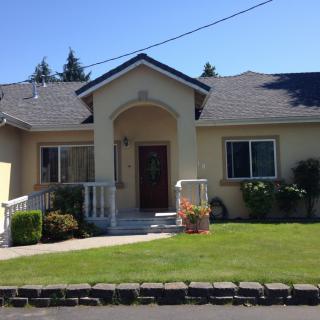
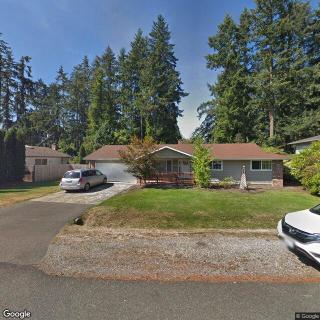
4407 120th Pl SE, Everett, WA 98208
To contact a resident: (425) 785-5886
For more information about senior living options: (866) 208-4318
Premier Care Loving Costs & Pricing
Premier Care Loving offers competitive pricing for its accommodations, with a monthly cost of $7,000 for both the one-bedroom and private room types. When we examine the costs in comparison to Snohomish County and the broader Washington state averages, it's evident that Premier Care is positioned at a higher price point. In Snohomish County, a one-bedroom unit averages $5,080, while private rooms are available for around $4,834. Similarly, throughout Washington state, one-bedroom apartments average $4,632 and private rooms are priced at approximately $4,772. This suggests that while Premier Care Loving provides premium services or amenities justifying its higher rates, prospective residents should consider the overall value proposition in light of regional options.
| Floor plans | Premier Care Loving | Snohomish County | Washington |
|---|---|---|---|
| 1 Bedroom | $7,000 | $5,080 | $4,634 |
| Private | $7,000 | $4,834 | $4,774 |
Memory care communities with a similar price nearby
-
from -$500 / mo

The Promised Land
$6,500 / month8.2 miles away -
from -$1000 / mo

Home Away From Home LLC
$6,000 to $7,000 / month6.2 miles away -
from -$1000 / mo
Elderly Home Care
$6,000 to $8,000 / month11.0 miles away -
from -$1250 / mo

Fieldstone Rolling Bay and Fieldstone Memory Care
$5,750 to $8,895 / month21.6 miles away -
from +$900 / mo

Caring Cabin Manager, LLC
$7,900 to $9,000 / month7.7 miles away
Overall Review of Premier Care Loving
Pros
 They did a very good job during the short stay.
- The staff did a very good job during the brief stay.
- The care team performed well during the visit.
Cons
 The reviewer laments that their loved one stayed for only a week before passing.
Review
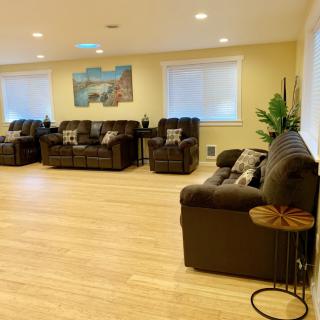
Premier Care Loving in Everett is best suited for families confronting a brief, transition-focused care need, most notably end-of-life support or short-term respite where the core requirement is compassionate, attentive bedside care delivered with dignity. The experience available suggests staff can handle a sensitive moment with calm professionalism, delivering a level of care that offers real reassurance to families during a difficult period. In practical terms, this community appears to function well as a respectful holding place for a loved one who is passing or who needs short-term stabilization, rather than a long-term home designed for ongoing daily living.
Those evaluating options for longer horizons should consider alternatives. If the plan involves sustained daily living, memory care, robust social programming, or transparent, long-running cost structures, other communities are likely to provide clearer evidence of consistent performance over time. Families that require a well-documented multi-year care track record, regular activity schedules, and demonstrable economies of scale in staffing may want to compare Premier Care Loving with facilities that publish longer-term metrics and more comprehensive programming.
On the plus side, the strongest takeaway is that care rendered during the stay appeared competent and compassionate. That impression matters immensely when there is little time to establish trust, and it can offset concerns about unknowns in long-term quality. In practical terms, the ability of caregivers to respond promptly, maintain comfort, and communicate with family in a sensitive manner directly addresses what matters most in short, emotionally charged transitions. For families choosing a temporary step between home and a higher level of care, these elements carry significant weight.
The most evident gap is the scarcity of information about long-term suitability. A single positive encounter does not establish a track record for ongoing residents, and no details are provided about amenities, room configurations, meal quality, safety features, or staffing stability over time. Without long-term data, it remains unclear how Premier Care Loving would perform under extended residence, or how it would adapt to progressive needs, such as increased assistance, specialized medical oversight, or changes in mobility and daily routine.
That gap can be offset by clarity around a specific, time-bound plan. If the decision hinges on a brief need, the demonstrated care in the week-long window matters more than generic assurances. Prospective families should pursue concrete confirmations: current licensed capacity for escalation if needs change, partnerships with hospice or palliative teams, transparent pricing with a detailed scope of services, and options for longer stays if the situation evolves. A candid discussion about what is included in the rate, what constitutes extra charges, and how care levels are adjusted will convert an uncertain impression into a practical decision framework.
In the end, Premier Care Loving warrants serious consideration for families facing a short-term care transition where compassionate, responsive staff can offer real peace of mind. For those needing sustained, long-term residency with proven, comprehensive programming and measurable long-term outcomes, it is prudent to compare against other communities with stronger long-run track records. The next step is a focused visit, request to meet caregivers, tour the facility, review sample menus and activity options, and obtain a detailed cost breakdown, and to bring a checklist that probes staffing levels, care escalation processes, and hospice integration.
 Board and Care Home
 Memory Care
 Cable or satellite TV
 Fireplaces
 Full kitchen
 Ground floor units
 Handicap accessible
 Private
 Private patio, deck, or balcony
 Respite or short term stays offered
 Wheelchair accessible showers
 Wi-Fi/high-speed internet available
 Diabetic care
 High acuity care
 Incontinence care
 Medication management
 Anytime dining
 Activities on-site
 BBQs or picnics
 Birthday parties
 Catholic services
 Day trips and outings
 Karaoke
 Light therapy programs
 Live musical performances
 Stretching classes





 Are Dementia and Alzheimer's Disease Lethal? A Comprehensive Exploration
 Exploring the Power of Reminiscence Therapy for Individuals With Dementia
 An In-Depth Look at Reminiscence Therapy in Dementia Care