
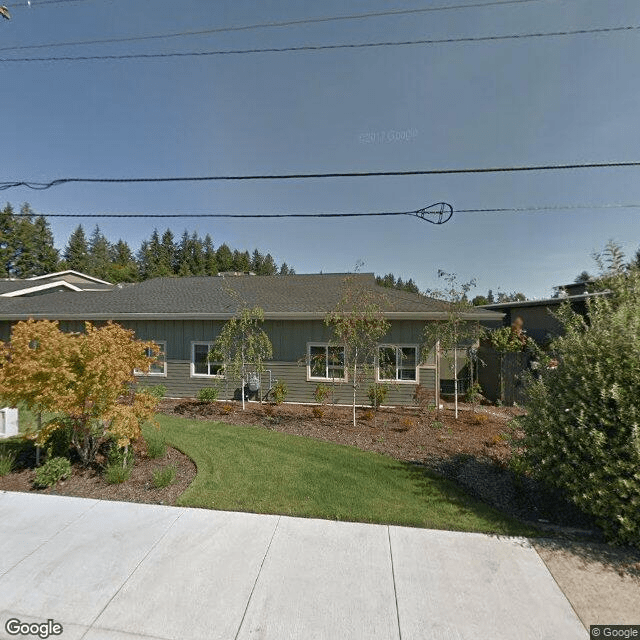
2855 NE Cumulus Ave, McMinnville, OR 97128
To contact a resident: (503) 474-4222
For more information about senior living options: (866) 208-4318
Marjorie House Memory Care Costs & Pricing
Marjorie House Memory Care offers a monthly cost of $5,030 for a studio room, which is notably higher than both the average rates in Yamhill County at $4,837 and the broader state average in Oregon at $3,815. While this pricing may initially seem steep compared to local and state averages, it's essential to consider the specialized care and services that memory care facilities provide. Residents benefit from tailored support designed to meet the unique needs of individuals with memory-related conditions, ensuring their comfort and quality of life. Investing in such dedicated care can be invaluable for families seeking peace of mind as they navigate these challenging circumstances.
| Floor plans | Marjorie House Memory Care | Yamhill County | Oregon |
|---|---|---|---|
| Studio | $5,030 | $4,837 | $3,815 |
Memory care communities with a similar price nearby
-
from -$470 / mo

Heartwood Place Memory Care
$4,560 to $4,980 / month15.1 miles away -
from +$420 / mo

Battle Creek Memory Care
$5,450 to $7,850 / month24.2 miles away -
from -$580 / mo

Jurgens Park Senior Living
$4,450 to $5,600 / month22.1 miles away -
from -$785 / mo

SpringRidge at Charbonneau
$4,245 to $6,355 / month20.1 miles away -
from -$380 / mo

Coral Springs RCF
$4,650 / month18.8 miles away
Overall Review of Marjorie House Memory Care
Pros
 The staff treat everyone like family and prioritize residents.
- The founders did extensive research and know what they’re doing, caring for every resident as if they were family.
- The facility provides a sense of security and a loving family environment.
- The on-site medical team and community doctor are valuable assets to the Marjorie House community.
- Residents participate in group activities that maintain mental and physical stimulation.
- Families consistently report happiness and would highly recommend Marjorie House as a memory care facility.
- The staff are kind and friendly and help residents form friendships.
- The facility maintains cleanliness and has good infection control precautions in place.
Cons
 The staff’s attire was deemed inappropriate, including ripped jeans with holes.
- It was felt there weren’t enough staff to adequately care for residents.
- Dementia was described as hard, unfair, and unpredictable.
- The facility was labeled terrible, with new hires treated like idiots despite their experience.
- The RN reportedly spoke badly about staff.
- Sara did not listen to staff and pushed tasks off.
- No one remembered residents’ names.
- Residents were changed only once per day and lifts were not used.
- A resident experienced significant weight loss and irregular incontinence care, with poor communication from ownership and administration.
- Med tech training was inadequate, leaving them alone to distribute meds after only brief training.
- A caregiver was fired for verbal abuse captured on camera.
- Overall management was described as poor.
Review
Marjorie House Memory Care in McMinnville is best suited for families seeking a warm, home-like memory care environment where residents are treated as part of a close-knit family. The program emphasizes daily engagement through group games, music, live entertainment, and mobility-focused activities that keep minds and bodies active. An on-site medical team and a community doctor provide a visible, ongoing layer of oversight, which can be a decisive comfort for families worried about medical attention and coordination. For residents who thrive in a small, intimate setting where staff patterns become familiar and routines feel predictable, this community offers meaningful continuity and a sense of belonging that supports both memory care needs and emotional well-being.
Those weighing alternatives should note that not every family will find Marjorie House meets every priority. A subset of reviews highlights concerns about staffing levels and consistency, with critics pointing to under-staffing and perceptible gaps in attention across all residents. Several accounts raise questions about professionalism and administrative responsiveness, including comments about how new staff are treated, how communication flows, and how care plans are followed. For families prioritizing formal appearance, rigid staffing protocols, or flawlessly executed care plans with immediate, transparent communication, other facilities may offer a more disciplined environment and clearer accountability.
The strongest positives, the family-centered approach, real warmth from caregivers, and the sense that residents are truly cared for, often offset significant drawbacks in the eyes of many families. Reviews praising “care like family” and staff who prioritize residents over other concerns carry substantial weight for memory care decisions. The founders’ emphasis on research-driven memory care and the accompanying social programming contribute to improvements in demeanor and engagement for many residents. In practice, this means a resident can enjoy a richer daily life, with activities designed to sustain cognitive and physical function, while still benefiting from medical oversight and an attentive, compassionate staff.
Yet the negative reports cannot be ignored. There are credible warnings about weight loss, inconsistent assistance with essential daily tasks, and lapses in following documented care plans. Specific concerns point to medication handling and training gaps for new medical technicians, plus instances where staff quality or management responsiveness appeared lacking. One caregiver allegation of verbal abuse and a separate complaint about administrative failures underscore the reality that frontline care can be uneven, and that confidence in leadership and operations may hinge on ongoing, meticulous oversight. These red flags emphasize the need for due diligence before committing.
The practical takeaway is that Marjorie House can be a strong choice for families who value a caregiving culture that feels like a close circle, complemented by accessible medical oversight and robust social programming. The facility’s energy around resident engagement, the presence of an on-site medical team, and the visible dedication of many caregivers can translate into noticeable improvements in mood and daily satisfaction for residents. However, the experience is not uniformly consistent, and concerns about staffing, care-plan adherence, and administrative communication warrant careful scrutiny. Any decision should be underpinned by direct, diligent evaluation of staffing levels, care-plan execution, and a candid conversation with management about how concerns are addressed.
For families actively exploring options, a deliberate, action-oriented process is advised. Schedule a tour focused on observing front-line caregiving during peak hours, request detailed staffing ratios by shift, and review the latest care plans for a loved one with dementia. Ask to meet the care director and owning leadership to understand how abuses or miscommunications are handled and what corrective steps are in place. If warmth, engagement, and a strong medical presence are the priorities, and a transparent path to improved coordination can be established, Marjorie House stands as a viable, even compelling, option. If consistency, formal professionalism, and flawless operational oversight are non-negotiable, it may be prudent to compare alternatives with deeper staffing capacity and sharper administrative controls.
 Memory Care
 Activities on-site
 Bath tubs
 Beautician on-site
 Devotional services on-site
 Indoor common areas
 Outdoor common areas
 Respite or short term stays offered
 Wheelchair accessible showers
 Ambulatory care
 Diabetic care
 Incontinence care
 Medication management
 Meals provided







 Guiding Your Journey: Understanding Power of Attorney for Elderly Parents
 22 Remarkable Caregiver Support Groups Available Online and In-Person
 Understanding Medicaid Coverage for Assisted Living: A Comprehensive Guide