Kareema Darby Memorial Home offers competitive pricing for its services, particularly when compared to the broader costs in Cuyahoga County and the state of Ohio. For both private rooms and studio accommodations, Kareema Darby Memorial Home charges $1,700 per month, which stands in stark contrast to the county's average of $4,004 for private rooms and $3,632 for studios. Even when evaluating state averages - where private rooms reach $4,771 and studios are priced at $3,727 - Kareema Darby's rates are significantly lower. This makes it an appealing choice for those seeking quality care without the financial strain typically associated with long-term care facilities in the region.
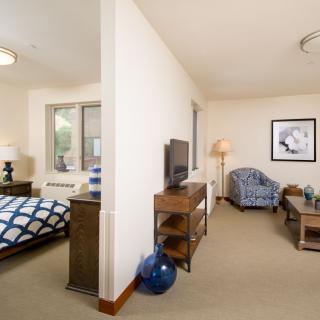
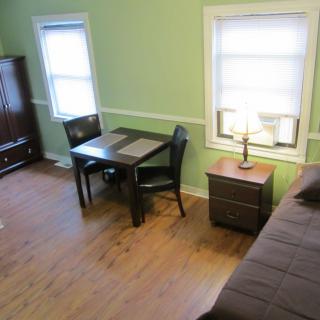
Floor plans
Kareema Darby Memorial Home
Cuyahoga County
Ohio
Studio
$1,700
$3,632
$3,727
Private
$1,700
$4,004
$4,771
Memory care communities with a similar price nearby
Cleanliness is a frequent point of both praise and complaint in the reviews.
Many visitors describe the building as clean, including clean halls and rooms, and some mention the facility smells pleasant. Other reviewers report a filthy or nasty environment, bad odors, bed bugs, or that the place could have been cleaner. There are also mentions of specific maintenance issues like a ceiling leak being fixed, which suggests upkeep can vary. If cleanliness is a top priority for you, the reviews show a wider range of experiences than average.
common15 reviews mention this
Staff friendliness and helpfulness
Residents’ families and visitors repeatedly describe the staff as friendly, helpful, and attentive.
Across the reviews, people highlight staff members who greet them warmly, answer questions, and make the visit feel manageable. Several reviewers also single out specific roles—like managers and nurses—for going above and beyond, helping with comfort, and addressing needs. Even among more critical reviews, there are mentions of a few staff members who stand out for being responsive and kind. Overall, the strongest recurring pattern is how approachable staff seem day to day.
differentiator3 reviews mention this
On-site dialysis is available
Dialysis appears to be offered on-site, which is a relief for some families.
Some reviewers describe meeting staff who were knowledgeable about dialysis services, and others explicitly note that dialysis is available at the facility. One review also describes the dialysis area as spacious with TVs and Wi-Fi. If you’re looking for a place that can handle dialysis within the building, multiple reviews point to that as a key capability.
common4 reviews mention this
Communication and updates vary
Families describe both proactive health updates and gaps in communication during transitions.
Several reviews say staff members check in, reach out after concerns, and keep families informed about changes in health or conditions. Others describe slower or less frequent updates after a leadership change, including times when the family wasn’t contacted after hospital transfers. Even in the more critical accounts, reviewers still praise certain nurses or social services staff for being personal and responsive. The reviews suggest communication is not consistent across every situation and shift.
common3 reviews mention this
Activities and community moments
The reviews mention activities and community events as part of life here.
Residents and visitors talk about shared activities like a community brunch and bingo, with staff inviting or encouraging participation. Another review calls out the activities department positively. A physical therapy-focused rehab experience also comes up in a few places, reinforcing that there are structured options beyond day-to-day care.
How we summarize
Counts show how many written reviews mention each theme; a review can touch several themes, and only frequently mentioned themes are displayed.
Features
Types of Care
Board and Care Home
Memory Care
Amenities
Private
Respite or short term stays offered
Transportation
Cleveland-Hopkins International (15 miles away)
Nearby Places of Interest
This part of Cleveland, Ohio offers a variety of amenities that cater to the needs of seniors looking for a convenient and comfortable living environment. With several restaurants such as McDonald's, bd's Mongolian Grill, and Boss Dog Brewing Co. nearby, there are plenty of dining options to choose from. Additionally, there are numerous pharmacies like Walgreens and CVS Pharmacy in close proximity for easy access to medications and health supplies. The area also boasts several parks such as Coventry PEACE Park and Anderson Field, providing opportunities for outdoor recreation and relaxation. For medical care, there are reputable hospitals like Cleveland Clinic and St Vincent Charity Medical Center nearby, along with various physician offices specializing in different areas of healthcare. In terms of transportation, there is a Greyhound station available for convenient travel options.Overall, this neighborhood offers a well-rounded community with a mix of dining options, healthcare facilities, parks, and transportation services ideal for seniors seeking a vibrant and accessible living environment in Cleveland.
Restaurants
McDonald's (0.4 miles)
bd's Mongolian Grill (1 miles)
Boss Dog Brewing Co. (2 miles)
New Heights Grill (2 miles)
Burger King (2.2 miles)
Burger King (2.2 miles)
Academy Tavern (2.3 miles)
Pharmacies
Cleveland Clinic - Stephanie Tubbs Jones Health Center (0.5 miles)
Marc's Stores (1 miles)
Walgreens (1.1 miles)
Rite Aid (1.7 miles)
Rite Aid (1.7 miles)
CVS Pharmacy (1.9 miles)
CVS Pharmacy (2.5 miles)
Parks
Coventry PEACE Park (1.1 miles)
Anderson Field (4.7 miles)
Desan Park (4.7 miles)
Willard Park (5.3 miles)
The Cleveland Mall (5.4 miles)
Voinovich Bicentennial Park (5.5 miles)
Oakville Road Park (6.4 miles)
Hospitals
Louis Stokes Cleveland VA Medical Center (1.3 miles)
Cleveland Clinic - W.O. Walker Center (1.7 miles)
Cleveland Clinic Children's Hospital Rehabilitation Center (2.7 miles)
St Vincent Charity Medical Center (4.5 miles)
University Hospitals (5.6 miles)
Cleveland Clinic - Lutheran Hospital (6.4 miles)
Physicians
Cleveland Clinic - Cole Eye Institute (1.8 miles)
Cleveland Clinic - Taussig Cancer Center (1.9 miles)
Cleveland Clinic R Building - Cleveland Clinic Children's Outpatient Center (2.1 miles)
Cleveland Clinic - Mellen Center (2.1 miles)
Cleveland Clinic Severance Medical Arts (2.3 miles)
Kareema Darby Memorial Home offers competitive pricing for its services, particularly when compared to the broader costs in Cuyahoga County and the state of Ohio. For both private rooms and studio accommodations, Kareema Darby Memorial Home charges $1,700 per month, which stands in stark contrast to the county's average of $4,004 for private rooms and $3,632 for studios. Even when evaluating state averages - where private rooms reach $4,771 and studios are priced at $3,727 - Kareema Darby's rates are significantly lower. This makes it an appealing choice for those seeking quality care without the financial strain typically associated with long-term care facilities in the region.
Dementia encompasses a range of cognitive impairments characterized by types such as Alzheimer's and vascular dementia, and follows a seven-stage progression model known as the Global Deterioration Scale (GDS), highlighting varying symptoms and decline timelines. Early detection allows for lifestyle adjustments to potentially slow progression, while caregivers need support and resources to manage the challenges involved in caring for affected individuals.
The article presents eight strategies for preserving cognitive health and memory in older adults, emphasizing a nutrient-rich diet, regular exercise, intellectually stimulating activities, adequate sleep, social connections, stress management techniques, limiting harmful substances, and regular medical checkups to mitigate age-related memory decline.
Activities of Daily Living (ADLs) are fundamental tasks vital for an individual's independence, particularly in older adults over 85, and include functions like bathing and dressing; assessing ADLs alongside Instrumental Activities of Daily Living (IADLs) helps determine the level of required assistance due to age-related health challenges. Tailored support plans, involving family and community resources, are essential for maintaining dignity and autonomy in assisted living environments.
Get PricingAsk A QuestionSchedule A TourContact Senior Advisor
By clicking submit, you agree to our Partner's Terms of Use. You
also consent to receive calls and texts, which may be autodialed, from our Partner. Your consent is not a condition to
using our Partner's service. Please visit our Partner's Privacy Policy for information about their privacy practices.


 Board and Care Home
 Memory Care
 Private
 Respite or short term stays offered
 Cleveland-Hopkins International (15 miles away)
 Excellent access to dining, parks, pharmacies, hospitals, and transportation.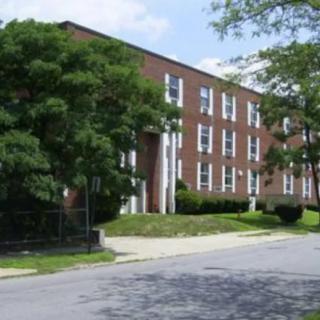

 Understanding Dementia Through Its Seven Stages: A Comprehensive Look at Progression and Expectations
 Safeguarding Your Memory Through the Golden Years: Eight Ways to Preserve Cognitive Health
 Comprehensive Insights into Activities of Daily Living (ADLs) and Their Assessment