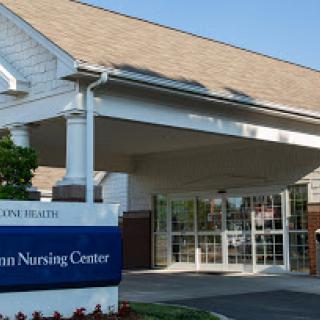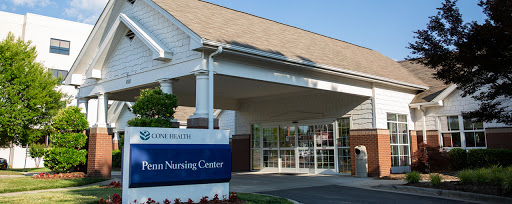
618-A South Main Street, Reidsville, NC 27320
For more information about senior living options: (866) 208-4318
Overall Review of Penn Nursing Center
Pros
 The staff are mostly highly compassionate and regularly round on residents.
- There are many long-tenured employees, contributing to continuity of care.
- The activity staff is very engaged with residents, meeting a range of interests.
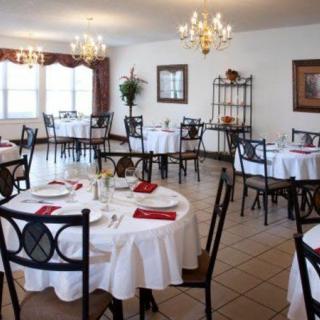
- The facility is clean and the food looks amazing.
- Visitors are greeted by the staff at all hours, morning, noon, and night.
- The staff are respectful of residents and their families when dealing with issues.
- The admissions staff were friendly and communicative.
- The facility deserves five stars for overall quality.
- The nurses are a blessing; they are caring and loving and communicate, even learning Spanish.
Cons
 The staff are overworked and do not have time to care for patients.
- Patients often have to wait over an hour for bathroom assistance.
- A nurse technician yelled at a patient for 30 minutes instead of helping.
- The facility does the bare minimum and often does not seem to care about patients.
- The center is unresponsive, with staff not answering calls and poor adherence to COVID-19 protocols.
- Chronic short-staffing leads to not enough nurses for all patients, and some CNAs are unfriendly or scared.
- Food trays are delivered cold.
Review
Penn Nursing Center in Reidsville, NC is best suited for families who prize a clean, well-maintained setting and programming that keeps residents engaged, with the understanding that care quality can fluctuate across shifts. The campus tends to read as orderly and pleasant, and several residents benefit from the continuity provided by long-tenured staff in certain wings. When the admissions process is handled smoothly, families report reassuring communication and a sense that transitions from hospital care into skilled nursing can be managed with fewer bumps. For seniors who can tolerate some day-to-day variance and who value a practical, no-nonsense environment with engaged activity options, Penn offers credible, workmanlike value.
Those who should seriously consider alternatives are families demanding consistently rapid assistance and uniform care across all hours. Multiple reviews highlight long waits for help with personal needs, sometimes an hour or more, and a few accounts of night staff not meeting expectations. Medical oversight can feel uneven, with residents reporting delays in seeing a physician. The most troubling experiences include perceived disrespect or rough treatment by staff. In short, for those who require steady, reliable responsiveness and high staffing ratios, Penn may fall short of expectations and merits comparing with facilities known for more uniform care across shifts.
On the plus side, the facility’s cleanliness and odor control are repeatedly praised, and when staff are available, interactions can be genuinely compassionate. There is evidence of care continuity where long-tenured aides know residents well, and activity programming can be engaging for a range of interests. The admissions team is consistently described as friendly and informative, and the building’s alignment with the hospital system can streamline therapy, rehab, and discharge planning. These strengths help preserve dignity and quality of life even when some operational gaps appear elsewhere, making the overall experience more tolerable for residents who already enjoy stable, attentive care on most days.
Yet the core tension remains staffing. The repeated reports of slow call-light responses and periods of unavailability point to a systemic capacity issue rather than isolated incidents. A few residents recount confrontations or terse interactions with staff, which underscores a potential culture problem that can undermine otherwise solid routines and amenities. While the facility’s strengths, cleanliness, safety features, and meaningful activity, do offer value, they do not erase the reality that delayed assistance and variable night coverage can erode trust over time. Prospective residents must weigh these dynamics carefully: are consistent, timely responses feasible with the resident’s level of need and risk tolerance?
Practical considerations for families include the undeniable appeal of a clean, secure environment and the facility’s accessibility. Grounds and rooms are well-maintained, and the absence of odors contributes to a comfortable atmosphere. The hospital-system connection can aid in coordinating therapy and discharge planning, and staff sometimes demonstrate genuine bilingual or multilingual care to bridge language gaps. The critical question, however, is whether the center can sustain reliable, timely help across all shifts. Prospective families should insist on a clear, written staffing plan, explicit call-light targets, and a chance to observe a shift-change, ideally during evenings and weekends, to see how consistently residents’ needs are met and how management handles high-acuity scenarios.
In the end, Penn Nursing Center is a pragmatic option for families willing to actively oversee care and push for accountability, given its strengths in cleanliness, environment, and programming. For those who cannot tolerate variability in staffing or who require unwavering promptness and consistent night coverage, alternative facilities with higher staffing ratios and clearer escalation procedures should be considered. If choosing Penn, approach with a concrete plan: request regular access to unit managers, set explicit expectations for call-light response, and verify that high-acuity residents receive appropriate supervision at all times. A thorough tour, conversations with current residents and families, and multiple references will illuminate whether this center can be a dependable fit or if a more consistently staffed option is warranted.
 40 resident community capacity
 Memory Care
 Skilled Nursing Facility
 Beauty salon
 Cable or satellite TV
 Dining room
 Fully furnished
 Garden
 Housekeeping services
 Kitchenette
 Move-in coordination
 Outdoor space
 Restaurant-style dining
 Small library
 Telephone
 Wi-Fi/high-speed internet available
 Piedmont Triad International (24 miles away)
 24-hour call system
 Activities of daily living assistance
 Assistance with bathing
 Assistance with dressing
 Assistance with transfers
 Diabetes diet
 Medication management
 Mental wellness program
 Special dietary restrictions




 Choosing the Right Senior Care: A Detailed Exploration of Assisted Living and Nursing Homes
 Safeguarding Your Memory Through the Golden Years: Eight Ways to Preserve Cognitive Health
 Comprehensive Insights into Activities of Daily Living (ADLs) and Their Assessment