
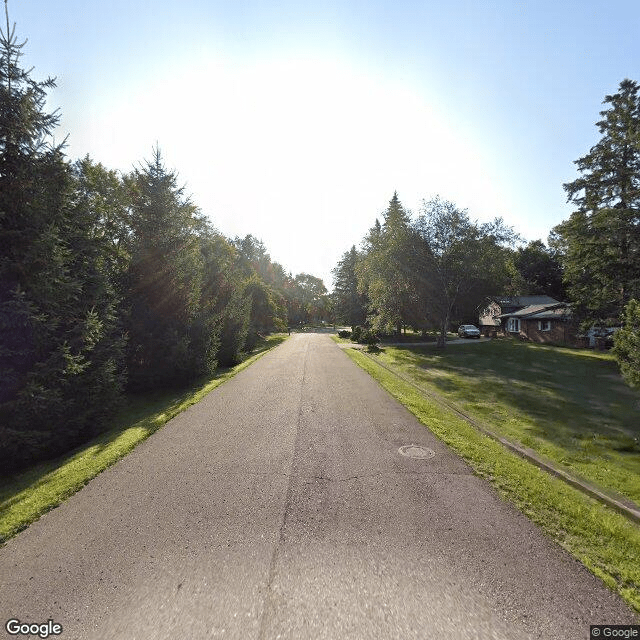
6385 E Norma Lee, West Bloomfield, MI 48322
To contact a resident: (734) 788-3000
For more information about senior living options: (866) 208-4318
Aleardi's Lilac Inn Costs & Pricing
Aleardi's Lilac Inn offers competitive pricing for its accommodations, reflecting both the quality of care and the services provided. For semi-private rooms, the monthly cost is set at $3,400, which is slightly higher than the average costs in Oakland County ($3,204) and the broader Michigan state average ($3,191). Conversely, private rooms at Aleardi's are offered at $3,600, positioning them just below Oakland County's average of $3,708 and Michigan's overall average of $3,675. These pricing structures not only highlight Aleardi's commitment to providing personalized care but also demonstrate its alignment with regional market trends while maintaining a focus on exceptional service.
| Floor plans | Aleardi's Lilac Inn | Oakland County | Michigan |
|---|---|---|---|
| Semi-Private | $3,400 | $3,204 | $3,189 |
| Private | $3,600 | $3,708 | $3,674 |
Memory care communities with a similar price nearby
-
from -$400 / mo

Hutcheson Manor
$3,000 to $4,500 / month6.8 miles away -
from +$400 / mo

Silverbell Manor
$3,800 / month15.5 miles away -
from -$200 / mo
Vicky's Place
$3,200 to $6,000 / month3.3 miles away -
from +$600 / mo

Oakland View Senior Living
$4,000 to $5,000 / month21.4 miles away -
from +$200 / mo

Pineview Manor
$3,600 / month14.4 miles away
Overall Review of Aleardi's Lilac Inn
Pros
 The place is great.
- The staff are nice.
- The food served at these AFC homes is great.
Cons
 The owner told the reviewer not to tell A Place for Mom that they visited, to avoid paying the fee.
- A staff member gave morphine incorrectly to the dad during his last week, and the same error happened the next day.
- Hospice had to intervene to address the incorrect medication issue.
- The dad passed away, and the owner promised a refund but then ghosted and never paid it back.
- The reviewer would never recommend this facility.
- Denise Aleardi is warned against; she lies to con families to make them believe she cares about their loved one.
- She provides minimal care at a premium price.
- She charges a $1,500 nonrefundable move-in fee and then tells residents to move out after collecting it.
- The reviewer would give her a zero rating if possible.
- People are advised to run from Denise Aleardi’s homes.
Review
Aleardi’s Lilac Inn in West Bloomfield is best suited for families seeking a small, home-like setting where staff interactions feel personal and meals are comforting, and where the daily routine can feel intimate rather than institutional. The facility carries a mixed signal: a modest community vibe paired with a troubling record on care oversight and financial conduct, reflected in a 3.4 overall rating and two strongly skeptical one-star reports. That combination places it firmly in the “careful, informed visit” category rather than a clear recommendation.
Those who should consider alternatives are families prioritizing strict clinical governance, transparent billing, and ethical, straightforward business practices. If a premium upfront cost is acceptable only with ironclad, verifiable assurances about medication safety, consistent staffing, and predictable move-out policies, this may still be worth a pre-admission look, but only with rigorous questions. In particular, any family requiring consistent, physician-led oversight or clear, enforceable refund and fee policies should broaden the search and scrutinize options with well-documented procedures and stronger licensing histories.
The strongest positives cited revolve around warmth in daily interactions and a basic comfort-forward environment. Several accounts describe friendly staff and good meals, painting a picture of a place where residents feel at home and meals feel nourishing. Those elements matter for quality-of-life and can make the day-to-day experience pleasant, especially for residents who value a casual, homey atmosphere and approachable caregivers. However, these perquisites become inconsequential when weighed against signals of safety lapses, governance concerns, and financial opacity.
The compelling negatives overwhelmingly temper any upside. A recurrent thread centers on dangerous lapses in medical care, including multiple reports of morphine being administered inappropriately, with hospice involvement required to intervene. Such incidents, if verified, point to serious clinical mismanagement and insufficient supervision, raising questions about staffing ratios, training, and accountability. Equally troubling are accusations about the owner’s conduct, claims of dishonest or manipulative behavior, a hefty nonrefundable move-in fee, and promises of refunds that never materialized. When a facility’s leadership is perceived as pressuring families to pay upfront and leave abruptly, trust erodes quickly, and comfort does not compensate for the risk.
In weighing these dynamics, the key pros do not meaningfully offset the main cons. A personable staff and decent meals support residents’ daily happiness, but they cannot compensate for potential medication errors, inconsistent oversight, or financially opaque practices. The price tag, reflected in a sizable upfront fee, and the reported difficulty in obtaining refunds amplify the risk, particularly for families navigating tight timelines and sensitive emotions around care transitions. For many families, the calculus is simple: if safety, transparency, and predictable, ethical stewardship are nonnegotiables, this community warrants a cautious, guarded approach or a pass.
For families evaluating options, approach with a clear, evidence-based plan. Request current, written care protocols, explicit nurse-to-resident ratios, and a detailed on-site supervision framework. Demand a transparent, itemized contract that spells out fees, refund policies, and the conditions under which move-out can be initiated, including timelines for refunds. Interview the owner and administrator about how medication administration is overseen, how mistakes are reviewed, and what corrective steps exist. Check state licensing records, read inspection reports, and, if possible, speak with current residents or their families about recent experiences. Have a trusted elder-law or financial advisor review all documents before signing, and insist on seeing independent, third-party corroboration of safety and financial practices.
In the end, Aleardi’s Lilac Inn presents a cautious option for families who prize a home-like atmosphere and can tolerate the possibility of governance and safety red flags. If the priority is ironclad clinical oversight, transparent billing, and predictable terms, this community should not be the first choice. Tours should proceed with pointed questions, a demand for concrete policies, and a readiness to walk away if confidence cannot be established. The prudent path favors alternatives with proven safety records, transparent ownership, and clearer commitments to resident welfare over the lure of a quaint, intimate setting.
 Board and Care Home
 Memory Care
 Cats allowed
 Dogs allowed
 Activities off-site
 Beautician on-site
 Devotional services off-site
 Outdoor common areas
 Private
 Private bathrooms
 Respite or short term stays offered
 Wheelchair accessible showers
 Detroit Metropolitan-Wayne County (23 miles away)
 High acuity care
 Incontinence care
 Medication management
 Kosher
 Christian services







 8 Important Indicators That Memory Care May Be Necessary
 Delving into the Inner World of Dementia: Insights into Thoughts and Awareness
 Five Subtle Dementia Indicators to Observe: An In-Depth Guide to Understanding “Does My Mom Have Dementia?”