

16699 Village Drive, Victorville, CA 92394
To contact a resident: (213) 392-5395
For more information about senior living options: (866) 208-4318
Village Home Care Inc Costs & Pricing
Village Home Care Inc offers competitive pricing for its services compared to both San Bernardino County and the broader California market. For a semi-private room, residents can expect a monthly cost of $1,850, significantly lower than the county average of $2,958 and the state average of $3,333. When it comes to private rooms, Village Home Care Inc maintains an appealing rate of $3,500, which is slightly below the county's average of $3,561 and notably less than the state average of $3,939. These rates not only reflect a commitment to affordability but also position Village Home Care Inc as an attractive option for individuals seeking quality care without sacrificing financial stability.
| Floor plans | Village Home Care Inc | San Bernardino County | California |
|---|---|---|---|
| Semi-Private | $1,850 | $2,958 | $3,333 |
| Private | $3,500 | $3,561 | $3,939 |
Memory care communities with a similar price nearby
-
About the same

IMS Home Inc
$1,800 to $3,000 / month11.7 miles away -
from +$150 / mo

Seegal Residential Care
$2,000 to $3,500 / month5.1 miles away -
from +$150 / mo

Maemar Manor
$2,000 to $2,500 / month4.8 miles away -
About the same

Serene Sunrise Villa
$1,800 to $2,300 / month4.5 miles away -
from +$150 / mo

Rimrock Residential Care Home
$2,000 to $2,500 / month6.6 miles away
Overall Review of Village Home Care Inc
Pros
 They really liked this place.
- It has a nice home setting.
- It is a newer home.
Cons
 They are very unprofessional.
- They make it very difficult to leave and offer excuses to prevent you from leaving.
- They do not deserve even a full star.
- They lack compassion for their patients.
- They care only about money and squeezing money from patients and their insurers.
- They make fraudulent claims toward insurance companies for services and supplies.
- They refer caregivers who are not licensed, without background checks or drug testing.
- When they are in the wrong, they threaten former patients and those involved in a patient’s care.
- They warn others not to use their services and suggest you will regret contacting them.
Review
Village Home Care Inc in Victorville is best suited for families that prize a very small, home-like atmosphere and are prepared to take an active hand in verifying credentials and overseeing bills. The environment aims for intimacy rather than efficiency, presenting a newer, residential setting with a limited number of residents. That can feel more comfortable for seniors who want to avoid a clinical vibe and for families who want closer, more direct access to the person delivering daily care. However, this option should not be considered by households that depend on consistently licensed, well-regulated staff and transparent, risk-averse billing practices. For those needing formal oversight, accountability, and predictable operations, alternatives are worth a serious comparison.
The most troubling threads in the feedback concern professionalism and integrity. Reviews describe unprofessional behavior and a pattern of steering or pressuring families concerning services and payments. Allegations include questionable insurance claims, referrals of caregivers who may not be licensed or properly vetted, and even threats when care arrangements are declined. These reports imply a culture where financial leverage and inadequate credentialing take precedence over resident welfare. Such dynamics create tangible risk, both financially and personally, for families trying to navigate essential caregiving decisions. In short, the danger signals are hard to ignore.
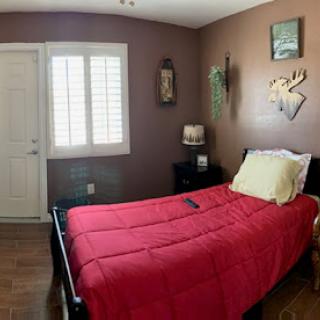
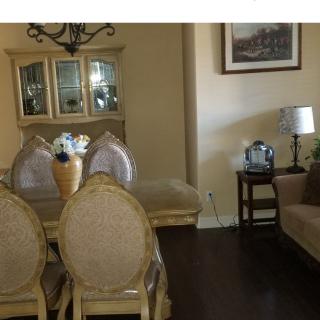
On the surface, the setting’s pros are specific and tangible. A newer home, described as having a quiet, home-like feel, can foster a sense of comfort and safety when staffing is stable. The small scale, often noted as very few residents, may allow more individualized attention if trust and reliability are present. Yet the absence of a key amenity, such as an in-house shower, crosses the line from a merely inconvenient to a meaningful obstacle for daily living. For seniors who require regular assistance with bathing or who need accessible facilities, this is not a minor detail but a fundamental limitation that challenges the viability of care in this location.
These positives do not reliably offset the core concerns. The intimate, homey vibe cannot compensate for allegations of unprofessional conduct, questionable insurance practices, and inconsistent credentialing. The risk of being pressured into services or charged in questionable ways weighs heavily against any upside of a cozy setting. Even the potential for closer attention is undermined if the staff cannot be verified as licensed, trained, and held to clear professional standards. In effect, the allure of a small, warm environment is overshadowed by a fundamental doubt about reliability, safety, and long-term stability of care.
For families still weighing options, the prudent path includes rigorous due diligence before engagement. Demand clear proof of licensing and ongoing staff background checks, plus a transparent staffing roster and caregiver qualifications. Insist on written care plans, specific duties, and measurable outcomes, with a straightforward, contract-based billing process and no hidden fees. Request references from current and former clients, and arrange to meet the caregiver team who would interact with the resident. Explore a trial period with defined exit terms to test whether communication is prompt, boundaries respected, and concerns addressed promptly. Importantly, compare with larger, regulated home-care agencies or licensed board-and-care facilities that provide robust oversight and formal grievance channels.
In the end, this community should be approached with a strong preference for oversight and a clear risk threshold. If the family cannot or will not implement stringent checks and if a movement toward professional credentialing cannot be demonstrated, alternatives should predominate. For those who can maintain vigilant governance, the micro-setting may work, yet even then, the lack of essential amenities and the reported billing and credentialing concerns demand caution. Best next steps involve anchoring the decision in verified licensure, transparent financial practices, and a track record of reliable, respectful care.
 Board and Care Home
 Memory Care
 Activities off-site
 Beautician on-site
 Devotional services off-site
 Indoor common areas
 Outdoor common areas
 Private
 Respite or short term stays offered
 Wheelchair accessible showers
 High acuity care
 Incontinence care
 Medication management
 Meals provided





 Comprehensive Insights on the Late Stages of Dementia: What to Expect and How to Provide Care
 Medications Associated with Dementia Risk: A Comprehensive Overview
 Guiding Your Journey: Understanding Power of Attorney for Elderly Parents