
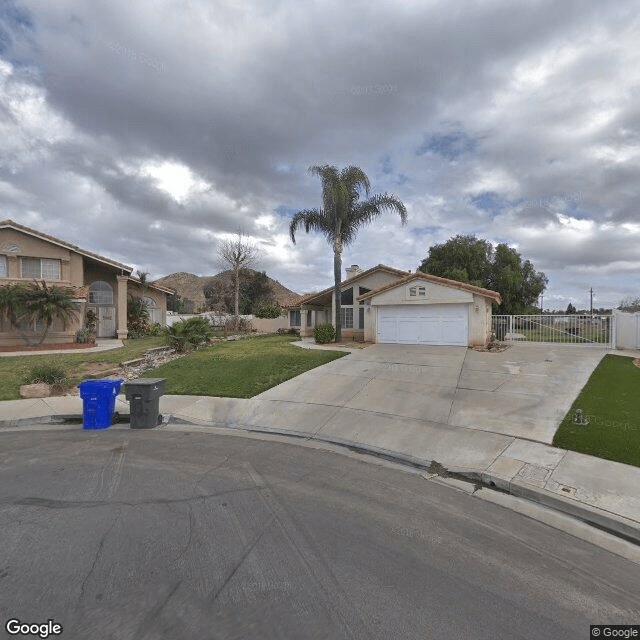
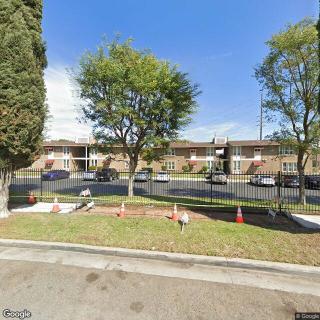
5821 Tahoma Place, Riverside, CA 92505
To contact a resident: (951) 977-9724
For more information about senior living options: (866) 208-4318
Rose Manor Costs & Pricing
At Rose Manor, the cost for a semi-private room is set at $1,800 per month, which presents a compelling value compared to the broader market. In Riverside County, similar accommodations average around $2,844, while the average cost across California soars to approximately $3,333. This makes Rose Manor an attractive option for those seeking affordable care without compromising on quality, as it significantly undercuts both local and state averages. Such pricing not only reflects Rose Manor's commitment to accessible care but also positions it favorably in a competitive landscape where costs can often be prohibitively high.
| Floor plans | Rose Manor | Riverside County | California |
|---|---|---|---|
| Semi-Private | $1,800 | $2,844 | $3,333 |
Memory care communities with a similar price nearby
-
from +$200 / mo
House Of Grace
$2,000 to $4,200 / month18.8 miles away -
from +$150 / mo
Select Senior Care, LLC
$1,950 to $6,200 / month17.3 miles away -
from +$200 / mo
Milam Manor
$2,000 to $3,600 / month14.0 miles away -
About the same
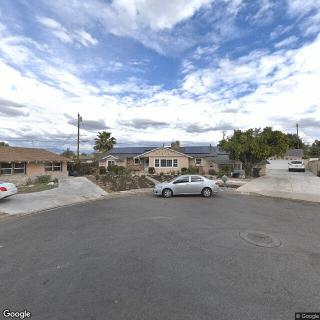
South Hills Country Home for the Elderly
$1,800 to $2,500 / month25.0 miles away -
About the same
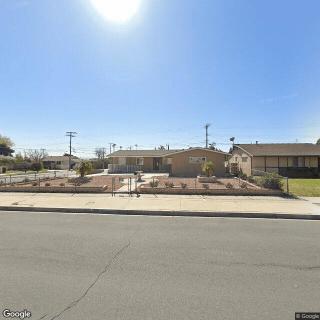
Delizo's Guest Home
$1,800 to $2,500 / month11.8 miles away
Overall Review of Rose Manor
Pros
 They were very pleasant people.
Cons
 There were no activities at all.
- He was not happy there.
- He began acting out.
Review
Rose Manor in Riverside, California is best suited for seniors who prioritize a personal, low-key caregiving environment over a busy activity calendar. The single local assessment notes pleasant, attentive staff and a calm, unhurried atmosphere that can translate into reliable daily assistance and predictable routines. This setting is a reasonable fit for couples who wish to stay together and for residents who derive comfort from a small-community feel where staff know residents by name and respond with warmth. The absence of a robust program lineup, however, signals that those who expect frequent events, outings, or structured social opportunities may find the culture leaning toward quiet containment rather than active engagement. For this niche, Rose Manor offers a workable home, not a destination for enrichment.
Alternatives should be strongly considered for anyone whose top priority is meaningful, consistent programming and opportunities for social interaction. Families with a loved one who requires regular activity, stimulation, or a dynamic schedule will want to explore options that emphasize daily calendars and outings. Likewise, residents who can become unsettled when activities vanish or who present behavioral challenges that demand careful handling may encounter a mismatch here, given the reported incident where a spouse felt compelled to relocate. When the goal is to balance safety, engagement, and behavior management, Rose Manor may fall short relative to higher-activity communities.
On the upside, the described staff warmth addresses routine care needs with a human touch that often translates into better day-to-day comfort, reliable responses to requests, and a welcome atmosphere. Those social dynamics may keep a resident feeling valued in quieter moments. Yet the absence of scheduled activities leaves a substantial gap for residents who rely on programming for purpose and companionship, and this gap cannot be fully offset by the kindness of individual staff members. The eviction-like incident tied to a partner’s unhappiness and acting out signals a rigidity in policy or tolerance thresholds that can be devastating to families seeking stability. The positives help, but they do not counterbalance the central concern of limited engagement and potential policy-driven moves.
Before moving forward, families should verify several practical details. Scrutinize the activity calendar and the staff-to-resident ratio to gauge daily engagement. Ask how activities align with varying levels of mobility, memory, and interest, and whether residents can personalize calendars. Probe policies on behavioral issues and eviction, what triggers a move-out, what supports are offered before removal, and how families are involved in decision-making. In addition, request candid references about mood, social connectedness, and overall satisfaction from current residents with similar needs. These questions reveal whether Rose Manor can pivot from a pleasant, quiet environment into a more vibrant, comfortable home.
For a resident who thrives on routine and companionship through structured programming, Rose Manor will feel like a quiet placeholder rather than a home. For families that can supplement with external activities, community groups, regular family visits, or home-based stimulation, the facility may serve as a steady base with dependable care. For couples, the absence of meaningful engagement could become an ongoing challenge if one partner desires external stimulation while the other prefers a peaceful routine. In contrast, if a resident values consistent staff attention and a humane atmosphere more than built-in social opportunities, this community can deliver reliable daily life without the frenzied pace of larger campuses.
Bottom line: Rose Manor is a workable option for those who prize warm staff, predictable routines, and a calm residential feel, but it falls short for anyone seeking robust activity programming or flexible handling of behavioral dynamics. Families should weigh the value of daily kindness against the likelihood of long stretches without organized engagement and the potential need for policy-driven relocation if a resident’s mood or behavior raises concerns. In Riverside, there are alternatives offering richer calendars and clearer supports for behavioral issues; Rose Manor should be chosen only when those elements are truly secondary to comfort, quiet, and staff responsiveness.
 Board and Care Home
 Memory Care
 Activities off-site
 Bath tubs
 Devotional services off-site
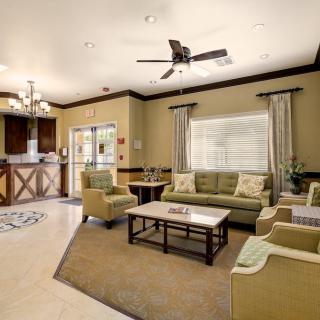
 Indoor common areas
 Outdoor common areas
 Private bathrooms
 Respite or short term stays offered
 Ontario International (10 miles away)
 Ambulatory care
 High acuity care
 Incontinence care
 Kosher
 Adventist services
 Buddhist services
 Islamic services

 Comprehending Evening Confusion in Dementia: Causes, Manifestations, and Support
 Delirium and Dementia: Unraveling the Key Differences
 Are Dementia and Alzheimer's Disease Lethal? A Comprehensive Exploration