
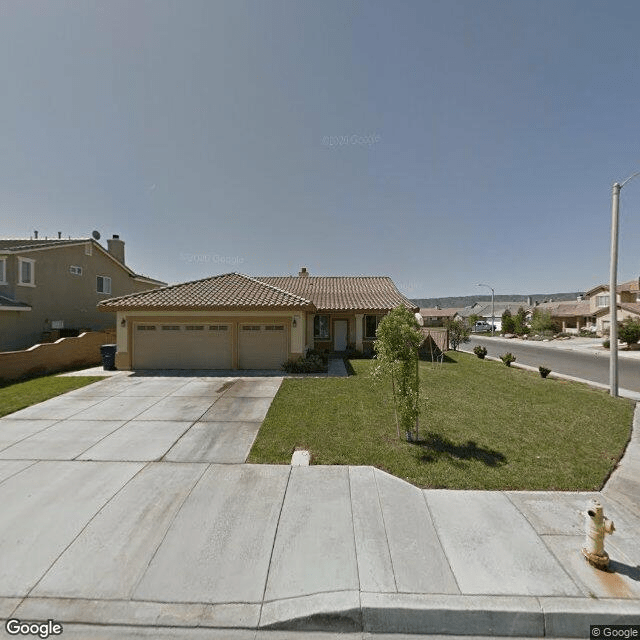
44315 Casa Nova Dr, Lancaster, CA 93536
To contact a resident: (661) 206-8026
For more information about senior living options: (866) 208-4318
Golden Years Home Costs & Pricing
Golden Years Home offers a range of room options, with costs that reflect both its location and services. For a semi-private room, the monthly fee stands at $3,500, which is slightly higher than the average cost in Los Angeles County ($3,349) and California overall ($3,333). When considering private rooms and one-bedroom accommodations, Golden Years Home maintains a premium pricing strategy; both are priced at $6,000 per month, significantly above the county's average of $4,197 for private rooms and $4,603 for one-bedrooms. While these rates may be on the higher end compared to local and statewide averages, they likely correspond with the quality of care and amenities provided at Golden Years Home.
| Floor plans | Golden Years Home | Los Angeles County | California |
|---|---|---|---|
| Semi-Private | $3,500 | $3,349 | $3,333 |
| Private | $6,000 | $4,197 | $3,939 |
| 1 Bedroom | $6,000 | $4,603 | $4,340 |
Memory care communities with a similar price nearby
-
from -$505 / mo

Palm Vista Senior Living
$2,995 to $4,095 / month6.2 miles away -
from -$507 / mo
The Havens at Antelope Valley
$2,993 to $6,385 / month4.9 miles away -
from +$240 / mo
Prestige Assisted Living at Lancaster
$3,740 to $6,400 / month3.4 miles away -
About the same
Westside Villa
$3,500 to $4,200 / month4.8 miles away -
from +$695 / mo

Oakmont of Valencia
$4,195 to $9,295 / month23.8 miles away
Overall Review of Golden Years Home
Pros
 Golden Years Home feels like family, with staff and owners treated as extended family.
- Families are kept updated about both good times and bad.
- The facility is beautiful, spacious, and clean, with friendly, professional, and genuinely caring staff.
- It operates as a residential-style setting with extra-special attention and quality care, including hospice capacity.
- The service is top-notch and reassuring during tough decisions, with staff like Bryan being especially helpful.
- Families would highly recommend Golden Years Home for their loved ones.
Cons
 The mother-in-law was described as very mischievous and sneaky.
- It was rough to send their grandparents to a senior living home.
- They didn’t think there were activities there.
- They could only take two hospice patients at any given time.
Review
Golden Years Home in Lancaster is best suited for families seeking a small, home-like residential care setting where seniors receive unusually personalized attention, ongoing family communication, and compassionate end-of-life support. The community functions as a close-knit environment, with owners and staff often described as family-like and genuinely engaged in residents’ welfare. This model is ideal for elders who require moderate assistance with daily activities but do not need a large clinical campus or intensive 24/7 medical supervision. For families who value transparency, regular updates, and involvement in care decisions, Golden Years Home offers a reassuring, hands-on approach that feels supportive during difficult transitions.
Pros clearly center on warmth, cleanliness, and individualized care. The facility is described as beautiful and spacious, with a domestic ambiance that makes residents feel at home. Staff members are consistently noted as friendly, professional, and attentive, delivering genuine care and maintaining a high standard of cleanliness. The residential-care vibe supports extra emphasis on quality of life, including regular meals that residents enjoy and a culture that respects personal preferences. A faith-informed ethos appears to be a meaningful touchstone for some families, contributing to a sense of purpose and alignment with residents’ values. The capacity to accept hospice patients, up to a modest number, also positions Golden Years Home as a potential option for those nearing end-of-life, allowing for aligned, personalized oversight.
Where the experience softens into trade-offs, the most noticeable con is a perceived gap in activities and structured programming. One reviewer explicitly notes that activities may be limited, which can be a consideration for seniors who thrive on a busy social calendar or who require diverse engagement opportunities to stay mentally and physically active. Additionally, capacity constraints for hospice care, reported as space for two hospice patients at a time, can be a decisive factor for families planning for advanced end-of-life needs across multiple loved ones or expecting higher demand for palliative services. The small size, while offering intimacy, also limits the breadth of amenities and larger-scale activities found in bigger communities.
Those strengths, however, can offset the drawbacks when viewed through the right lens. The intimate setting enables close supervision, rapid caregiver responsiveness, and highly individualized attention that larger facilities struggle to consistently deliver. Regular updates and open communication between staff and families reduce uncertainty during challenging moments, particularly as a resident’s condition evolves. Food quality and general comfort in the living spaces further bolster daily life, making the home feel welcoming rather than clinical. The combination of a compassionate team, clear lines of communication, and a supportive atmosphere can make the difference for families navigating the stress of placement, especially when spiritual or values-based alignment matters to the resident.
Prospective movers should explicitly consider alternatives if three needs are non-negotiable: a robust activity calendar, a non-religious environment, or a facility with larger scale operations and broader medical capacity. For seniors who crave more social programming, a setting with frequent outings, enhanced therapy options, or more formal programming may be preferable. Families prioritizing extensive medical oversight or those requiring a higher ratio of clinical staff will probably find bigger campuses or traditional skilled-nursing facilities more suitable. Likewise, those seeking a secular atmosphere with emphasis on activity diversity might feel Golden Years Home does not fully meet those expectations.
In the end, Golden Years Home offers a compelling blend of warmth, integrity, and personalized care that resonates with families seeking a small, family-centric senior living option. The community’s strongest selling points are the caring staff, clean and comfortable home-like surroundings, and transparent, ongoing family communication. For elders who prize a close-knit environment, a straightforward care model, and a supportive spiritual context, this is a confident choice. For families prioritizing extensive daily programming, broad hospice capacity, or a non-faith-based setting, a broader-spectrum community may deliver a better fit. The decision should hinge on balancing the value of intimate, attentive care against the desire for more activities and larger-scale resources.
 Board and Care Home
 Memory Care
 Activities on-site
 Bath tubs
 Beautician on-site
 Indoor common areas
 Outdoor common areas
 Private
 Respite or short term stays offered
 Ambulatory care
 Diabetic care
 Incontinence care
 Meals provided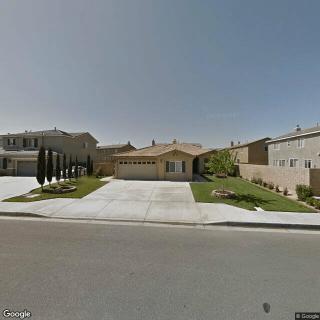


 Dementia-Related Hallucinations: Causes, Experiences, and Practical Approaches
 Illuminating Insights About Alzheimer's Disease: Ten Crucial Realities
 A Thorough Discussion of Medications Potentially Linked to Dementia Risk