
14571 W Desert Hills Dr, Surprise, AZ 85379
To contact a resident: (623) 444-8557
For more information about senior living options: (866) 208-4318
Pleasant Living Costs & Pricing
Pleasant Living offers competitive pricing for its accommodations when compared to both Maricopa County and the broader Arizona state averages. The facility's semi-private rooms are priced at $2,500 per month, significantly lower than the county average of $2,801 and the state average of $2,820. Similarly, both studio and one-bedroom options are available for $3,000, which is more affordable than the respective county rates of $3,960 for studios and $3,473 for one-bedroom units. The private room option also stands out at $3,000 compared to the county's price of $3,318 and the state's rate of $3,345. Overall, Pleasant Living provides a cost-effective choice for residents seeking quality care without compromising on comfort in a competitive market.
| Floor plans | Pleasant Living | Maricopa County | Arizona |
|---|---|---|---|
| Semi-Private | $2,500 | $2,801 | $2,820 |
| Studio | $3,000 | $3,960 | $3,829 |
| 1 Bedroom | $3,000 | $3,473 | $3,532 |
| Private | $3,000 | $3,318 | $3,345 |
Memory care communities with a similar price nearby
-
About the same
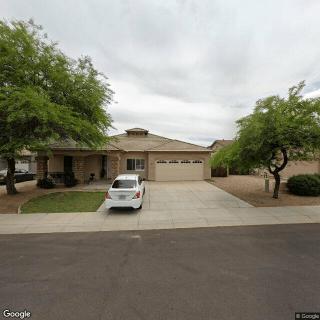
Anc Assisted Living Homes I
$2,500 to $3,500 / month5.1 miles away -
from +$200 / mo
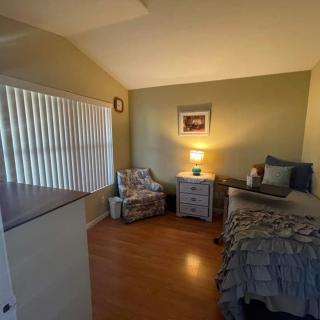
Caring Hearts Senior Care
$2,700 to $3,500 / month3.5 miles away -
About the same
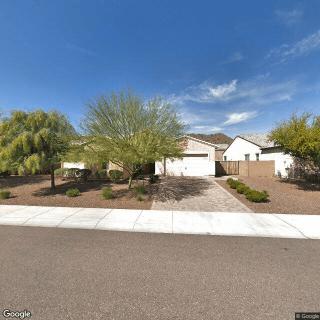
Northlands Assisted Living Home
$2,500 / month10.8 miles away -
from -$245 / mo

Windsor Luxury Assisted Living, LLC
$2,255 to $5,950 / month23.9 miles away -
from -$300 / mo
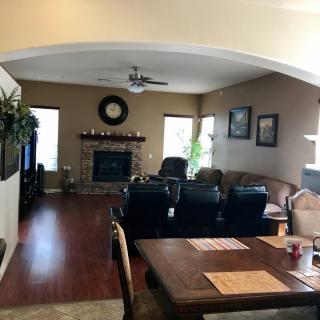
Paseo Highlands ALH
$2,200 to $3,500 / month15.8 miles away
Overall Review of Pleasant Living
Pros
 The Pines at Pleasant Valley provided care with kindness and dignity.
- Residents received home-cooked meals daily.
- Medications were given with fidelity and the room and the home were immaculately clean.
- She was spoken to with kindness and her family was included in the day as appropriate.
- The reviewer would recommend The Pines at Pleasant Valley for consistent, quality care.
- The reviewer is pleased that her husband has moved in today.
Review
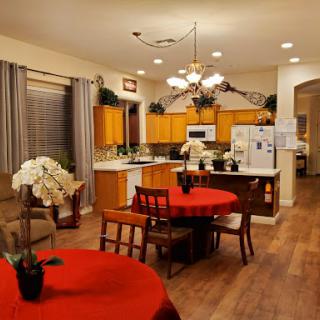
Pleasant Living in Surprise, AZ is best suited for families seeking a dependable, person-centered assisted living where dignity, kindness, and daily routines are the core of care. The reviews convey a home-like setting with home-cooked meals, meticulous cleanliness, and staff who engage residents with warmth. It rewards families who want regular inclusion of the senior in daily activities and a transparent, respectful caregiving relationship. For seniors who need steady assistance with daily tasks and medication, and who value a stable, welcoming atmosphere, this community stands out as a practical fit.
However, for residents with higher medical or cognitive needs requiring robust clinical resources or a formal memory-care program, alternatives should be explored. Families should consider options that advertise 24/7 on-site nursing coverage, specialized dementia care, or larger campuses with more medical staffing. The brevity of information in reviews means potential buyers should verify exact levels of care, availability of consistent nurses, and policies on hospital transfers. These are legitimate diligence points before committing to a move.
The strongest advantages, consistency of care, kindness and dignity, home-cooked meals, spotless environment, reliable medication administration, and family inclusion, address the common anxieties families have when moving a loved one into assisted living. These strengths tend to offset the lack of public metrics about clinical acuity or specialized services. Yet, the absence of explicit details on clinical oversight means some risk remains for residents who require more intensive medical attention. In such cases, align expectations with a tour focused on medical staffing, emergency protocols, and chronic care management.
On a daily basis, residents experience a gentle, inclusive rhythm: meals that feel homelike, staff who communicate respectfully, and spaces that are clean and orderly. The testimonial that home-cooked meals are provided daily is meaningful in contrast to institutional dining. The fact that families are welcomed into the daily life of the resident, through appropriate inclusion, speaks to a culture that prioritizes personhood and dignity. Another positive signal is the line about a spouse moving in, which implies a smooth onboarding process and a willingness to accommodate family members, not as passive visitors but as participants in care.
For families evaluating Pleasant Living, a practical checklist emerges from the narrative: confirm medication management practices, review how meals are prepared and served, tour the living spaces for cleanliness and safety, and observe staff engagement with residents and families. Ask about staff turnover, caregiver-to-resident ratios, and how and when residents can participate in daily activities or leave for social outings. Also investigate what medical support can be accessed on-site, and what happens if medical needs escalate. These questions clarify whether the proven strengths align with the loved one's medical reality.
Bottom-line: Pleasant Living in Surprise is well-suited for seniors who prize dependable, compassionate care delivered in a home-like setting, with strong emphasis on meals, cleanliness, and inclusive family involvement. It is less ideal for residents requiring advanced clinical care or highly specialized memory-dementia programming, unless those services are explicitly available on site. Families with strong medical complexity or budget concerns should compare it against options that offer broader clinical staffing or different care models. With steady performance in the core areas and a welcoming orientation toward family inclusion, this community deserves serious consideration for those prioritizing dignity, comfort, and daily reliability.
 Board and Care Home
 Memory Care
 Activities on-site
 Devotional services on-site
 Indoor common areas
 Outdoor common areas
 Private
 Private bathrooms
 Phoenix Sky Harbor International (24 miles away)
 Diabetic care
 Incontinence care
 Meals provided

 Illuminating Insights About Alzheimer's Disease: Ten Crucial Realities
 A Thorough Discussion of Medications Potentially Linked to Dementia Risk
 Why Do Dementia Patients Sleep So Much? Understanding Oversleeping, Stages, and Care Approaches