
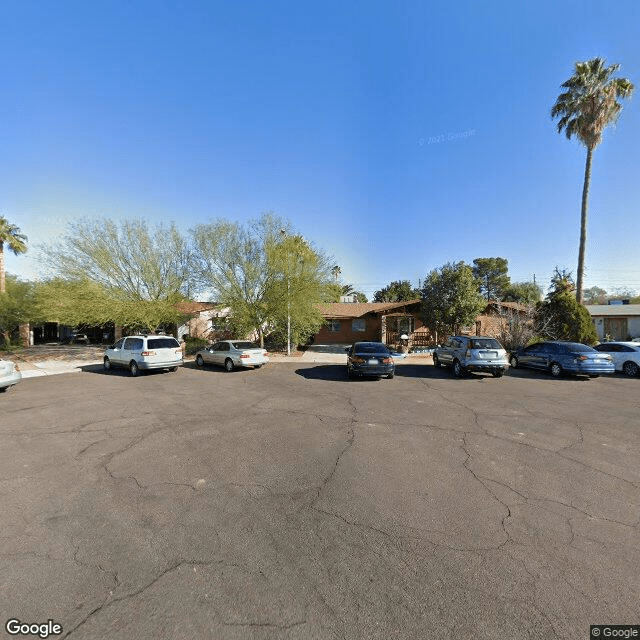
9407 N 36th Avenue, Phoenix, AZ 85051
To contact a resident: (602) 841-7669
For more information about senior living options: (866) 208-4318
Desert View ALH Costs & Pricing
Desert View ALH offers competitive pricing for its accommodations, with costs significantly lower than the broader averages for Maricopa County and the state of Arizona. For semi-private rooms, residents pay $2,000 per month, which is notably less than the county's average of $2,801 and the state's average of $2,820. Private room rates at Desert View ALH are set at $2,500, again undercutting both the county's average of $3,318 and the state's average of $3,345. Similarly, one-bedroom units also maintain this trend at $2,500 compared to Maricopa County's average of $3,473 and Arizona's average of $3,532. These cost advantages position Desert View ALH as an attractive option for individuals seeking quality assisted living services without compromising their financial resources.
| Floor plans | Desert View ALH | Maricopa County | Arizona |
|---|---|---|---|
| Semi-Private | $2,000 | $2,801 | $2,820 |
| Private | $2,500 | $3,318 | $3,345 |
| 1 Bedroom | $2,500 | $3,473 | $3,532 |
Memory care communities with a similar price nearby
-
About the same
Tatum Ranch Assisted Living
$2,000 to $3,000 / month15.9 miles away -
About the same
Angel's Adult Group Home
$2,000 to $3,000 / month20.4 miles away -
from +$255 / mo

Windsor Luxury Assisted Living, LLC
$2,255 to $5,950 / month10.2 miles away -
from +$225 / mo
Harts Home - Exceptional Elder Care
$2,225 to $5,500 / month13.7 miles away -
from +$200 / mo
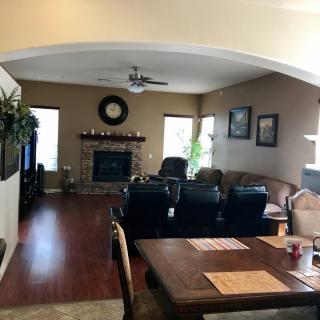
Paseo Highlands ALH
$2,200 to $3,500 / month8.4 miles away
Overall Review of Desert View ALH
Pros
 It is a great place to live.
- The caring staff provide constant care and a gentle touch.
- The care is awesome, with a professional approach to residents.
- People highly recommend this place.
Cons
 The owner of this building is disrespectful and unprofessional.
- It is claimed that bringing family members here would result in them being held hostage.
- The care here is horrible.
- The lady is in it for the money, does not pay her employees for their hard work and time, and is in the business for all the wrong reasons.
Review
Desert View ALH in Phoenix is best suited for seniors who want close, hands-on caregiving delivered with warmth by staff perceived as consistently engaged. Families and residents who value daily attentiveness, a gentle approach to tasks of daily living, and a professional, rule-driven caregiving environment may find the right fit here. The strongest appeal lies in daily care that feels personal and dependable, with caregivers who actively monitor needs and respond promptly. This is not a setting aimed at those seeking light supervision or a purely independent lifestyle; the emphasis is on direct support, watchful oversight, and a structured routine that keeps residents safe. Those requirements are the core strength of Desert View when the operation runs smoothly.
Among the positives, several reviewers cite a caring staff and a constant caregiving presence. When functioning well, the team delivers what looks like hands-on attention, with a professional demeanor that communicates respect for residents. In practical terms, residents can expect help with mobility, hygiene, and daily routines without extended delays. This reliability matters for seniors who need regular reminders, assistance with medications, or supervision during activities of daily living. The consistency of care appears to be the distinguishing factor that separates Desert View from facilities where staff attention is more sporadic.
Yet, serious governance concerns appear in the experience of some families. One reviewer describes the owner as disrespectful and unprofessional, alleging that family members are treated poorly and that moving a resident to another facility is unduly obstructed. Another comment accuses the leadership of operating primarily for profit and of underpaying staff, raising red flags about morale, retention, and the sustainability of compassionate care. A separate critique notes difficulty with transfers, implying that all-important transitions, whether for hospital discharge, insurance, or a need for higher level care, may be hindered by management decisions. Taken together, these reports point to a fragile trust in the facility’s operational backbone.
Pros and cons collide here. The genuine, steady caregiving described by some residents can offset many daily frustrations, providing a lifeline for families who fear neglect or inattentive oversight. However, governance issues threaten to unwind even excellent care: when leadership is perceived as hostile toward families, or when financial priorities overshadow staff welfare, the entire resident experience can deteriorate fast. The risk isn't merely one-off complaints but a pattern that could leave residents with inconsistent policies, fragile advocacy, and uncertain rights. For families footing the bill, that means the comfort of constant care is balanced by the anxiety of unclear accountability and the potential for abrupt changes without clear protections.
For those evaluating Desert View, concrete diligence will determine fit. Prospective residents should insist on speaking with multiple caregivers and, if possible, current residents to gauge consistency and morale. Scrutinize the contract for transfer rules, notice requirements, and escalation paths if care or safety concerns arise. Demand clarity on ownership, management structure, and any performance or quality indicators the facility tracks. Check alignment with family expectations about billing, fee increases, and what constitutes a need for higher levels of care. If that clarity cannot be delivered, or if leadership shows defensiveness around concerns, alternatives with more transparent governance and proven resident advocacy should be pursued.
In practical terms, Desert View ALH is a cautious choice. It can serve as a reasonable option for seniors who prize dependable, hands-on daily care and who can tolerate some governance ambiguity in exchange for steady caregiving. Those who demand transparent management, smooth transfers, and staff stability should look elsewhere and compare with facilities that demonstrate consistent leadership and clear resident protections. The decision should rest on a careful interview of staff, a review of policies on transfers, and a candid sense of whether the current leadership will honor resident rights over time. When those conditions align, Desert View becomes a viable, practical option; when they do not, alternatives win out.
 Board and Care Home
 Memory Care
 Cats allowed
 Dogs allowed
 Private
 Respite or short term stays offered
 Phoenix Sky Harbor International (12 miles away)
 Ambulatory care
 Diabetic care
 High acuity care
 Incontinence care


 A Holistic Dementia Care Guide: Effective Strategies for Memory Support
 Memory Care Pathways: A Holistic Guide to Dementia Support
 Comprehending Evening Confusion in Dementia: Causes, Manifestations, and Support