
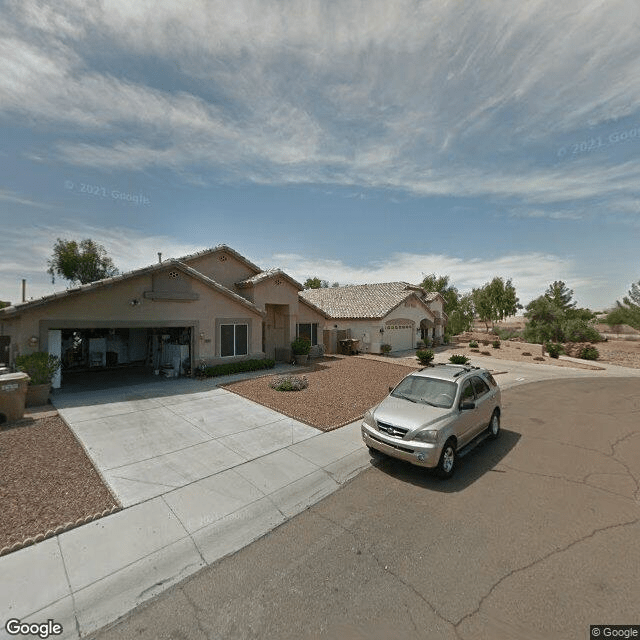
15607 N 91st Drive, Peoria, AZ 85382
To contact a resident: (623) 583-7815
For more information about senior living options: (866) 208-4318
Caroline Baylon Adult Foster Care Home Costs & Pricing
Caroline Baylon Adult Foster Care Home offers competitive monthly rates compared to the broader market in Maricopa County and throughout Arizona. For a semi-private room, residents can expect to pay $2,500, which is notably lower than the county average of $2,801 and the state average of $2,820. Similarly, the cost for a private room is set at $3,000, offering substantial savings when compared to Maricopa County's average of $3,318 and Arizona's average of $3,345. Additionally, one-bedroom accommodations are also priced at $3,000 - again providing a more affordable option against the averages of $3,473 in the county and $3,532 statewide. Caroline Baylon Adult Foster Care Home thus positions itself as an economically favorable choice for individuals seeking quality adult foster care services without compromising on the essential comforts they desire.
| Floor plans | Caroline Baylon Adult Foster Care Home | Maricopa County | Arizona |
|---|---|---|---|
| Semi-Private | $2,500 | $2,801 | $2,820 |
| Private | $3,000 | $3,318 | $3,345 |
| 1 Bedroom | $3,000 | $3,473 | $3,532 |
Memory care communities with a similar price nearby
-
About the same
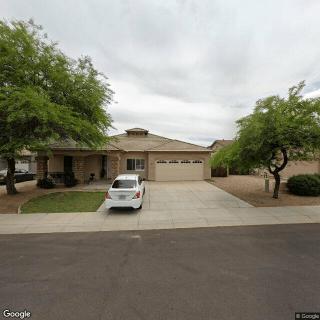
Anc Assisted Living Homes I
$2,500 to $3,500 / month11.6 miles away -
from +$200 / mo

Caring Hearts Senior Care
$2,700 to $3,500 / month8.0 miles away -
About the same

Northlands Assisted Living Home
$2,500 / month7.1 miles away -
from -$245 / mo

Windsor Luxury Assisted Living, LLC
$2,255 to $5,950 / month17.9 miles away -
from -$275 / mo
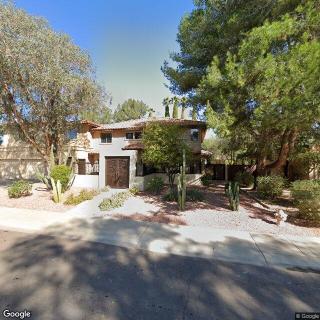
Harts Home - Exceptional Elder Care
$2,225 to $5,500 / month20.8 miles away
Overall Review of Caroline Baylon Adult Foster Care Home
Pros
 The staff seemed nice.
- The house appeared clean.
- Her health was improving upon arrival.
Cons
 The facility will not take care of loved ones, but will take all of their money.
- The mother’s health declined after arrival, with staff claiming the leaking fluids from her legs and arms were normal, and she died within six days.
- The facility failed the grandmother and the family.
- The staff were rough with the grandmother and caused her pain when she was moved, despite her recent neck surgery requiring extra precautions.
- They ignored severe edema, told the family it was normal, and left her in wet clothes as her condition worsened.
- The family paid $4,000 for six days of care and felt the service was subpar, with the full amount kept for about 5.5 days.
- They do not accept diabetic residents.
Review
Caroline Baylon Adult Foster Care Home in Peoria is best suited for residents who can tolerate a home-like setting with minimal medical oversight and whose families are prepared to closely supervise care. The four negative reviews and a one-star rating tell a troubling story: this community does not appear capable of delivering reliable medical attention, timely responses to changing conditions, or the level of accountability families expect in a senior living arrangement. For seniors with chronic illnesses, wounds requiring professional management, or any condition necessitating skilled nursing, this option becomes a high-risk choice. The emphasis here seems to be on ambience rather than clinical safeguards, making it unsuitable for higher-need residents.
Who should consider alternatives? Those needing consistent, skilled medical support should look elsewhere. The reports describe rough handling and pain during transfers, coupled with responses that dismissed edema and other warning signs as “normal.” A striking barrier is the facility’s policy of not accepting diabetic residents, which excludes a substantial segment of older adults who require supervision for diabetes and related complications. Postoperative needs, wound care, and fall-risk management are unlikely to be reliably addressed here. In short, this home does not deliver the medical stability many families expect from a senior-care setting.
Even where there are faint positives, they fail to offset the core failures. Some reviewers noted a clean house and courteous staff at times, which provides surface reassurance. Those impressions quickly fade under reports of inadequate attention to escalating health issues and a dangerous mischaracterization of edema as routine. The most serious red flag is the rapid decline after admission, culminating in a death within days and an ER transfer that followed only after significant delay. Financial concerns compound the crisis: a $4,000 charge for roughly six days, with the family retaining little confidence that the value justified the cost.
Financial transparency and value emerge as significant liabilities here. Families describe paying for a stay that yielded little meaningful care and, in at least one instance, the full amount was retained despite a short stay and troubling outcomes. The lack of acceptance for diabetics narrows the eligible resident pool and signals tighter medical constraints. In environments where emergencies can and do arise, the absence of a clear plan for managing edema, postoperative needs, or acute events constitutes a serious liability. When care quality appears to hinge on the day’s staff, the risk becomes a predictable outcome rather than an exception.
For families weighing options, insist on independent verification: confirm licensure status, staffing ratios, and the presence of a licensed nurse on site, not merely a caregiver. Demand a formal care plan tailored to the resident’s medical history, with explicit protocols for edema, wound care, and emergency transfer. Seek facilities that openly accept diabetics and provide transparent, itemized pricing. Consider whether the setting can truly support both safety and dignity or if the environment is primarily a home-like atmosphere lacking critical medical infrastructure. If risk tolerance is very low, this particular option should be dismissed in favor of safer, more established alternatives.
The verdict is clear: Caroline Baylon is not a prudent choice for most seniors whose families expect dependable care, medical oversight, and respectful handling. The price of admission appears steep given the documented outcomes, and the absence of essential medical acceptance creates a chronic risk. Alternatives that offer licensed nursing, stronger clinical oversight, clearer communication, and transparent pricing clearly outrank this option. For families with limited options or constrained budgets, safety and long-term well-being must come first, even if it means forgoing short-term comfort. Thorough visits, rigorous questioning, and comparisons across higher-rated facilities will determine whether a setting can meet the required standard or if this one should be crossed off the list.
 Board and Care Home
 Memory Care
 Private
 Phoenix Sky Harbor International (19 miles away)
 Ambulatory care
 Incontinence care
 Medication management



 8 Important Indicators That Memory Care May Be Necessary
 Delving into the Inner World of Dementia: Insights into Thoughts and Awareness
 Five Subtle Dementia Indicators to Observe: An In-Depth Guide to Understanding “Does My Mom Have Dementia?”