
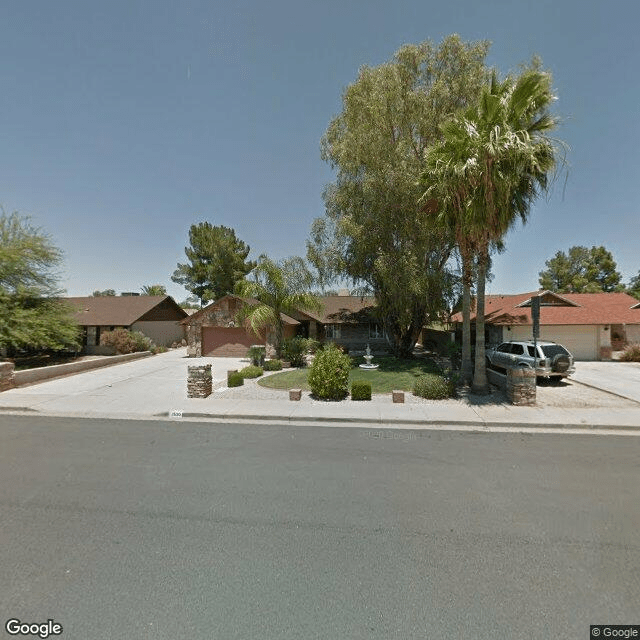
3530 E Pueblo Avenue, Mesa, AZ 85204
To contact a resident: (480) 275-8625
For more information about senior living options: (866) 208-4318
Leisure Living Cottages Costs & Pricing
Leisure Living Cottages offers competitive pricing for its various room types when compared to both Maricopa County and the broader state of Arizona. For a semi-private room, residents can expect to pay $2,500 per month, which is notably lower than the county average of $2,801 and the state average of $2,820. Those opting for private accommodations will find Leisure Living's rate of $3,500 to be reasonable as well, given that it is slightly below Maricopa County's average of $3,318 and just above the state's average of $3,345. Lastly, while the one-bedroom option at Leisure Living is priced at $5,000 per month - considerably higher than both local averages ($3,473 in Maricopa County and $3,532 statewide) - it may reflect unique features or services offered within that living arrangement. Overall, Leisure Living Cottages presents an attractive proposition for individuals seeking affordable care options without sacrificing quality.
| Floor plans | Leisure Living Cottages | Maricopa County | Arizona |
|---|---|---|---|
| Semi-Private | $2,500 | $2,801 | $2,820 |
| Private | $3,500 | $3,318 | $3,345 |
| 1 Bedroom | $5,000 | $3,473 | $3,532 |
Memory care communities with a similar price nearby
-
About the same

La Bella Vita ALH
$2,500 to $7,000 / month5.0 miles away -
from -$100 / mo
Golden Touch One Adult Care Home
$2,400 to $5,800 / month5.2 miles away -
from -$245 / mo

Windsor Luxury Assisted Living, LLC
$2,255 to $5,950 / month14.9 miles away -
from -$275 / mo
Harts Home - Exceptional Elder Care
$2,225 to $5,500 / month14.7 miles away -
from -$300 / mo
Desert Springs Communites
$2,200 to $2,500 / month5.5 miles away
Overall Review of Leisure Living Cottages
Pros
 Sandra and Sam took wonderful care of my mother.
- The staff are awesome and very kind to her.
- They are great to residents and to families.
- They are very understanding of the situation and very patient.
- The home is clean and the caregivers are nice.
Cons
 Assisted living and nursing homes are too expensive, but they all are.
- She's not helping them out.
- They have activities, but my grandma is not going to engage in them.
Review
Leisure Living Cottages in Mesa is best suited for families seeking a warm, home-like environment where an elder can receive highly personal, one-on-one attention in a small, clean setting. The care staff, exemplified by Sandra and Sam, build strong relationships with residents and deliver a steady, compassionate presence. It works well for seniors who aren’t after a large campus with formal programming, and for families who value low-key consistency, familiar routines, and a caregiver team that feels more like family than staff.
Alternatives to consider include larger assisted living communities that offer more structured activities, social calendars, and pronounced on-site medical oversight. Those who require wider social networks, more frequent transportation, or more robust 24/7 medical support may find the smaller home setting constraining. If the loved one demands a richer activity pipeline or programs tailored to specific interests, the offerings here may feel limited despite the presence of activities.
Pros are clear in practice: the home presents clean, well-kept spaces and caregivers who meet residents with warmth. Reviews repeatedly highlight Sandra and Sam as the core strength, delivering genuine kindness, patience, and understanding toward both residents and families. The personal attention translates into a sense of security and predictable routines that reduce anxiety for aging loved ones, and the staff’s willingness to accommodate family needs adds practical peace of mind.
Cons center on scale and value. The most obvious trade-off is size; the property is smaller than some families expect, which can translate to a quieter pace and a limited pool of on-site social opportunities. Costs are not disclosed here, but the remark that assisted living and nursing homes are too expensive suggests price matters; in practice, smaller homes often lean toward leaner programming and a different value proposition. The available activities may not engage every resident, limiting participation for some.
How the positives offset the negatives is telling. For families prioritizing intimate care and consistent, empathetic staff, the intimate setting and dedicated caregivers provide a depth of relationship and trust that larger communities cannot match. Clean, homelike surroundings and patient, understanding responses to family dynamics reduce stress during transitions. While activities may not spark interest for every resident, a small home environment often allows staff to tailor gentle engagement and leverage existing routines, which can be more meaningful than generic programming.
Bottom-line guidance: Leisure Living Cottages is a strong match for a senior who thrives in a small, home-like atmosphere and values steady, compassionate caregiving over formal programming. It is worth exploring for families who want clear, personal relationships with staff and a setting that feels like a true home. Those needing robust social calendars, broader transportation options, or higher levels of medical oversight should actively compare with larger communities or specialized care settings. Visit with Sandra and Sam, review daily schedules, meals, and care plans, and assess whether the resident’s interests can be captured within the smaller footprint. If this balance aligns, the community offers practical, candid value; if not, alternatives may deliver the social and medical support that better fits the loved one’s needs.
 Board and Care Home
 Memory Care
 Activities on-site
 Air-conditioning
 Bath tubs
 Cable or satellite TV
 Devotional services on-site
 Full kitchen
 Indoor common areas
 Outdoor common areas
 Private
 Private bathrooms
 Respite or short term stays offered
 Wheelchair accessible showers
 Wi-Fi/high-speed internet available
 Phoenix Sky Harbor International (15 miles away)
 Diabetic care
 High acuity care
 Incontinence care
 Medication management
 Anytime dining
 Art classes
 BBQs or picnics
 Birthday parties
 Karaoke
 Live musical performances
 Live well programs
 Pet-focused programs
 Visiting chaplain or priest

 8 Important Indicators That Memory Care May Be Necessary
 Delving into the Inner World of Dementia: Insights into Thoughts and Awareness
 Five Subtle Dementia Indicators to Observe: An In-Depth Guide to Understanding “Does My Mom Have Dementia?”