
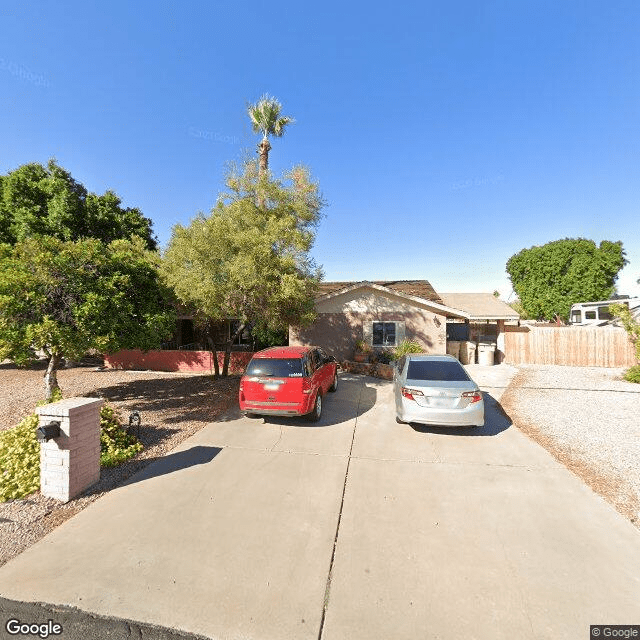
6412 W Villa Theresa Dr, Glendale, AZ 85308
To contact a resident: (928) 699-9419
For more information about senior living options: (866) 208-4318
The Willow House by New Reflections RCH Costs & Pricing
The Willow House by New Reflections RCH offers competitive pricing for its accommodation options compared to the broader market in Maricopa County and the state of Arizona. For semi-private rooms, residents can expect a monthly cost of $2,500, which is notably lower than the county average of $2,801 and the state average of $2,820. In terms of private rooms and one-bedroom apartments, both are priced at $2,900 - significantly more affordable than the county's averages of $3,318 for private accommodations and $3,473 for one-bedroom units. Overall, The Willow House presents an appealing value proposition for individuals seeking quality residential care in a cost-effective manner within this region.
| Floor plans | The Willow House by New Reflections RCH | Maricopa County | Arizona |
|---|---|---|---|
| Semi-Private | $2,500 | $2,801 | $2,820 |
| Private | $2,900 | $3,318 | $3,345 |
| 1 Bedroom | $2,900 | $3,473 | $3,532 |
Memory care communities with a similar price nearby
-
About the same

Anc Assisted Living Homes I
$2,500 to $3,500 / month14.9 miles away -
from +$200 / mo

Caring Hearts Senior Care
$2,700 to $3,500 / month11.1 miles away -
About the same

Northlands Assisted Living Home
$2,500 / month6.8 miles away -
from -$245 / mo

Windsor Luxury Assisted Living, LLC
$2,255 to $5,950 / month16.0 miles away -
from -$275 / mo

Harts Home - Exceptional Elder Care
$2,225 to $5,500 / month18.1 miles away
Overall Review of The Willow House by New Reflections RCH
Pros
 The staff are described as nice.
 - Willow House staff are said to have saved a life and helped the person discover who they are.
- The experience at Willow House is described as the best 45 days of their life, and they have remained sober for over five years.
- The owner, Jane, is described as warm and caring.
- The staff are described as friendly and accommodating.
- The house is described as clean and welcoming.
- Willow House alumni express love for the Willow House family and look forward to future successes.
- New Reflections is described as having a warm owner and providing excellent care, with a caller stating they would highly recommend it.
Cons
 The staff were consistently rude and disrespectful toward patients.
- The program over-promised and under-delivered, with insufficient therapeutic staff to meet patient needs.
- The directors and at least one nurse were described as inconsiderate or the most disrespectful they had encountered.
- Patients experienced coercive or intrusive practices, including being forced to undergo sleep studies and pressured to take medications without consent.
- The facility reportedly treated patients as less than human, including having personal mail read by a therapist and denial of medication for a back injury.
- The discharge process was described as coercive, requiring patients to select “mostly better” to be released, likened to a “hell hole.”
- Trauma therapy sessions were scarce and often absent, with undertrained staff and limited progress toward promised care.
- A troubling power dynamic was noted, with staff displaying a “better than” attitude that compromised safety and dignity.
Review
The Willow House by New Reflections RCH in Glendale is best suited for adults seeking a residential mental-health recovery program with a trauma-focused frame, delivered in a homey, accountable environment. When the program is fully staffed, it can offer a structured daily routine, private rooms, and a sense of community that some alumni describe as life-changing. The facility’s strongest appeal is its foundational aim to tailor care around the individual, along with a leadership tone that can feel warm and supportive to residents who respond well to an intimate, house-style setting. For families described by reviewers as prioritizing personal growth, accountability, and a hopeful path forward, Willow House can be a meaningful option.
Those weighing alternatives should consider programs with a consistently robust trauma-therapy cadence and staff who demonstrate uniform respect and responsiveness. The Meadows, noted by several reviewers as a preferable benchmark, represents a reality check for those who cannot tolerate frequent therapy gaps or variable staffing. Families whose priorities include rigid timelines, predictable therapeutic touchpoints, and consistently respectful care may find better alignment elsewhere. A price tag near sixty- to seventy-thousand dollars, paired with variable outcomes, makes it essential to compare long-term value and guarantee-driven deliverables before committing.
On the upside, several reviewers highlight genuine caregiving and transformative potential. The most durable positives center on staff who, on some shifts, show up with warmth, competence, and a willingness to help residents navigate difficult emotions. There are accounts of alumni who credit Willow House with meaningful recovery, sobriety milestones, and a lasting sense of belonging, testaments that the program can catalyze deep personal change when the care team functions at its best. The private-room configuration and the overall cleanliness of the house contribute to a respectful, dignified living environment that supports recovery goals. In favorable moments, these factors create the trust and stability needed for hard therapeutic work.
Yet the most persistent drawbacks threaten the program’s core promise. A recurring theme across reviews is insufficient therapeutic staffing, with residents reporting few trauma-focused sessions, missed appointments, and a lack of back-up coverage when therapists are unavailable. Discrepancies in care quality are also cited, including disrespectful interactions from nursing staff and a sense that rules or interventions are inconsistently applied. Complaints about being pushed toward medication without clear consent, as well as discharge paperwork that pressures a biased assessment of progress, undermine safety and autonomy. Add to that reports of limited accommodations for trauma triggers and an overall sense that the program’s promises do not consistently translate into practice.
The practical takeaway is that the potent benefits can be substantial, but only when Willow House operates with a reliable, well-staffed clinical team and consistently respectful governance. The presence of committed staff, a warm directorate, and a living environment that feels like home can offset some friction, but the scale of reported gaps cannot be ignored. For families and residents who insist on steady trauma-focused therapy, clear daily structure, and unwavering professional conduct, the gaps may overwhelm the gains. Prospective entrants should demand a concrete, written treatment plan with explicit therapy hours, a transparent staffing schedule, and a definitive commitment to trauma-specific care before admission.
In the end, Willow House represents a decision with high upside for the right person, and real risk for those who cannot tolerate fluctuations in therapy access and interpersonal respect. The advisory stance is pragmatic: pursue Willow House only if the family can verify stable trauma-therapy availability, a predictable care rhythm, and a culture that consistently treats residents with dignity. If those assurances cannot be secured, or if cost relative to delivered outcomes remains a major concern, explore stronger, more consistently staffed programs such as Meadows or comparable residential facilities. The key is to align expectations with demonstrated capacity, and to insist on concrete safeguards before placing a loved one in this environment.
 Board and Care Home
 Memory Care
 Private
 Respite or short term stays offered
 Phoenix Sky Harbor International (19 miles away)
 Ambulatory care
 Incontinence care







 Why Do Dementia Patients Sleep So Much? Understanding Oversleeping, Stages, and Care Approaches
 8 Key Indicators That Suggest It May Be Time to Transition from Assisted Living to Skilled Nursing Care
 Nourishing the Mind: Essential Dietary Approaches for Dementia