
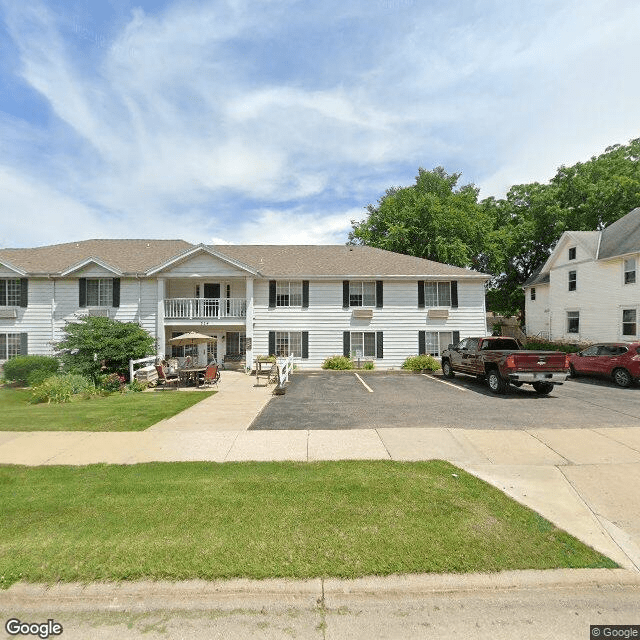
354 N Main Street, Oregon, WI 53575
To contact a resident: (608) 835-5404
For more information about senior living options: (866) 208-4318
Main Street Quarters Assisted Living Costs & Pricing
Main Street Quarters Assisted Living offers competitive pricing for its studio accommodations at $4,110 per month, which is notably lower than the average cost in Dane County at $4,418. This provides a more affordable option for residents while ensuring they receive quality care and services. When comparing to the broader state average of Wisconsin at $3,999, Main Street Quarters is slightly above this benchmark but positions itself as a valuable choice in an area where assisted living options can vary significantly in price and amenities. Overall, residents can expect to find a thoughtful balance of cost and care at Main Street Quarters.
| Floor plans | Main Street Quarters Assisted Living | Dane County | Wisconsin |
|---|---|---|---|
| Studio | $4,110 | $4,418 | $3,999 |
Skilled Nursing Facilities with a similar price nearby
-
from +$685 / mo

Heritage Middleton
$4,795 to $6,295 / month12.9 miles away -
from +$740 / mo

Villa At Middleton Village
$4,850 / month12.3 miles away
Overall Review of Main Street Quarters Assisted Living
Pros
 The staff team is readily available to answer questions and is highly accommodating.
- Residents are made to feel comfortable moving into assisted living.
- The menu is adjusted to accommodate low-sodium diets while offering variety.
- A broad range of on-site activities is offered, with a family calendar and occasional outings.
- Personal hair styling and nail services are available on-site.
- Families highly recommend the community, noting improvements in health and well-being.
- The environment is small, clean, and homey, with staff and residents feeling like one big family.
Review
Main Street Quarters Assisted Living in Oregon, WI is best suited for families seeking a warm, intimate setting where residents receive highly individualized attention, maintain personal autonomy, and enjoy a true sense of community. This is the place for seniors who value easy access to staff, frequent family communication, and a homey atmosphere over a larger, more impersonal campus. The arrangement works especially well for residents who appreciate routine social engagement, arts, music, trivia, outings, and who want a caregiver presence that feels more like a trusted local team than a distant facility operation.
Those who may want to consider alternatives are residents requiring heavy medical oversight, complex skilled nursing, or dementia-focused memory care that demands intensive supervision and specialized programming. A larger or more medically oriented community might be a better fit for individuals with frequent hospital-level needs, 24/7 medical management, or whom the family wants a broader menu of on-site clinical services. Also, households seeking a wide array of high-end services, or robust transportation networks and multi-site resources, may find other communities more aligned with those expectations.
The strongest draws here are undeniable: staff accessibility and genuine, responsive care create immediate confidence for families. The team makes themselves available for questions, and the relational dynamic helps even reluctant residents settle in, which is priceless for new entrants. Dietary flexibility stands out, one-on-one conversations with the chef to accommodate low-sodium needs demonstrate a rare, practical commitment to individual nutrition without locking residents into a rigid, one-size-fits-all menu. The continued variety within a set menu, updated options on a predictable cadence, balances structure with choice, a combination many families prize.
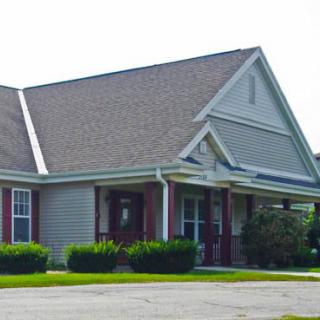
A quiet, personalized scale reinforces the advantages. A small, intimate community supports deeper relationships between residents and caregivers, contributing to a clean, homey environment described as accommodating and familial. The social calendar is consistently shared with families, and activities, from bingo and trivia to live music, TV show gatherings, and occasional outings, provide meaningful engagement without overwhelming daily life. Additional touches, such as on-site hairdressing and nail services, underscore a holistic approach to well-being that minimizes appointment friction and maintains residents’ dignity and routines.
When weighing the pros against potential drawbacks, the balance tilts decisively toward the positives. The core strengths, the staff’s availability, the staff-resident rapport, personalized dietary adjustments, and a lively but intimate activity program, create a safety net of social and physical well-being that is hard to match in larger communities. The small size can limit breadth of services and the range of specialty programs, but the visible, proactive staff culture and the strong sense of family compensate by delivering continuous, attentive care in real time. In practical terms, the risk of feeling overlooked is minimized by staff who know residents well and communicate effectively with families.
The practical verdict is clear: Main Street Quarters is an excellent fit for seniors who thrive on a tight-knit environment where care feels personal, where meals can be tailor-made without sacrificing variety, and where daily life is enriched by accessible activities and genuine staff investment. Families should enter with realistic expectations about medical intensity and program breadth, acknowledging that the strength of the community lies in its intimate scale and hands-on, proactive approach. For those prioritizing camaraderie, consistent staff presence, and a livable home atmosphere, this choice often proves to be not only suitable but superior to more impersonal options.
 20 resident community capacity
 Assisted Living
 Board and Care Home
 Memory Care
 Skilled Nursing Facility
 Activities off-site
 Beautician on-site
 Cable or satellite TV
 Devotional services off-site
 Dining room
 Fully furnished
 Garden
 Housekeeping services
 Indoor common areas
 Kitchenette
 Move-in coordination
 Outdoor common areas
 Respite or short term stays offered
 Telephone
 Wheelchair accessible showers
 Wi-Fi/high-speed internet available
 Dane County Regional (15 miles away)
 24-hour call system
 Ambulatory care
 Assistance with bathing
 Assistance with dressing
 Assistance with transfers
 Diabetes diet
 Diabetic care
 Hospice waiver
 Incontinence care
 Meal preparation and service
 Medication management
 Mental wellness program
 Special dietary restrictions
 Transportation arrangement (medical)
 Transportation to doctors appointments



 Delving into the Inner World of Dementia: Insights into Thoughts and Awareness
 Five Subtle Dementia Indicators to Observe: An In-Depth Guide to Understanding “Does My Mom Have Dementia?”
 Dementia, Paranoia, and Caregiver Guidance: Understanding the Connection