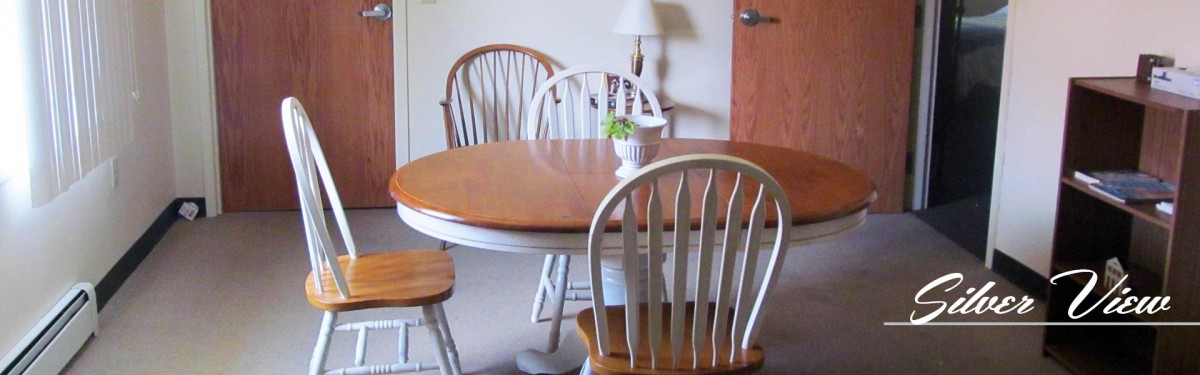
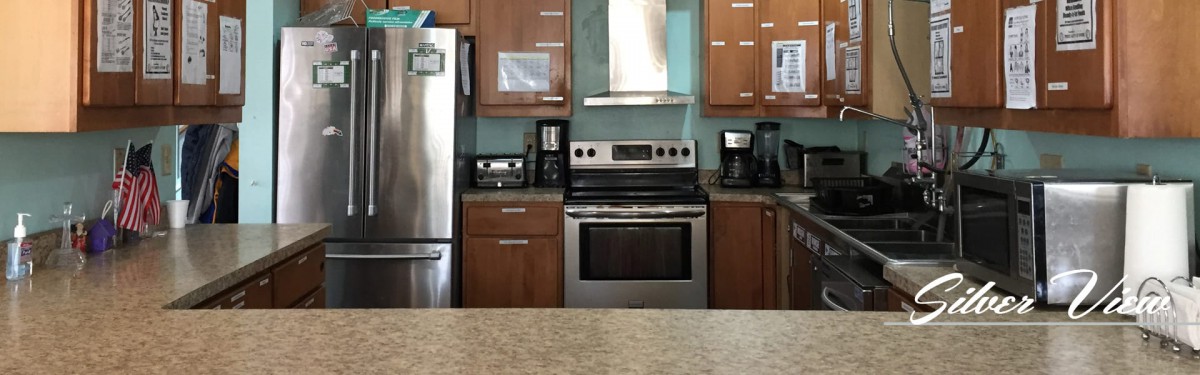
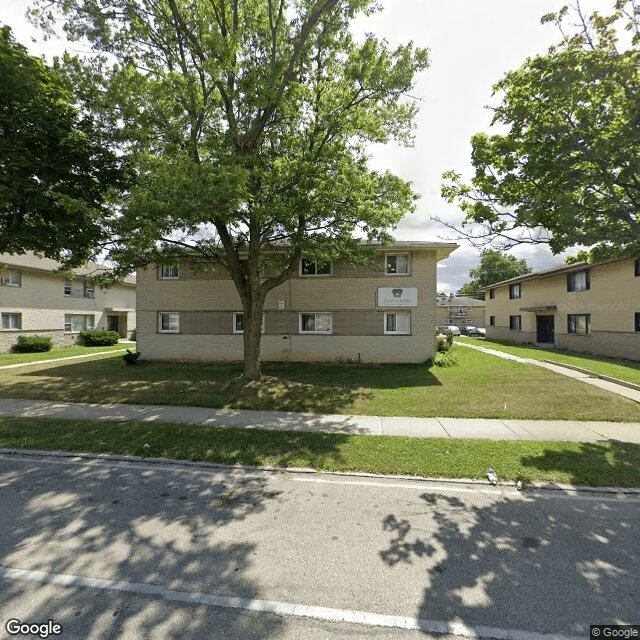
9215 W. Silver Spring Drive, Milwaukee, WI 53225
To contact a resident: (414) 464-0557
For more information about senior living options: (866) 208-4318
Silver View Assisted Living Costs & Pricing
Silver View Assisted Living offers competitive pricing for its residents, particularly in comparison to the broader market of Waukesha County and the state of Wisconsin. For a semi-private room, Silver View's cost is $3,500 per month, which is notably lower than the county average of $4,369 and aligns closely with the statewide figure of $3,977. In contrast, their one-bedroom option is priced at $3,700 per month. While this rate exceeds the county's more affordable average of $2,752, it remains lower than the state average of $3,412. Overall, Silver View provides a compelling choice for those seeking assisted living accommodations, balancing quality care with attractive pricing within the local landscape.
| Floor plans | Silver View Assisted Living | Waukesha County | Wisconsin |
|---|---|---|---|
| Semi-Private | $3,500 | $4,369 | $3,977 |
| 1 Bedroom | $3,700 | $2,752 | $3,412 |
Memory care communities with a similar price nearby
-
from -$400 / mo
Serenity Villa
$3,100 to $5,500 / month18.3 miles away -
from -$350 / mo
Home Share North Shore House
$3,150 / month6.4 miles away -
from -$410 / mo

Wellington Place at Hartford
$3,090 to $4,020 / month21.5 miles away -
from +$500 / mo

Ellens Home Germantown
$4,000 / month8.4 miles away -
from +$500 / mo
Complete Home Health Care
$4,000 / month2.2 miles away
Overall Review of Silver View Assisted Living
Pros
 The reviewers remain hopeful that new leadership will bring positive changes.
- The reviewers are optimistic about improvements that better serve senior citizens.
- The reviewers see potential for a better overall experience under improved administration.
Cons
 The place is horrible.
- The new administration is terrible.
Review
Silver View Assisted Living in Milwaukee, WI is best suited for seniors whose families are prepared to tolerate ongoing administrative instability and who primarily need basic housing, routine activities, and companionship rather than high-touch medical oversight. The current signal from multiple residents and their families points to a setting where governance and leadership turnover undermines day-to-day reliability. When service quality hinges on who is in charge at any given moment, this community tends to deliver inconsistent experiences rather than steady routines. In practical terms, this is a facility that may work for those who can tolerate ambiguity in management while pursuing a simple, non-medically complex living environment.
Those who may want to consider alternatives fall into a few clear categories. First, seniors with meaningful medical needs or requiring regular, predictable staffing for safety and timely medical responses should look elsewhere; the available feedback emphasizes administration instability more than clinical capability. Second, families that place a high value on transparent communication, decisive problem-solving, and consistent caregiver engagement will likely be disappointed. Finally, residents who value a stable leadership team and proven continuity in care plans would be prudent to compare other options before committing to Silver View.
From the limited, but pointed, pros that emerge in the reviews, any perceived positives appear eclipsed by the overarching concerns about governance. A single five-star rating suggests there can be moments of adequacy, perhaps adequate space, routine offerings, or basic comfort, but those positives do not counterbalance the dominant criticisms. The strongest, most repeated red flag is the admission that the administration has changed in ways that degrade the quality of the resident experience. In short, what might feel like a modestly acceptable environment on a good day is undermined by leadership that appears detached from reliable, resident-centered operations.
The principal con, new administration that is described as “terrible”, drives most of the risk here. Administrative upheaval typically manifests as delayed responses to concerns, inconsistent staffing, muddled care coordination, and wavering adherence to care plans. When leadership stability is in doubt, staff morale, turnover, and training gaps follow, and families frequently encounter frustration when trying to resolve day-to-day issues. This pattern undermines trust and raises the likelihood of missed calls, stalled housekeeping, and uneven activity programming. In this context, even potential advantages like familiar routines or peer connections struggle to compensate for the risk of fragmented care and uncertain accountability.
For families actively evaluating options, a practical approach is essential. Start with a face-to-face visit focused on meeting the administrator and the caregiving leadership to gauge responsiveness, communication style, and clarity of policies. Ask for a clear sample care plan, including medication management, monitoring schedules, and escalation procedures for health changes. Inquire about staff-to-resident ratios during peak hours, turnover rates, and who handles family updates and incident reporting. Request recent resident reference checks, and speak with current residents about perceived reliability, safety, and the consistency of daily routines. Finally, compare two or three nearby communities on governance practices, communication cadence, and the stability of leadership teams before deciding.
The bottom-line verdict is clear. Silver View Assisted Living is unlikely to meet the needs of families prioritizing dependable administration, consistent staffing, and transparent problem-solving. For seniors who require minimal medical oversight yet still expect reliable management, the risk remains significant. Alternatives with proven administrative stability and stronger care coordination should be the focus of the search in Milwaukee. If pursuing Silver View, approach with concrete questions, enforce explicit expectations, and prepare to reassess quickly if leadership continuity proves elusive.
 23 resident community capacity
 Assisted Living
 Memory Care
 Cats allowed
 Activities off-site
 Beautician on-site
 Cable or satellite TV
 Devotional services off-site
 Dining room
 Fully furnished
 Garden
 Housekeeping services
 Indoor common areas
 Kitchenette
 Move-in coordination
 Outdoor common areas
 Respite or short term stays offered
 Restaurant-style dining
 Small library
 Telephone
 Wheelchair accessible showers
 Wi-Fi/high-speed internet available
 General Mitchell International (14 miles away)
 24-hour call system
 Ambulatory care
 Assistance with bathing
 Assistance with dressing
 Assistance with transfers
 Diabetes diet
 Diabetic care
 Incontinence care
 Medication management
 Mental wellness program
 Special dietary restrictions



 Comprehending Evening Confusion in Dementia: Causes, Manifestations, and Support
 Delirium and Dementia: Unraveling the Key Differences
 Are Dementia and Alzheimer's Disease Lethal? A Comprehensive Exploration