
4822 North 47Th Street, Milwaukee, WI 53218
For more information about senior living options: (866) 208-4318
Hadassah Care Home Costs & Pricing
Hadassah Care Home offers competitive pricing compared to the broader Milwaukee County and Wisconsin averages. For a monthly stay in a studio room, residents can expect to pay $2,295, which is significantly lower than the county average of $3,841 and even more so compared to the state average of $3,999. However, for those seeking a one-bedroom accommodation, Hadassah Care Home's rate of $4,895 exceeds both Milwaukee County's average of $3,057 and Wisconsin's state average of $3,412. This pricing structure indicates that while Hadassah Care Home provides an attractive option for studio living, its one-bedroom units may not be as competitively priced compared to other facilities in the region.
| Floor plans | Hadassah Care Home | Milwaukee County | Wisconsin |
|---|---|---|---|
| Studio | $2,295 | $3,841 | $3,999 |
| 1 Bedroom | $4,895 | $3,057 | $3,412 |
Assisted Living communities with a similar price nearby
-
from +$286 / mo

New Perspective West Bend
$2,581 to $5,093 / month23.0 miles away -
from -$345 / mo
Meadowmere Oak Creek
$1,950 to $5,155 / month15.5 miles away -
from -$84 / mo

Schmidt Home
$2,211 to $3,413 / month17.8 miles away -
from -$195 / mo
The Waters of Oak Creek
$2,100 to $7,110 / month15.5 miles away -
from -$167 / mo
Oak Creek Place
$2,128 to $3,740 / month15.7 miles away
Overall Review of Hadassah Care Home
Pros
 The company is described as the best company ever.
- The team works well together and residents are awesome.
- It stands behind its beliefs and values.
- People love others, tell the truth, work hard, and have fun.
- Fardale Home rocks.
Review
Hadassah Care Home in Milwaukee is best suited for families seeking a values-driven, team-centered living environment where staff and residents operate with a shared sense of purpose. The strongest signal from available input is a culture built on honesty, hard work, and genuine compassion, an atmosphere where residents are treated like part of a community, not a checkbox on a roster. For families who prize a warm, approachable environment and a staff that projects stability and mutual respect, this facility is a compelling option.
Those evaluating options should consider alternatives if medical acuity is the highest priority. For residents requiring advanced clinical oversight, complex memory-care programming, or highly transparent, published metrics on staffing ratios and care outcomes, Hadassah Care Home may not satisfy every need. Location convenience, cost structure, and access to specific specialists should also factor in the decision. If the primary goal is rigorous, data-driven care indicators alongside measurable clinical performance, families will want to compare with other communities that publish those details.
The primary positives center on people and culture. A strong, cohesive team appears to stand behind the community’s stated beliefs, delivering care with integrity and a work ethic that translates into dependable daily routines. Residents come across as well-integrated, active participants in the communal life, which reduces isolation and fosters social engagement. This combination, competent teamwork coupled with an engaged resident body, helps create a sense of safety, continuity, and belonging that many families find reassuring when trust in staff is a paramount concern.
By contrast, the limited nature of the available feedback leaves several practical questions unanswered. There is no detailed information in the reviews about clinical oversight, medication management, safety protocols, fall prevention, or the breadth of activities and amenities offered. Meal quality, housekeeping standards, transportation options, and how individual care plans are developed and updated are also not addressed. This absence means that families must take a proactive, inquiry-driven approach to verify day-to-day operations before committing.
The key pros offset some potential concerns by grounding daily life in reliable human connection. A culture built on honesty, teamwork, and shared values often yields responsive staff and a predictable, respectful atmosphere, which can mitigate worries about inconsistency or neglect. In environments where medical needs are moderate and social well-being is a primary objective, these strengths can translate into meaningful quality-of-life advantages. However, the offset is not exhaustive; the absence of concrete clinical indicators means this offset relies on ongoing due diligence, tours, direct conversations with caregiving staff, and requests for sample care plans and calendars, to validate the facility’s capacity to meet specific medical or cognitive support requirements.
In summary, Hadassah Care Home presents a practical, compelling option for families prioritizing culture, community, and character in their choice of senior living. It is a particularly strong fit for residents who want to feel known, valued, and actively engaged within a supportive team framework. Those with higher medical needs or the desire for explicit, metric-driven performance should approach with a checklist: request detailed care plans, inquire about staffing patterns and response times, review menus and activity rosters, and insist on speaking to independent references. If these steps confirm the fit, this community can deliver a trustworthy, pleasant, and deeply human living experience.
 3 resident community capacity
 Assisted Living
 Cable or satellite TV
 Dining room
 Fully furnished
 Garden
 Housekeeping services
 Move-in coordination
 Outdoor space
 Telephone
 Wi-Fi/high-speed internet available
 General Mitchell International (12 miles away)
 24-hour supervision
 Activities of daily living assistance
 Assistance with bathing
 Assistance with dressing
 Assistance with transfers
 Diabetes diet
 Meal preparation and service
 Medication management
 Special dietary restrictions
 Transportation arrangement (medical)
 Transportation to doctors appointments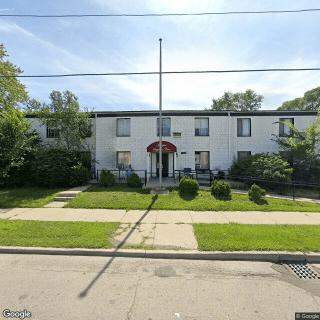

 8 Key Indicators That Suggest It May Be Time to Transition from Assisted Living to Skilled Nursing Care
 Vibrant Senior Living: A Comprehensive Guide for Active Older Adults
 When to Transition from Assisted Living to Memory Care: Key Indicators, Steps, and Finding the Right Community