
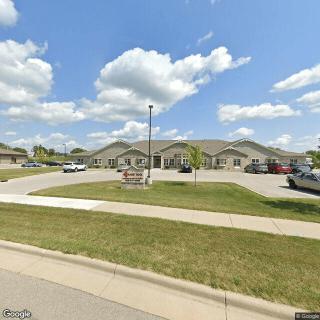
621 East Spring Street, Jefferson, WI 53549
For more information about senior living options: (866) 208-4318
Overall Review of St Coletta Of Wi Tau
Pros
 St Coletta's has amazing staff and programs to meet individual needs.
- The institution is one of a kind, staffed by exceptional professionals who serve very special people.
- St Coletta's cared for Rosemary Kennedy.
- The organization has cared for residents for decades, earning gratitude for its dedication and love.
- Families praise St Coletta's for its dedication and compassionate care.
Cons
 Horrible driver(s) that endanger the lives of their passengers and others on the road.
- A St Coletta employee was driving while using a cell phone, endangering others.
Review
St Coletta Of Wi Tau in Jefferson, WI is best suited for families seeking lifelong, specialized residential support for adults with complex developmental needs who require a seasoned, mission-driven team. The community’s long history of service is evident in stories of residents staying for decades, including a great-uncle who lived there for more than fifty years and a sister who returned to the campus when family care needed to transition. The organization’s capacity to care for high-needs individuals, often described as a “one-of-a-kind” institution staffed by professionals who can meet very specific needs, marks it as a dependable home base for families who want continuity, built on trust and a deep institutional memory.
Those who may want to consider alternatives are families for whom transportation safety and incident-free travel are non-negotiables. Several reviews highlight troubling driver behavior, including distracted driving and close calls with other vehicles. The negative implications of staff operating vehicles while using a cell phone, and the perception that transport safety is not consistently prioritized, can be a decisive factor for families who rely on regular, reliable transportation to appointments, community activities, or social engagement. With a rating of 3.7 from 15 reviews and a meaningful share of one-star experiences, prospective residents should weigh day-to-day safety and oversight as a core criterion, and consider other options if transport safety is a top priority.
The strongest pros center on caregiving quality and individualized programming. Reviewers repeatedly praise “amazing staff and programs to meet individual needs,” and describe the center as exceptionally well-suited to serve very special people. There is a powerful thread of appreciation from families who note long-term placement and consistent, attentive care, testimonies that speak to genuine devotion, stability, and the capacity to tailor services to unique cognitive, physical, and behavioral profiles. This is not a generic facility; it is described as a place where skilled professionals design and implement care plans that adapt to evolving needs, producing meaningful engagement and ongoing support for residents over many years.
Yet the cons cannot be dismissed, especially when they touch the core logistics of daily life. Transportation safety concerns present a tangible risk to residents, families, and other road users. The repeated complaints about drivers’ cell phone use and risky driving practices cast doubt on the reliability of transport as a safety net. In a setting where mobility and community integration depend on dependable transportation, these issues can erode confidence in the overall care environment, regardless of the quality of in-facility programs. The mixed sentiment reflected in the star ratings reinforces the reality that care quality may be strong in some areas but uneven in others, particularly around transport safety and fault lines in staff performance.
The favorable elements, the dedicated staff, personalized programs, and long-standing commitment, do offset the primary concerns to a degree, but only if those mitigations are actively verified and continuously improved. The depth of care suggested by anecdotes about caring for Rosemary Kennedy and relatives who remained resident for decades points to a culture that values dignity, continuity, and specialized attention. That credibility can compensate for some daily-life stress if families are assured that transport safety is being addressed with transparent policies, rigorous driver training, and prompt incident follow-up. Prospective residents should, however, demand explicit assurances: current driver certification standards, fleet maintenance records, and a clear plan for ongoing safety upgrades alongside the celebrated in-house care philosophy.
In practical terms, a decisive visit is essential. Families should request a candid tour focused on daily routines, care plans for conditions typical in residents with high needs, and introductions to the care team dynamics. Ask for current transportation practices, review any safety incident logs, and talk to families with relatives who use the transport services to gauge consistency. If transport reliability and oversight are satisfactory, the community offers a compellingly stable, caring home with proven longevity. If not, it is prudent to explore alternatives that can deliver equally strong in-facility care with tighter transportation safeguards and more transparent accountability. The choice hinges on aligning the organization’s deep caregiving strengths with the family’s non-negotiables for safety, independence, and long-term residency.
 5 resident community capacity
 Assisted Living
 Cable or satellite TV
 Dining room
 Fully furnished
 Garden
 Housekeeping services
 Move-in coordination
 Outdoor space
 Telephone
 Wi-Fi/high-speed internet available
 24-hour supervision
 Activities of daily living assistance
 Assistance with bathing
 Assistance with dressing
 Assistance with transfers
 Diabetes diet
 Meal preparation and service
 Medication management
 Special dietary restrictions
 Transportation arrangement (medical)
 Transportation to doctors appointments

 Securing Financial Support for Assisted Living: A Comprehensive Overview
 Social Security Benefits and Assisted Living: Navigating Options Across the U.S.
 An Extensive Exploration of the VA Aid and Attendance Benefit