
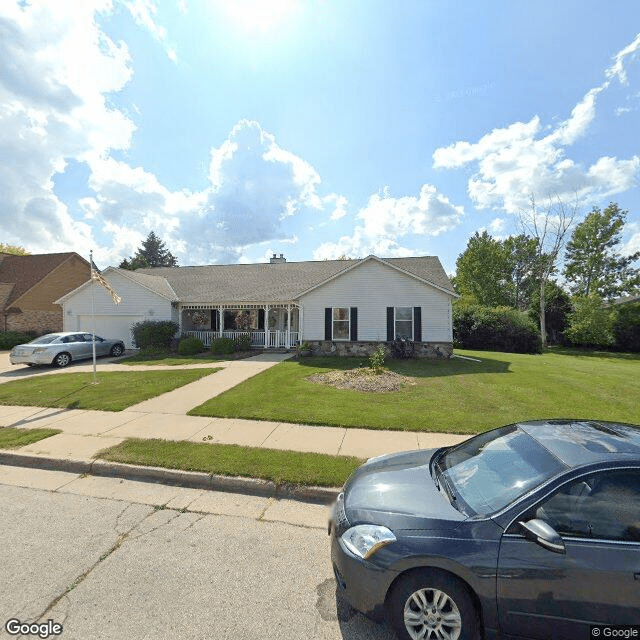
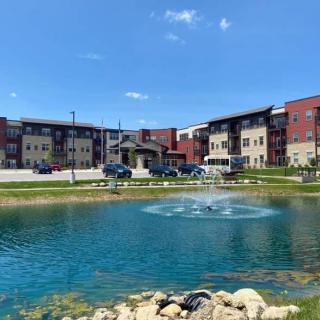
1951 First Avenue, Grafton, WI 53024
For more information about senior living options: (866) 208-4318
Hamburg Home Costs & Pricing
Hamburg Home's pricing structure reflects its commitment to providing quality care, but it does present a notable variance when compared to Ozaukee County and broader Wisconsin rates. For a semi-private room, residents at Hamburg Home can expect to pay $4,667 monthly, slightly above the county average of $4,558 and significantly higher than the state average of $3,977. Private accommodations at Hamburg Home are priced at $5,124, again surpassing both Ozaukee County ($4,571) and Wisconsin averages ($4,339). Similarly, studio apartments cost $5,124 at Hamburg Home compared to more affordable options in the county ($4,022) and state ($3,999). While these fees are higher than regional counterparts, they may reflect the specific amenities or level of personalized care offered by Hamburg Home.
| Floor plans | Hamburg Home | Ozaukee County | Wisconsin |
|---|---|---|---|
| Semi-Private | $4,667 | $4,558 | $3,977 |
| Private | $5,124 | $4,571 | $4,339 |
| Studio | $5,124 | $4,022 | $3,999 |
Memory care communities with a similar price nearby
-
from +$333 / mo

Compassionate Heights of Beechwood
$5,000 / month18.5 miles away -
from -$467 / mo

River Way Place
$4,200 / month13.0 miles away -
from -$667 / mo

Ellens Home Germantown
$4,000 / month9.4 miles away -
from -$667 / mo
Complete Home Health Care
$4,000 / month12.8 miles away -
from +$146 / mo

Oak Park Place Of Wauwatosa
$4,813 to $5,649 / month18.2 miles away
Overall Review of Hamburg Home
Pros
 The staff is amazing.
- They are big-hearted people who want their residents to be respected and cared for at all times.
- The leadership at Harvest Home is amazing.
- The care at Harvest Home is top-notch, and residents are safe and well cared for.
- The facility makes residents feel at home and part of the family.
- The care workers are consistently attuned to residents' needs.
- The staff is friendly and communicative with families.
- Maintenance needs are handled promptly and with a smile.
- The staff gives the best hugs.
Cons
 Harvest Home was accused by a reviewer of taking advantage of its employees and not appreciating them.
- A reviewer claimed the Grafton location's nurses are "unaware racists" and that Black History Month signs were discarded while other decorations were allowed, indicating discriminatory policy.
Review
Harvest Home in Grafton is best suited for families prioritizing a memory-care oriented environment where residents are treated with sustained warmth, dignity, and hands-on oversight. The community consistently earns praise for staff who know residents by name, respond quickly to concerns, and create a home-like atmosphere that makes loved ones feel safe and cherished. For families facing Alzheimer’s or related cognitive challenges, this is a setting that leans into emotional and spiritual well-being as part of daily care, not just physical safety. Those who want clear, proactive communication with leadership and front-line caregivers will find a solid alignment here.
Alternatives are worth considering for those with specific concerns about cost, strict clinical-pace environments, or unambiguous anti-discrimination policies. While Harvest Home’s reviews celebrate exceptional care, the presence of even a single negative account, albeit isolated, about staff behavior and decor-policy enforcement signals a need for careful due diligence. Families on tighter budgets or seeking highly structured, systematized care plans may want to compare pricing, contract terms, and staffing models with other dementia-focused communities. In short, it is prudent to explore a few options to confirm that the environment and policies meet all expectations for inclusivity, policy enforcement, and personal comfort.
The strongest advantages are the staff’s evident dedication and the atmosphere of genuine care. Families repeatedly describe caregivers as compassionate, attentive, and consistently respectful, with staff communication that keeps relatives reassured about daily routines, safety, and overall progress. Leadership is highlighted as a driver of high standards, with families feeling that the care team operates with integrity and accountability. The result is peace of mind: residents appear safe, happy, and well-meaningly included in daily life, with maintenance and practical needs handled promptly. For someone weighing quality-of-life indicators, meals, activities, spiritual support, and emotional connection, Harvest Home’s pros substantially offset the normal anxieties of senior living transitions.
However, one notable con appears in the broader feedback: a review flagged a problematic behavior by a staff member and a clash with a decoration-policy incident that touches on cultural sensitivity. This singular report cannot be allowed to define the community, but it must be examined with seriousness. It underscores the importance of asking upfront about diversity training, incident reporting, accountability mechanisms, and how leadership follows up when concerns are raised. Prospective residents should press for concrete examples of ongoing staff development in inclusivity, alongside a clear description of how policy decisions are communicated to families. In such conversations, the strength of family communication already praised by others becomes a critical lever to gauge alignment.
To decide confidently, come armed with a structured inquiry: ask to observe a care-shift overlap to gauge consistency; request the resident-to-staff ratio during peak hours; review the care plans for cognitive support, physical activity, and spiritual programs; and request copies of recent family communications and progress notes. Tour during different times of day to assess how meals, activities, and social opportunities actually unfold. Verify bed availability and timelines for memory-care transfers, which have clearly mattered to families in need of timely placement. If inclusivity is non-negotiable, seek explicit assurances about staff training and incident-resolution processes, and request references from families who have navigated similar concerns.
Bottom line: Harvest Home Grafton stands out as a compelling option for families seeking a warm, resident-centered memory-care environment with consistently high praise for staff, leadership, and family communication. It delivers meaningful benefits in safety, happiness, and emotional well-being that can translate into real peace of mind for loved ones and caregivers alike. Yet a cautious approach is warranted for those with strong commitments to anti-discrimination practices; due diligence should include verifying training programs, policies, and escalation channels. For families willing to invest the time to verify these elements, Harvest Home offers a practical, experienced choice that tends to keep residents not just alive, but connected, respected, and engaged.
 12 resident community capacity
 Assisted Living
 Board and Care Home
 Memory Care
 Activities off-site
 Bath tubs
 Cable or satellite TV
 Devotional services off-site
 Dining room
 Fully furnished
 Garden
 Housekeeping services
 Indoor common areas
 Move-in coordination
 Outdoor common areas
 Private
 Private bathrooms
 Respite or short term stays offered
 Telephone
 Wheelchair accessible showers
 Wi-Fi/high-speed internet available
 24-hour supervision
 Assistance with bathing
 Assistance with dressing
 Assistance with transfers
 Diabetes diet
 Diabetic care
 High acuity care
 Hospice waiver
 Incontinence care
 Meal preparation and service
 Medication management
 Mental wellness program
 Special dietary restrictions
 Transportation arrangement (medical)
 Transportation to doctors appointments



 Estimating the Expenses of At-Home Dementia Care: A Detailed Exploration
 Comprehensive Insights on the Late Stages of Dementia: What to Expect and How to Provide Care
 Medications Associated with Dementia Risk: A Comprehensive Overview