
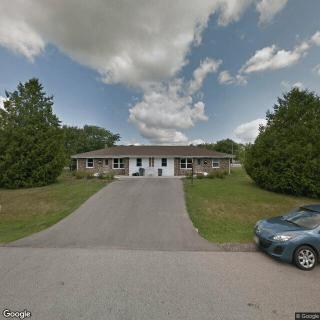
1315 Schneider Lane, Burlington, WI 53105
For more information about senior living options: (866) 208-4318
Gall Family Care Home Costs & Pricing
At Gall Family Care Home, the monthly costs for housing are competitively priced compared to both Walworth County and the state of Wisconsin. For a studio, residents pay $2,620, which is significantly lower than the county average of $3,713 and the state average of $3,999. The 1-bedroom option is available for $2,830, slightly below Walworth County's figure of $2,851 and notably less than the statewide average of $3,412. Even for those looking for more space in a 2-bedroom setup, Gall Family Care Home offers an appealing rate of $2,988 - higher than the county's average of $2,252 but still more affordable than Wisconsin's state average of $3,111. This pricing strategy positions Gall Family Care Home as a cost-effective choice for individuals seeking comfortable living arrangements while balancing quality care with affordability.
| Floor plans | Gall Family Care Home | Walworth County | Wisconsin |
|---|---|---|---|
| Studio | $2,620 | $3,713 | $3,999 |
| 1 Bedroom | $2,830 | $2,851 | $3,412 |
| 2 Bedrooms | $2,988 | $2,252 | $3,111 |
Assisted Living communities with a similar price nearby
-
from +$480 / mo
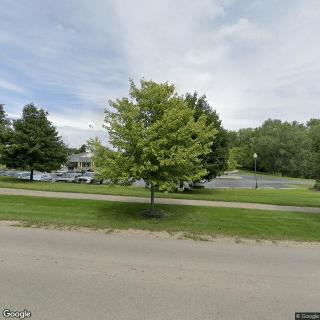
Arbor Village of Geneva Crossing
$3,100 / month13.5 miles away -
from +$449 / mo

Matthews of Oak Creek
$3,069 / month20.2 miles away -
from +$480 / mo
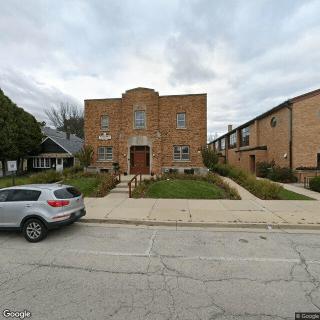
St. John's Manor
$3,100 / month23.3 miles away -
About the same

Best Home Care Of Wi
$2,600 / month22.8 miles away -
from -$409 / mo
Schmidt Home
$2,211 to $3,413 / month19.9 miles away
Overall Review of Gall Family Care Home
Pros
 Home Helpers is a professional and caring health company.
- Joanne and the team quickly assess needs and formulate compassionate care plans.
- Lynn is kind, gentle, and professional, keeping loved ones safe.
- The services make the caregiving journey richer and less stressful with attentive staff.
- The staff are friendly, helpful, accommodating, and highly professional.
- Home Helpers cares for the whole family, offering hope, direction, and support.
- The care enables loved ones to stay at home rather than moving to a facility.
- Barb and Jamie demonstrate consistent care, compassion, and thorough medication management.
- The agency is responsive with genuine compassion, even during challenging times.
Cons
 The reviewer states the experience with Home Helpers was abysmal and the care subpar, with neglect and attention lapses.
- They allege an aide turned her back on a full assist elderly patient with dementia not once but twice, which is described as unacceptable.
- A fall occurred due to lack of attention, and a second fall happened when the full assist patient was left unattended, nude and vulnerable.
- The family feels these incidents may have contributed to the mother’s decline, indicating a failure in care.
- They were disgusted that, after calling the office four times, they still received ongoing communications about care schedules and that three days in a row caregivers arrived while the mother lay in hospice during a grieving time.
- The reviewer accuses a caregiver (Jamie) of mocking the cameras and acting disrespectfully in front of surveillance.
- Bonnie is described as rough and verbally abusive.
- The line between helper and family allegedly blurred, with a caregiver trying to insert herself into family matters and stating “This is my job,” which was viewed as inappropriate.
Review
Gall Family Care Home in Burlington, WI is best suited for seniors who want a warm, homelike living arrangement where a small, devoted caregiving team delivers close, personalized attention. This community appeals to families seeking daily continuity: staff who know routine preferences, medical nuances, and personal histories, and who can partner with families in day-to-day decisions. For residents who value a quieter, more intimate atmosphere over a large, institution-like campus, Gall Family Care Home offers a setting where conversations feel familiar, and assistance is integrated into the flow of everyday life rather than segmented into rigid shifts.
Those weighing alternatives should consider whether a larger assisted living campus or a specialized memory-care environment better matches the level of medical oversight and program breadth needed. If a resident’s needs trend toward 24/7 skilled nursing, complex wound care, or highly structured cognitive-therapy programming, a bigger facility with more on-site specialists may be a better fit. Likewise, for families prioritizing robust social programming, extensive activity calendars, or niche memory-care amenities, a multi-wing community could deliver a broader slate of options than a smaller home setting.
The strongest positives of Gall Family Care Home lie in the culture of attentiveness and the potential for deeply personalized care. A smaller scale means caregivers can tailor routines, adjust menus, and adapt schedules with relatively quick feedback loops to families. The right staff can provide reliable daily oversight, help with medications, and forge relationships that reduce anxiety for both residents and loved ones. In the broader landscape of home-care experiences reflected in the reviews, families consistently applaud caregivers who are compassionate, responsive, and capable of coordinating care with medical professionals; those qualities, when present in a small, local home, translate into meaningful peace of mind for families.
Yet, the main drawbacks to watch for in a small home setting include a more limited menu of activities and fewer on-site medical resources than larger campuses. If medical complexity or specialized therapies become the norm, the ability to access a wide range of services on-site may lag behind bigger communities. Staffing continuity is also a critical factor; a high turnover or gaps in coverage can disrupt routines and care plans, dampening the otherwise strong relational advantages such environments typically offer. Families should verify not only licensing and emergency protocols but also how personnel turnover is managed, and how temporary absences are covered without compromising safety.
The favorable impact of a tight-knit care team can offset these concerns when paired with clear, well-documented care plans and disciplined coordination. Continuity, both in staffing and in daily routines, reduces confusion, lowers the risk of missed medications, and supports safer transitions between activities or levels of care within the home. When families see consistent communication, transparent scheduling, and proactive problem-solving, the strengths of Gall Family Care Home become compelling: a trusted space where elders remain engaged, supported, and treated with dignity, close to home and loved ones. The contrast with erratic or poorly coordinated in-home care highlights how essential dependable, compassionate staffing is to a positive outcome.
Practical steps for families evaluating Gall Family Care Home include requesting a guided visit, observing how caregivers interact with residents, and asking for a sample week’s schedule. Inquire about staff-to-resident ratios, training and certification of caregivers, and the process for medication management and physician communications. Seek references from current families, and request details on how emergencies are handled, how respite or short-term stays are facilitated, and whether trial periods are available. License status and recent survey results should be reviewed, along with a clear understanding of costs and what is included or excluded. With these checks, Gall Family Care Home emerges as a prudent option for those prioritizing a homey, person-centered environment over a more institutional footprint. For residents whose medical or cognitive needs demand broader on-site resources, however, exploring larger assisted living or memory-care communities may prove the more capable path.
 4 resident community capacity
 Assisted Living
 Cable or satellite TV
 Dining room
 Fully furnished
 Garden
 Housekeeping services
 Move-in coordination
 Outdoor space
 Telephone
 Wi-Fi/high-speed internet available
 General Mitchell International (23 miles away)
 24-hour supervision
 Activities of daily living assistance
 Assistance with bathing
 Assistance with dressing
 Assistance with transfers
 Diabetes diet
 Meal preparation and service
 Medication management
 Special dietary restrictions
 Transportation arrangement (medical)
 Transportation to doctors appointments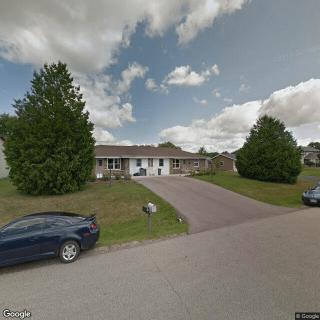


 Beyond the Bingo Hall: 50+ Enriching Activities for Seniors in Assisted Living
 Understanding the Distinctions: Assisted Living and Memory Care Explained
 Guiding Elderly Parents Who Refuse Assisted Living: 6 Practical Steps