
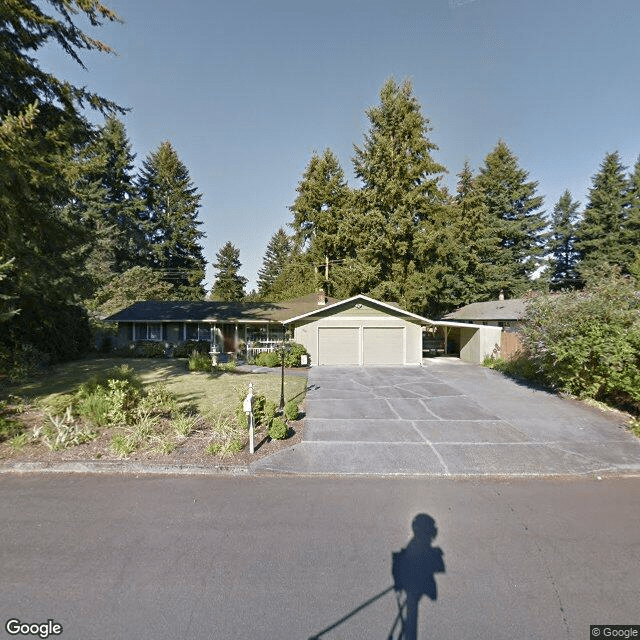
3808 NE 99th AVe, Vancouver, WA 98662
To contact a resident: (360) 260-9391
For more information about senior living options: (866) 208-4318
Royal Oak AFH Costs & Pricing
Royal Oak Adult Family Home (AFH) offers private room accommodations at a monthly rate of $5,000. This pricing is notably higher than the average cost in Clark County, which stands at $3,992, and also exceeds the state average for Washington, where private rooms are typically around $4,772. While Royal Oak AFH may present a steeper investment compared to its regional counterparts, the difference in costs could be reflective of enhanced services or amenities offered within the facility that cater to residents' needs. Families considering this option should weigh these financial factors alongside the quality of care and environment provided by Royal Oak AFH to determine if it meets their expectations and requirements.
| Floor plans | Royal Oak AFH | Clark County | Washington |
|---|---|---|---|
| Private | $5,000 | $3,992 | $4,774 |
Overall Review of Royal Oak AFH
Pros
 The facility provides evident care.
 - The location is peaceful and the care providers are attentive.
- Marinela and Vi consider their residents to be family and care for them accordingly.
- The reviewers believe this facility sets the standard for adult family care.
- The reviewers wish they could rate them higher than five stars.
- Marinela and Vi immediately fell in love with their friend and provided wonderful, complete care during the last days.
- Anyone who chooses this facility will be happy they did and can rest easily knowing their family member is getting the very best care possible.
- The staff greet residents by name and are open, friendly and gracious.
Cons
 The home neglects its patients.
- They left three diapers on a resident at a time and would not change them, causing a urinary tract infection that progressed to a bloodstream infection.
- Staff hovered over visitors and listened in on personal conversations.
- The visiting hours are described as weird.
- The reviewers believe the facility cares more about money than the residents, even suggesting they want to harm the family they care for.
- They advise avoiding this place because it does not provide proper care and neglects residents.
Review
Royal Oak AFH is best suited for families seeking a small, dementia-focused, women-only home in Vancouver, WA where 24-hour personal care is delivered in a calm, family-like environment. The setting suits residents who benefit from intimate attention, highly hands-on caregiving, and a tight-knit feel that prioritizes individualized routines over institutional formality. It shines for families who want a partner in care who treats residents as family and who value continuity, peace of mind, and a home atmosphere over a larger, more clinical campus.
Those evaluating broader options may want to consider alternatives if several realities matter: a mixed-gender or larger community, a facility with more diverse medical oversight, or a program with more expansive social and activity options beyond a small, intimate home. Couples who wish to remain together across rooms, or families seeking a venue with a wider range of on-site services and structured memory-care programming found in bigger facilities, should weigh other nearby options. In short, this is not a one-size-fits-all solution; it is a targeted match for specific preferences and needs.
On the upside, the strongest draws are compelling and repeatedly affirmed: the home’s six-bed footprint creates a genuinely intimate care environment, with 24-hour staffing and a clearly memory-care–savvy approach. Reviewers repeatedly describe the atmosphere as clean, bright, and peaceful, with care providers who greet residents warmly and who appear deeply knowledgeable about dementia and related health needs. The owners and operators are honored by families as devoted and hands-on, with a philosophy that charges are treated as family members. The net effect is a reassuring sense of safety, predictability, and daily attentiveness that is hard to replicate in larger settings.
Yet a single negative account introduces a meaningful caveat. That review alleges neglect and a failure to promptly change incontinence care, linking the situation to severe infection risk, and questions surrounding end-of-life decision communication, visiting hours, and perceived motive. While this stands in sharp contrast to the overwhelmingly positive experiences described elsewhere, it warrants serious consideration. It underscores the need for prospective families to verify consistently high staffing levels, clear care plans, transparent communication, and flexible visitation. It also serves as a reminder to perform thorough due diligence, talk to current families, request a tour during normal hours, and probe how staff respond to urgent needs and changes in condition.
Overall, the key pros, personalized attention, small-scale, women-only living, and demonstrable memory-care competence, tend to offset the main drawbacks for families who value a home-like, low-traffic environment and who prioritize daily hands-on care over institutional breadth. The positive history of caring for multiple relatives across years, with a track record of calm, clean spaces and reliable care, provides practical reassurance that this model can deliver steady, compassionate support when dementia and complex health needs are present. The caveat is real, however: any choice in this realm hinges on verifying that the particular home’s norms, staffing, and responsiveness align with the resident’s evolving needs.
In the end, Royal Oak AFH represents a strong option for families seeking a small, intimate, dementia-focused residence where staff treat residents like family and where a peaceful, home-like setting supports comfort and dignity. It is less suited for those requiring mixed-gender housing, broader medical rescue services, or aggressive programming typical of larger memory-care campuses. Prospective families should plan deliberate visits, request direct opportunities to meet caregivers, review recent care plans, and talk to multiple families who have recent experiences with the home. If the priority is a warm, dedicated, small-scale environment for a woman living with memory loss and complex health needs, this community should be seriously on the short list. If those conditions don’t align, keep exploring other near-term options with a broader array of services and environments.
 Board and Care Home
 Activities on-site
 Bath tubs
 Beautician on-site
 Devotional services on-site
 Indoor common areas
 Outdoor common areas
 Private
 Private bathrooms
 Respite or short term stays offered
 Wheelchair accessible showers
 Portland International (4 miles away)
 Diabetic care
 High acuity care
 Incontinence care
 Medication management
 Meals provided
 Weight Training for Seniors: Building Strength and Vitality
 Understanding the Sandwich Generation: Stress and Responsibilities for Multigenerational Caregivers
 8 Essential Assistive Devices for Older Adults