

4423 54th Ave SW, Seattle, WA 98116
To contact a resident: (206) 949-5950
For more information about senior living options: (866) 208-4318
Genesee Service Home Care LLC Costs & Pricing
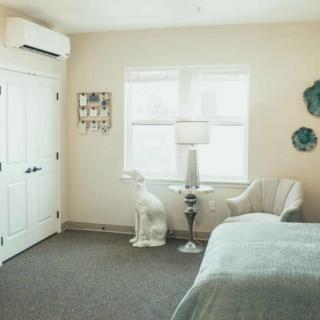
Genesee Service Home Care LLC offers a competitive pricing structure for its services compared to the broader market in King County and across Washington state. The cost for both private and semi-private rooms at Genesee stands at $5,500 per month. This rate is notably higher than the average for King County, where private room costs are approximately $5,034 and semi-private options are around $4,430. However, when compared to the statewide averages of $4,772 for private rooms and $4,267 for semi-private accommodations, Genesee's pricing reflects an investment in quality care and specialized support. Clients considering Genesee Service Home Care can expect not only tailored services but also an environment designed to foster well-being - attributes that may justify the premium rates.
| Floor plans | Genesee Service Home Care LLC | King County | Washington |
|---|---|---|---|
| Private | $5,500 | $5,034 | $4,774 |
| Semi-Private | $5,500 | $4,430 | $4,272 |
Senior living communities with a similar price nearby
-
from +$1000 / mo

The Promised Land
$6,500 / month16.8 miles away -
from +$500 / mo

Home Away From Home LLC
$6,000 to $7,000 / month20.9 miles away -
from +$900 / mo

The Park at Belle Harbour
$6,400 to $15,500 / month11.1 miles away -
from +$500 / mo

Elderly Home Care
$6,000 to $8,000 / month14.6 miles away -
from +$250 / mo

Fieldstone Rolling Bay and Fieldstone Memory Care
$5,750 to $8,895 / month8.2 miles away
Overall Review of Genesee Service Home Care LLC
Pros
 The tour of the home went well.
- They are an experienced couple with several years in business.
Cons
 The reviewer believed that their loved one would not be comfortable and could become depressed.
- The couple decided not to use a home for care.
Review
Genesee Service Home Care LLC in Seattle is best suited for families seeking a small, home-like care arrangement run directly by a devoted couple. This operation emphasizes warmth, continuity, and a residential feel over a traditional facility’s formal structure. The couple-led model, backed by several years in business, signals steadiness and a straightforward approach to caregiving. It is a good fit for residents who value personal attention, predictable routines, and a non-institutional atmosphere where decisions come from the owners themselves rather than from a distant management layer.
The strongest selling points flow from its intimate scale. A tour that felt “fine” in the moment often reflects a transparent, low-friction setup where communication happens quickly and concerns are addressed without multiple handoffs. Owners who are personally involved can tailor daily rhythms with notable flexibility, and the longer track record in the community provides a sense of reliability. For families prioritizing ease of contact, consistent caregiving cues, and a home environment that avoids the feel of a facility, these factors can translate into real value.
However, the caveat raised by the review is not trivial. The decision not to proceed centers on emotional fit: the loved one in question would not have been comfortable in a home care setting and could become depressed. That is a meaningful signal about whether the environment supports social engagement and meaningful daily interaction. In a smaller home setting, opportunities for incidental socialization can be more limited, and some residents require a higher level of oversight, programming, or peer activity to stay buoyant. This is the hinge point where the small scale shifts from a strength to a potential weakness.
These dynamics mean the pros offset the cons only under particular conditions. When a senior thrives with one-on-one attention, enjoys a familiar, quiet home-like routine, and does not demand abundant social programming, the couple-run model can deliver stability, trust, and a sense of quiet dignity that larger communities sometimes struggle to provide. Conversely, for residents whose mood and motivation rely heavily on structured activities, peer companionship, and readily available professional support, the absence of robust programming and on-site resources may leave emotional needs unmet. The balance, therefore, rests on the resident’s personality, social needs, and medical complexity.
Families should consider alternatives if the emotional or medical demands exceed what a small home setting can sustain. Larger assisted living communities nearby offer built-in activity calendars, organized social opportunities, and a broader staff pool capable of more frequent check-ins and initiative care. For seniors requiring more substantive medical oversight, nursing or memory-care capabilities, these larger environments may prevent mood declines associated with isolation. Additionally, formal home health agencies or adult family homes with greater staff-to-resident ratios can provide a middle ground that preserves a homey feel while expanding programming and oversight.
To make a well-supported choice, pursue a structured evaluation process. Schedule multiple visits and ask pointed questions about daily life: meals, activity options, verified staff qualifications, and how care plans are assessed and updated. Verify licensing and safety protocols, inquire about emergency procedures, and request candid references from current or former residents and families. Consider a trial period if possible to observe mood, engagement, and practical day-to-day functioning. In Seattle’s diverse landscape, the decisive factor is alignment: the setting must match the resident’s emotional needs and support requirements, with a clear plan for escalation if mood, safety, or care needs shift.
 Board and Care Home
 Activities off-site
 Beautician on-site
 Devotional services off-site
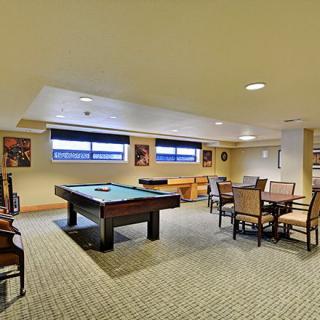
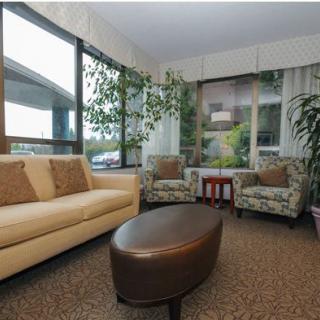
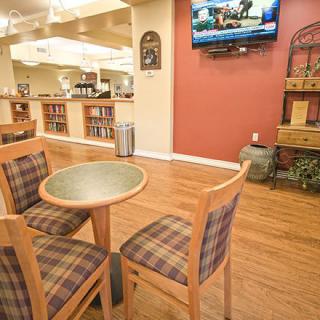
 Indoor common areas
 Outdoor common areas
 Private
 Private bathrooms
 Respite or short term stays offered
 Wheelchair accessible showers
 Seattle-Tacoma International (9 miles away)
 Diabetic care
 High acuity care
 Incontinence care
 Medication management
 Meals provided



 Financing Long-Term Nursing Home Care Through Social Security: A Thorough Exploration
 Essential Knowledge on Pneumonia in Older Adults
 Exploring Palliative Care in the Home: A Comprehensive Overview