

147 Whiting Ave, Williamsburg, VA 23185
To contact a resident: (757) 564-3364
For more information about senior living options: (866) 208-4318
Buskey's Adult Home Costs & Pricing
Buskey's Adult Home offers competitive pricing for its accommodations, particularly when compared to both Williamsburg city and the broader Virginia state averages. For a studio room, residents can expect to pay $3,315 per month, which is significantly more affordable than the city's average of $4,615 and the state's average of $4,436. Similarly, the one-bedroom option at Buskey's costs $3,551, again undercutting both Williamsburg's average of $4,625 and Virginia's statewide figure of $4,257. Finally, in terms of two-bedroom units, Buskey's rate of $3,942 remains lower than Williamsburg city's average of $4,883 and the state's typical cost of $4,602. Overall, Buskey's Adult Home stands out as an economically viable choice for those seeking quality adult care in a comfortable setting.
| Floor plans | Buskey's Adult Home | Williamsburg city | Virginia |
|---|---|---|---|
| Studio | $3,315 | $4,615 | $4,436 |
| 1 Bedroom | $3,551 | $4,625 | $4,257 |
| 2 Bedrooms | $3,942 | $4,883 | $4,602 |
Senior living communities with a similar price nearby
-
from -$465 / mo

Dominion Village Williamsburg
$2,850 to $3,295 / month10.5 miles away -
from -$495 / mo

Verena at The Reserve
$2,820 to $3,690 / month7.3 miles away -
from -$165 / mo
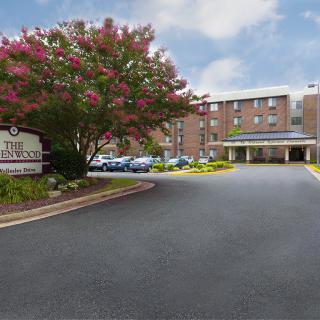
The Hidenwood Community
$3,150 to $5,075 / month12.3 miles away -
from -$315 / mo

The Chamberlin
$3,000 to $3,500 / month23.0 miles away -
from +$496 / mo

Commonwealth Senior Living at Gloucester House
$3,811 to $8,295 / month14.3 miles away
Overall Review of Buskey's Adult Home
Pros
 The staff are incredibly responsive and caring when a loved one needs help with daily living tasks.
- Stephanie, the Director of Brookdale at Home Services, lines up personal care assistants immediately, even on a Sunday night and her day off.
- Taylor and Shireen have been wonderful with timely arrangements to move mom into assisted living where she will get the help she needs.
- Families feel very much part of a Brookdale family and are grateful for that.
- The response and help are immediate.
- The staff who came were caring and responsible.
- They moved into the right place at the right time.
- The manager, Stephanie, is wonderful—responsive, on top of everything, and personable.
- The caretakers are of high quality both professionally and personally.
- They have not had problems with no-shows for shifts.
Review
This community is best suited for families seeking a highly responsive, relationship-driven home-based care option that can scale up quickly to assisted living if needs intensify, all within the Williamsburg area. It works best when the priority is rapid access to personal care support for activities of daily living, with a care team that feels like an extension of family. For families wanting a light-touch, at-home approach that preserves familiarity and independence while arranging a smooth transition to higher levels of care, this option stands out. The reviews consistently spotlight a real-time, hands-on capability to mobilize caregivers, even on tight timelines, which is invaluable when a loved one’s needs suddenly spike.
Equally important, this community may prompt some families to explore alternatives. If the objective centers on a traditional on-site campus with constant nursing oversight, specialized memory-care programming, or a broader array of on-site medical services, a more conventional assisted living facility or a sharper-contrast medical model could be a better fit. Prospective clients should note that while home-based care can cover daily living tasks and transitional planning effectively, it may not replicate every service a larger, facility-based operation provides. For those needing extensive clinical supervision or a fixed, full-time on-site staff with specialized certifications, shopping around remains prudent.
The strongest pros hinge on responsiveness, reliability, and relational care. The staff is described as incredibly caring and available, with the leadership setting a clear standard for accountability. The director, named as Stephanie, emerges as a standout: fast, direct, and personable, able to line up personal care assistants immediately, even on a Sunday night when many would be off. Caregivers like Taylor and Shireen are praised for their timeliness and the quality of care they deliver. The sense of belonging, with care providers who feel more like friends than guests, creates trust and reduces the anxiety families feel when a loved one begins to rely on outside help. Importantly, scheduling and coverage appear reliable, with no-shows seemingly uncommon, which addresses a frequent worry in home-health contexts.
These advantages, rapid response, compassionate care, and a seamless, familylike atmosphere, directly offset the potential concerns that typically accompany home-based services. The ability to mobilize help quickly means tasks that once seemed unmanageable become manageable again, and that alone can prevent crises that would otherwise force a move into a higher-acuity setting. The transition pathway is equally meaningful: moving from home care into assisted living is framed as a natural next step where more hands are available to support daily needs, ensuring continuity rather than disruption for the resident. In practice, the combination of responsive management and high-quality caregivers tends to compounds a sense of safety for families and dignity for seniors.
Still, a cautious approach is warranted. While the reviews consistently highlight positives, the absence of stated drawbacks does not erase the reality that every family’s situation has unique pressures, budget constraints, shifts in health status, and the need for predictable caregiver coverage on holidays or during caregiver turnover can complicate arrangements. The strongest counterbalance here is the proven track record of prompt staffing and the explicit willingness of the management team to tailor services to individual families. Prospective clients should seek concrete details about caregiver-to-resident ratios, substitute coverage plans, and a documented escalation path for rising care needs, so there is no ambiguity when a situation changes.
In practice, this community serves as a pragmatic, action-oriented option for households prioritizing speed, reliability, and relational care. Families should start by clarifying three practical goals: the preferred balance between at-home support and eventual institutional care, the level of medical oversight required, and the comfort level with a care team that integrates closely with family routines. Next, verify the scope of Brookdale at Home services, who will be involved, how shifts are covered, and what happens if a key caregiver is unavailable. Request a written plan detailing onboarding, transition to assisted living, and a contingency strategy for emergencies. If these elements align with the desired pace and tone of care, the Brookdale at Home pathway in Williamsburg offers a compelling, doable route to preserve independence while ensuring safety and dignity as needs evolve.
 Board and Care Home
 Newport News Williamsburg International (10 miles away)




 Senior Move Management: Understanding the Role, Value, and Associated Costs
 Weight Training for Seniors: Building Strength and Vitality
 Understanding the Sandwich Generation: Stress and Responsibilities for Multigenerational Caregivers