
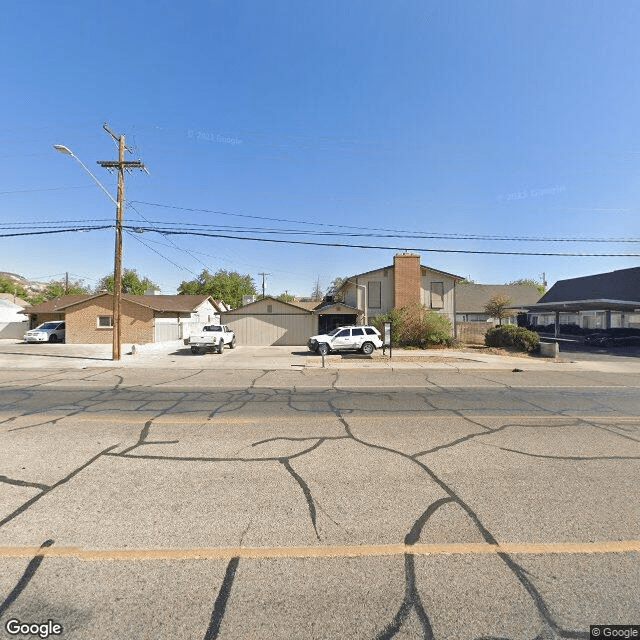
48 West 700 South, Saint George, UT 84770
For more information about senior living options: (866) 208-4318
Overall Review of Rosecrest Manor
Pros
 The small private home is well managed by two highly competent on-site owners.
- It has a full-time private cook who is invested in the health and joy of the residents.
- It is clean, quiet, and comfortable for residents.
- There is sufficient staff to ensure every resident is well cared for.
- It is very cozy and comfortable for residents.
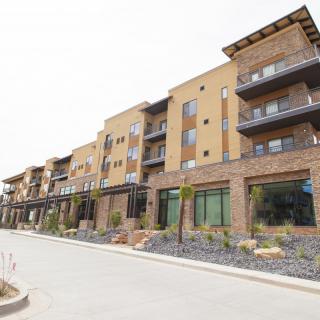
- Rosecrest Manor is a beautiful retirement home that is architecturally and aesthetically pleasing as well as roomy.
- It is handicap accessible with ramps and a stair lift.
- It provides home-cooked meals all day with no frozen foods.
- There is an indoor pool at the rear of the house that residents can swim in when the weather isn't suitable.
- There is always a nurse present, ensuring residents are properly cared for.
- The residents are very happy and feel Rose Crest has become a family.
- The facility is accommodating to residents with limited mobility, featuring a stair lift and meals prepared to meet dietary needs, contributing to a respectful, family-like atmosphere.
Review
Rosecrest Manor in Saint George, Utah is best suited for seniors who want a small, family-run living arrangement where owners are on site most of the day, meals are home-cooked, and care feels personal rather than institutional. This community thrives with residents who value a homelike atmosphere, intimate staff interactions, and a sense of belonging within a tight-knit group. It works well for individuals who prize independence but still want reliable, attentive daily support delivered in a calm, quiet setting that emphasizes comfort and civility.
Those weighing alternatives should note who may want options beyond Rosecrest. Families facing heavier medical needs or requiring a broader slate of therapies and structured programming may gravitate toward larger campuses with more specialized services. Similarly, if admissions timelines are a primary concern or if a resident desires a campus with extensive on-site amenities and more formal, plug-and-play activity schedules, Rosecrest’s intimate model may feel too small. A waiting list can also complicate access, making timely placement challenging for time-sensitive decisions.
The strongest positives here are the core elements that consistently show up in reviews. The two principal owners are present on site a large portion of every day, which translates into disciplined management, rapid responsiveness, and a unified, resident-focused culture. A full-time private cook and a commitment to comfort yield meals that feel nourishing and personalized, with evident attention to dietary needs. Cleanliness and quietude underpin a serene daily rhythm, while sufficient staff means residents receive attentive, unobtrusive care rather than a random, hurried approach. The overall atmosphere is cozy and dignified, with residents treated as civilized individuals and given space to maintain autonomy where possible.
On the downside, the main trade-off for Rosecrest’s intimate model is capacity. A small home environment naturally limits the breadth of programming and the pool of potential peers, which can matter for residents who crave a broader social scene or specialized care offerings. Availability may be constrained by a waiting list, and prospective residents should be prepared for a shorter-term decision window that requires proactive enrollment. The two-story layout is manageable thanks to a stair lift and ramps, but residents with advanced mobility challenges or those who require constant, high-level medical supervision might find a larger, institutionally equipped setting more suitable.
Yet the pros and cons do not exist in isolation. The very features that give Rosecrest its warmth, ownership on site, hands-on management, and family-style meals, often offset the limitations of a smaller footprint. The presence of a nurse around the clock adds a level of continuity rarely found in tiny homes, providing reassurance for families concerned about medical stability. The dining table where residents share stories and plans reinforces a sense of belonging that can soften the isolation sometimes felt in larger facilities. The recent expansion to a new location nearby signals a growing capacity to serve more families without sacrificing the intimate, home-like culture that characterizes Rosecrest.
For families considering a move, a practical path is to prioritize a visit while in the area, inquire about the current intake status, and verify the specific medical capabilities and staff ratios in place. Confirm how the on-site nursing services are structured (whether RN presence is continuous or scheduled, what medical tasks are covered, and what ancillary therapies are available). Request a transparent look at sample menus, dietary accommodation processes, and opportunities for residents to participate in meal planning and social gatherings. Speak with current residents and families about daily routines, privacy, and the sense of community during evenings and weekends. If these factors align with the resident’s expectations for independence, dignity, and personal attention, Rosecrest Manor emerges as a compelling, practical fit.
In the end, Rosecrest Manor represents a thoughtful choice for seniors who value a small-scale, respectful, home-like environment with real hands-on leadership, tasty, made-from-scratch meals, and a built-in sense of community. It is less well-suited for those who require broad professional services, expansive programming, or guaranteed admission without a wait. When the right fit is found, this community delivers a rare blend of comfort and care that can make a meaningful difference in daily living, offering residents a dignified, enjoyable place to call home while providing families with meaningful reassurance about oversight, meals, and companionship.
 9 resident community capacity
 Studio apartments
 Assisted Living
 Board and Care Home
 Memory Care
 Cable or satellite TV
 Dining room
 Fully furnished
 Garden
 Housekeeping services
 Laundry
 Move-in coordination
 Outdoor space
 Telephone
 Wi-Fi/high-speed internet available
 St George Muni (1 miles away)
 24-hour supervision
 Activities of daily living assistance
 Assistance with bathing
 Assistance with dressing
 Assistance with transfers
 Diabetes diet
 Meal preparation and service
 Medication management
 Special dietary restrictions
 Transportation arrangement (medical)
 Transportation to doctors appointments
 Fitness programs
 Games
Games Live musical performances
 Religious services
 English



 Are Dementia and Alzheimer's Disease Lethal? A Comprehensive Exploration
 Exploring the Power of Reminiscence Therapy for Individuals With Dementia
 An In-Depth Look at Reminiscence Therapy in Dementia Care