
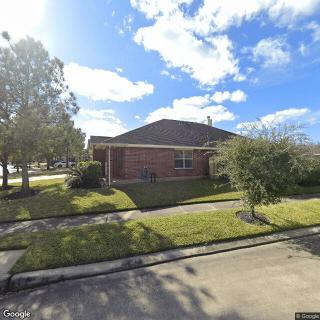
8620 Grand Mission Blvd, Richmond, TX 77407
To contact a resident: (832) 275-0593
For more information about senior living options: (866) 208-4318
Overall Review of Firstlight Home Care - Richmond, TX
Pros
 The care team is patient, kind, caring, and thoughtful.
- They provide great comfort by looking out for the husband when family is unavailable.
- Cathy is an excellent caregiver who communicates easily, knows what to do, and is a joy.
- Ruth Mwicigi cared for the husband for 17 days, enabling time with family.
- Ruth Mwicigi has a delightful disposition, is extremely caring, and is always prompt in following directions.
- Ruth checks the husband's blood levels and ensures he follows his diabetes diet.
- The husband found Ruth to be a delightful companion, showing interest in his programs.
- The family hopes Ruth will be available for future needs.
- Ruth is highly recommended, and the family was extremely happy with her service.
Review
Firstlight Home Care Richmond is best suited for families seeking deeply personal, in-home support where the caregiver relationship itself becomes a central pillar of safety, continuity, and daily life. This community excels for spouses or seniors who can stay in their own home with a trusted aide present to provide patient companionship, attentional monitoring, and practical help on a schedule that adapts to family needs. It is particularly well matched for those who value reliable, communicative caregivers who can coordinate around medical or dietary requirements and who can fill the gap when family cannot be physically present. Those drawn to a highly individualized care experience, where the emphasis is on warmth, promptness, and thoughtful, proactive assistance, will find this option compelling. However, if a higher level of on-site medical oversight or a more structured, facility-based social environment is essential, alternatives should be explored.
The standout strength is the caliber of the caregiving team. Across the board, services are delivered by companions who are described as patient, kind, and genuinely engaged in the well‑being of the client. The reviewers name several caregivers, Neci, Gregory, Cathy, Ruth, whose reliability, calm demeanor, and hands-on approach come through clearly. Notably, caregivers are praised for knowing what to do and for asking questions when uncertainty arises, a sign of solid training and responsive supervision. This creates a dependable rhythm: tasks are performed, routines are respected, and directions are followed with consistency. In a care scenario where uncertainty and anxiety can overwhelm families, the ability to trust front-line providers makes a tangible difference in daily quality of life and peace of mind.
Communication stands alongside compassion as a core advantage. Cathy’s ability to make communication easy is repeatedly highlighted, reinforcing the sense that the caregiver network actively bridges gaps between home life and medical or dietary needs. The reviewers describe promptness and clarity in feedback, with Ruth’s regular updates on blood levels and dietary adherence underscoring a practical, health-conscious cadence to care. For families, this means fewer moments of guesswork and more confidence that medical or routine concerns are being observed and reported in real time. The combination of caring personalities and clear, proactive communication forms a powerful offset to the inevitable challenges of managing aging at home.
Emotional and social engagement emerges as another meaningful pro. The care partners are portrayed as sources of companionship and vitality, not merely task executors. The spouse who found Ruth to be delightful company, who valued attention to programs of his choosing, and who appreciated the caregiver’s punctuality and attentiveness illustrates how home care can sustain dignity, autonomy, and a sense of personal agency. In-home care at its best can preserve familiar routines and favorite activities while layering in hands-on support, an outcome that often proves more comforting and sustainable than a transition to facility living for those not ready to leave home. These qualitative benefits, comfort, companionship, and a sense of control over daily life, can dramatically offset the absence of a communal social calendar typical of larger communities.
Still, no care model is without its limitations, and frank consideration helps families decide if this is the right path. The strongest caveat is that in-home care hinges on the availability and match quality of individual caregivers; the reviews showcase exceptional matches, but there is no indication of guaranteed 24/7 hands-on supervision or a built-in backup team within a single facility. For families whose loved ones require around-the-clock medical oversight, complex memory-care programming, or the social, structured milieu of an assisted living community, those needs may be better served elsewhere. The model’s elasticity is a strength when the goal is personalized, flexible support, but it can become a constraint if medical acuity or consistent staffing continuity becomes the deciding criterion.
Ultimately, the pros and the limited, but notable, constraints point to a clear decision framework. If the objective is to maximize comfort, preserve independence, and rely on a small cadre of highly capable, communicative caregivers who actively coordinate health tasks, this Richmond service stands out. The documented caregiver fidelity, prompt communication, and health-monitoring practices provide a compelling case for choosing in-home care as a primary arrangement. On the other hand, if the priority is 24/7 nursing oversight, a robust social program, or specialized memory-care services in a community setting, exploring alternatives, assisted living or skilled nursing, will likely yield a more comprehensive fit. A prudent approach is to verify caregiver matching processes, request a trial period or a short-term care plan to test consistency, and confirm access to a supervising manager who can address back-up coverage and emergency contingencies. With those guardrails in place, Firstlight Richmond offers a remarkably reliable pathway to maintaining home life with dignity, warmth, and practical health support.







 Comprehensive Guide to Blood Pressure Charts for Older Adults: Understanding Normal and High Readings by Age
 Financing Long-Term Nursing Home Care Through Social Security: A Thorough Exploration
 Essential Knowledge on Pneumonia in Older Adults