
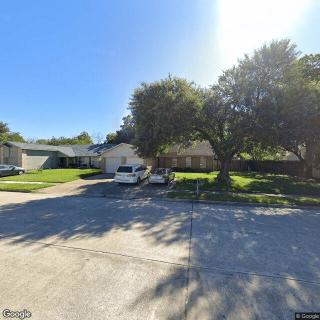
6519 Vickie Springs Lane, Houston, TX 77086
For more information about senior living options: (866) 208-4318
Overall Review of Brightway Personal Care I I
Pros
 Brightway Brightstar is an excellent company and organization.
- They have fun-filled staff who project a proper professional appearance and approach to mental health healing.
- They provide the kindest and most compassionate forms of care as a platform for growth and healing.
- They enable full rehabilitation for many of their high-functioning clients.
- They help clients develop leadership skills and regain independence, creating stability to become positive, productive members of society.
- They become role models that other clients follow to achieve their dreams.
- They receive five stars for an excellent representation of an act of conscience.
Cons
 The reviewer alleges that Brightway Brightstar lost their son and that they would not have known about it if not for visiting; the son remains missing.
- The reviewer alleges Brightway Brightstar forged their son’s name on a sign-out log that he never used.
- The reviewer notes that Brightway Brightstar is under investigation.
- The reviewer advises others to consider other options and not to use Brightway Brightstar for their loved ones.
- The reviewer states that Brightway Brightstar does not deserve any stars.
Review
Brightway Personal Care II in Houston is best suited for adults with mental health and related needs who thrive under a structured, growth-oriented program. The setting seems designed for high-functioning residents who can benefit from deliberate skill-building, leadership development, and a clear pathway toward renewed independence. Staff are described as energetic and approachable, carrying a professional bearing that supports therapeutic work rather than mere supervision. For families seeking a program that blends therapeutic engagement with practical daily living supports, this community’s emphasis on recovery, social role modeling, and incremental autonomy makes it a compelling option. In short, it is ideal for those who want to see progress through a disciplined, purpose-driven model.
But not every family should place full confidence here. A grave safety-red flag appears in the form of a resident’s name not appearing on a sign-out log, paired with reports that a resident went missing and the facility is under investigation. That combination raises real doubts about governance, accountability, and the reliability of record-keeping that families depend on for ongoing oversight. Those concerns are not cosmetic; they strike at the core promise of a place that houses vulnerable adults. Given such allegations and the ongoing inquiry, many families will conclude that alternatives with stronger safety measures and transparency are prudent.
From a pros perspective, the strongest argument for Brightway is the staff’s attentiveness and the programmatic framework. A culture described as energetic yet professional aligns with therapeutic engagement, reducing isolation and supporting motivation. The recovery-focused approach, anchored in mental health healing and the cultivation of independence, can deliver tangible gains for residents who engage with the process and stay with it long enough to translate skill-building into practical life improvements. The outcomes described, recovery milestones, leadership emergence, and role-model behavior, offer a persuasive narrative for residents with clear, attainable goals.
However, the main cons cannot be dismissed. The safety and record-keeping concerns dampen the potential gains from therapy and daily structure. When a sign-out omission coincides with a missing resident under investigation, trust erodes not only with families but with the broader community. This forces a recalibration: in crisis moments caregivers must act decisively; at all times, family members deserve prompt, transparent communication. In this light, programming quality alone cannot compensate for governance gaps that leave residents at risk or families uncertain about a loved one’s whereabouts.
Prospective families should pursue practical due-diligence steps. Request the most recent incident reports and outcomes, a plain-spoken explanation of how sign-out procedures actually work, and evidence of compliance with licensing standards. Inquire about staffing ratios across shifts, a clear on-call protocol, and the mechanisms for family communication when concerns arise. Seek a written risk-management plan, case-management practices, and references from current or former residents’ families. If possible, arrange a trial period or a clearly defined stopping-point to assess whether the therapeutic model’s benefits justify the safety questions.
The bottom line is decision-driven. For families prioritizing a robust, recovery-oriented program and who are confident in rigorous oversight assurances, Brightway presents meaningful potential. For those where governance concerns persist or where the fear of a missing resident or opaque sign-out processes remains salient, alternatives with transparent safety metrics and stronger accountability should be the default. In the end, a well-structured choice should hinge on concrete assurances around safety, timely communication, and demonstrable progress toward independence, rather than optimism about the program alone.
 10 resident community capacity
 Assisted Living
 Board and Care Home
 Cable or satellite TV
 Dining room
 Fully furnished
 Garden
 Housekeeping services
 Move-in coordination
 Outdoor space
 Telephone
 Wi-Fi/high-speed internet available
 George Bush Intercontinental (10 miles away)
 24-hour supervision
 Activities of daily living assistance
 Assistance with bathing
 Assistance with dressing
 Assistance with transfers
 Diabetes diet
 Meal preparation and service
 Medication management
 Special dietary restrictions
 Transportation arrangement (medical)
 Transportation to doctors appointments




 Medicare Coverage for Assisted Living: An In-Depth Exploration
 Choosing the Right Senior Care: A Detailed Exploration of Assisted Living and Nursing Homes
 Understanding the True Cost of Assisted Living in 2025: A Comprehensive Guide