

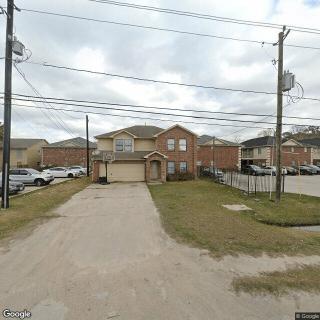
6411 Guadalupe, Houston, TX 77016
To contact a resident: (281) 392-6966
For more information about senior living options: (866) 208-4318
Always Home at Guadalupe Costs & Pricing
At Always Home at Guadalupe, the monthly costs for accommodations present a compelling value when compared to both Harris County and the broader state of Texas. For a semi-private room, residents pay $1,800, which is significantly lower than the average costs of $3,518 in Harris County and $3,680 statewide. Similarly, the private room option at $2,800 offers considerable savings compared to the local average of $3,784 and the state average of $4,096. These pricing structures not only reflect a commitment to affordability but also enhance the overall appeal of Always Home at Guadalupe as an attractive choice for individuals seeking quality care without compromising their financial well-being.
| Floor plans | Always Home at Guadalupe | Harris County | Texas |
|---|---|---|---|
| Semi-Private | $1,800 | $3,518 | $3,680 |
| Private | $2,800 | $3,784 | $4,096 |
Senior living communities with a similar price nearby
-
from +$200 / mo
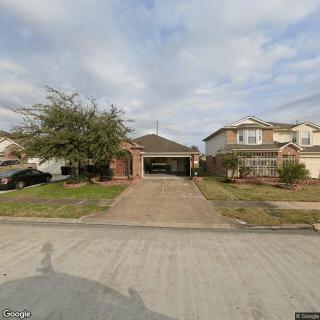
Open Angels - Shaman
$2,000 to $3,000 / month23.5 miles away -
About the same
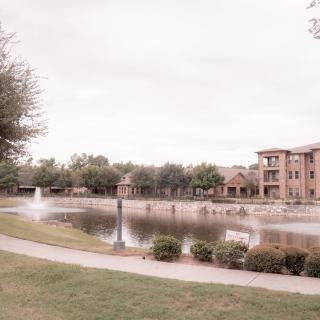
Watercrest at Kingwood Garden Village
$1,825 to $3,700 / month12.6 miles away -
from +$199 / mo

Watercrest at Shadow Creek Ranch
$1,999 to $2,499 / month23.5 miles away -
from +$60 / mo
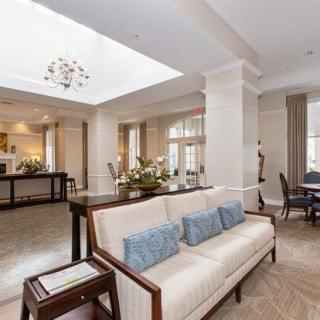
Morada Deer Park
$1,860 to $2,820 / month17.1 miles away -
from -$250 / mo
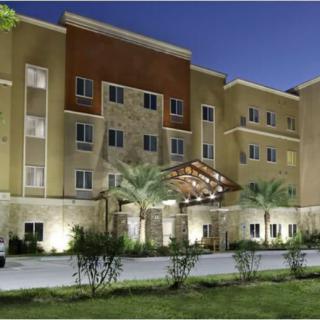
Relux at West Chase
$1,550 to $3,050 / month19.3 miles away
Overall Review of Always Home at Guadalupe
Pros
 They would have no objections to living there if they needed assisted living accommodations in their elderly years.
- They would be comfortable living there if assisted living were needed in their later years.
- They would welcome living there for assisted living in old age.
Review
Always Home at Guadalupe is best suited for seniors who anticipate needing assisted living support and want a straightforward, no-nonsense option in Houston. The lone reviewer signals a practical fit: they would have no objections to living there if elderly years require assisted living. That sentiment matters because it reflects comfort with routine care, predictable days, and a residential setting that does not demand ongoing persuasion to access essential services. For families weighing options, the core takeaway is clear: this community tends to be a practical, unobtrusive home for someone who wants dependable daily support without the frills that sometimes accompany marketing-driven promises.
Those evaluating alternative paths should consider what happens if more specialized needs arise. If memory care, high-intensity medical supervision, or an unusually active social calendar are non-negotiables, other Houston options with explicit dementia programming or broader therapeutic offerings will likely serve better. Cost structure and contract terms also matter, and the single data point offers no clarity on affordability or long-term financial commitments. In short, this community makes sense for straightforward assisted living needs, but it may fall short for families seeking niche care profiles or aggressive programming to enrich every day.
The pros in this case hinge on a clear alignment with a resident’s comfort level regarding assisted living. The review’s unambiguous stance, that living there would be without objections, implies an environment that supports essential daily living without friction. That is a meaningful counterweight to potential cons, especially where other facilities promise abundance but deliver complexity or pressure. The absence of negative detail in the feedback is itself a positive signal for families seeking reliability over spectacle. Still, the lack of granular information about staffing, activities, meals, and exact services means the solid pros are more impression than proof.
Practical considerations in Houston weigh into the decision even without granular internal data. Proximity to medical networks, access to transportation for family visits, and the ease of integrating with local services are real-world factors that influence satisfaction. The review provides no red flags about safety or daily routines, which can translate into a lower perceived risk for a resident who values predictable structure. For families, this translates into a conservative baseline: if the resident wants a quiet, dependable home environment that covers the basics well, Always Home at Guadalupe appears capable of delivering that without drama.
From a decision-making standpoint, a structured due-diligence approach is warranted. Verify state licensing and exact care levels offered, then demand a transparent breakdown of monthly costs plus potential add-ons. Seek perspectives from current residents or their families, and insist on a trial-stay option if available. Probe how escalating needs are managed and what contingencies exist if more intensive supervision becomes necessary. Compare nearby Houston communities on staffing, meal quality, accessibility, and overall atmosphere to ensure the target match remains strong as care needs evolve.
The bottom line remains practical and candid: for families prioritizing a low-friction entry into assisted living in Houston, Always Home at Guadalupe offers a credible option anchored by a resident who would have no objections to calling it home. The decisive factor is whether comfort with routine assistance and a stable daily rhythm aligns with the senior’s personality and care expectations. If that alignment holds, this community deserves serious consideration as part of a careful, comparative evaluation. If the goal is broader programming, memory-support specialization, or richer social engagement, alternative communities should be explored with the same disciplined scrutiny.
 Board and Care Home
 Activities off-site
 Bath tubs
 Devotional services off-site
 Indoor common areas
 Outdoor common areas
 Private
 Respite or short term stays offered
 George Bush Intercontinental (7 miles away)
 Ambulatory care
 Diabetic care
 High acuity care
 Incontinence care
 Meals provided

 Urinary Tract Infections in Older Adults: Comprehensive Insights on Symptoms, Treatment, and Prevention
 California's Form 602A: An In-Depth Examination of Senior Care Assessment
 Comprehensive Look at Senior Blood Pressure Charts: Normal and Elevated Levels by Age