

301 North Shadowbend Ave, Friendswood, TX 77546
To contact a resident: (832) 755-4766
For more information about senior living options: (866) 208-4318
Above and Beyond Costs & Pricing
Above and Beyond offers competitive pricing for its room types when compared to both Harris County and the broader Texas market. For semi-private accommodations, Above and Beyond charges $2,500 per month, which is significantly lower than the county average of $3,518 and the state average of $3,680. Similarly, for private rooms, the monthly cost at Above and Beyond is $3,500, again more affordable than the respective county and state averages of $3,784 and $4,096. This pricing strategy positions Above and Beyond as a cost-effective option for individuals seeking quality care without compromising on comfort or services.
| Floor plans | Above and Beyond | Harris County | Texas |
|---|---|---|---|
| Semi-Private | $2,500 | $3,518 | $3,680 |
| Private | $3,500 | $3,784 | $4,096 |
Senior living communities with a similar price nearby
-
About the same
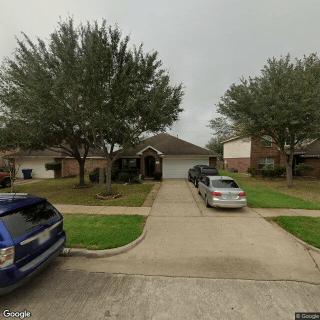
Shepherd Personal Care Home
$2,500 to $3,000 / month18.6 miles away -
from +$300 / mo

Assisting Hands Pearland
$2,800 / month7.9 miles away -
from -$300 / mo

Nixon Assisted Living Of Houston
$2,200 / month21.4 miles away -
from +$300 / mo

Evening Star Personal Care Home
$2,800 to $3,200 / month10.4 miles away -
from +$150 / mo

Home Matters Caregiving
$2,650 to $3,625 / month6.5 miles away
Overall Review of Above and Beyond
Pros
 The tour was great and all questions were answered.
- Even things they never thought to ask were brought up.
- The reviewer and their daughter were pleasantly surprised.
- They plan to go tomorrow to sign a contract.
- They will gather furnishings before moving in.
Review
Above and Beyond in Friendswood, TX is best suited for families that prize a highly proactive, transparent admissions process and want a thorough onboarding experience before committing. The two reviews indicate a strong first impression through a well-handled tour where every question is addressed and additional considerations are brought to light. For families who want to feel informed, reassured, and guided through the decision timeline, this community offers a clear path from initial curiosity to contract review with comfort and confidence. The emphasis is on preparation, not pressure, and that posture will appeal to those who prefer to plan around furnishings and move-in timing rather than rushing a decision.
That said, there are clear reasons some families may want to consider alternatives. The community’s public signal, two reviews and an overall mid-range rating, means there is limited evidence about long-term care quality, consistency of staffing, and resident satisfaction beyond the onboarding experience. For families requiring well-documented outcomes, measurable quality metrics, or a robust track record of resident engagement, this may not yet provide the reassurance needed. Those with a tight budget or a strong preference for immediate availability or a fixed move-in date might also want to shop around to compare pricing structures, included services, and real-time occupancy dynamics.
The strongest takeaway from the available feedback is the tour experience itself. The staff are described as knowledgeable, responsive, and capable of surfacing questions that families might not have considered. This level of attentiveness reduces the friction often felt during early conversations about care needs, pricing, and contract terms. The fact that the reviewer was “pleasantly surprised” and planned to sign soon signals trust-building and a sense that the process is straightforward, transparent, and aligned with the family’s planning timeline. When families value clear communication and a feeling that questions will be answered without hedging, this is a meaningful advantage.
However, the absence of concrete, long-term indicators is the flip side. Prospective residents cannot rely solely on an excellent initial tour to predict daily life, quality of care, activity variety, dining satisfaction, or staff stability. The two reviews do not address how care plans are customized over time, how transitions between levels of care would be managed, or what happens if health needs evolve. The mid-tier rating itself serves as a caveat: initial enthusiasm may not translate into sustained satisfaction. That uncertainty should prompt a cautious, evidence-seeking evaluation rather than premature commitment.
To offset these gaps, the admitted strengths of the onboarding experience should be leveraged into a structured due diligence plan. Request a detailed slate of prices, what is included, and what incurs additional charges. Ask for sample care coordination plans and a day-in-the-life itinerary to gauge activity levels and resident engagement. Seek conversations with current residents or families about their ongoing experiences, and demand a clear policy on staffing, turnover, and rural-urban access to outside services if needed. If possible, arrange a trial visit or reserved hold while reviewing financial terms and potential escalation protocols.
In the end, the decision hinges on the weight given to onboarding quality versus long-term certainty. Above and Beyond is a strong choice for families who want a transparent, question-friendly admissions process and a sense of confidence from the first walkthrough. Those who require robust, documented proof of ongoing care outcomes, or who need immediate move-in with a fixed, all-in price, may find it prudent to explore additional communities before signing. The prudent path is to capitalize on the positive tour experience by demanding comprehensive, written details on pricing, care progression, and resident experiences, then choose with both the head and the heart.
 Board and Care Home
 Activities off-site
 Devotional services off-site
 Indoor common areas
 Outdoor common areas
 Private
 Wheelchair accessible showers
 William P X (9 miles away)
 Ambulatory care
 Diabetic care
 High acuity care
 Incontinence care
 Meals provided






 8 Essential Assistive Devices for Older Adults
 Navigating the Financial Road to Nursing Home Care: In-Depth Guidance and Resources
 Supportive Employee Benefits That Help Caregivers Attain Better Work-Life Harmony