
2813 South Hulen Suite 140, Fort Worth, TX 76109
To contact a resident: (817) 921-9500
For more information about senior living options: (866) 208-4318
Overall Review of Professional Caretakers
Pros
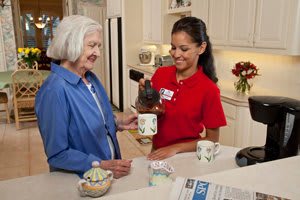
 Assisting Hands feels like family to their clients.
- They provide overnight care for clients who live independently.
- They visit clients, assist with shopping, take them to appointments, and help with cleaning.
- Families report high satisfaction with their services.
- Clients would highly recommend Assisting Hands.
- Staff such as Sarah are friendly, knowledgeable, and helpful.
- They excel at helping families care for loved ones and at pairing caregivers who match well and earn trust.
- They provide excellent assistants who take pride in their work and help with medication management.
- Their caregivers are reliable, kind, thoughtful, and professional.
- Tempie and Clevetta provide cheerful, expert care that makes events go smoothly.
- Kim Beveridge and Boots are amazing and supportive to residents and staff.
- Boots the therapy dog is a joy to see.
Cons
 They would give negative stars if possible.
- They reported that the first caregiver dropped their father.
- They experienced constant scheduling conflicts and days when no one showed up.
- The caregiver who did come arrived late and refused to stay because of the dog.
- They said the owner hung up on their husband when they demanded answers.
- They stated the service could not be fulfilled and they lost money two days before Christmas.
- They described the business practices as unreliable and terrible.
Review
Assisting Hands in Fort Worth is best suited for families seeking a warm, in-home care partner that extends support beyond basic tasks. This community shines for seniors or individuals with disabilities who need help with daily activities, transportation to appointments, shopping, medication reminders, and steady companionship. The strongest value lies in the personal connection: caregivers who learn routines, preferences, and fears, creating a sense of continuity that can stabilize a loved one’s week. The presence of Boots the therapy dog adds an important emotional layer, helping reduce isolation and lift spirits during visits. Observers consistently highlight caregivers who know their clients well, with names like Tee and the local leadership team delivering reliable, customized support whether the client remains at home or moves into a facility for part of the day.
Those weighing alternatives should consider whether flawless, event-level reliability is nonnegotiable. A family that cannot tolerate scheduling gaps or last-minute changes may want to explore options with stronger guarantees or more formal back-up coverage. One review candidly notes a cascade of scheduling issues, a late arrival during a planned outing, and a caregiver’s dog-related constraint, culminating in a breach of expectations at a crucial moment. For families in rural or outlying areas, or those requiring very strict adherence to a calendar, it makes sense to compare agencies that promise guaranteed staffing and explicit contingency plans, or to look at facility-based arrangements where oversight is constant.
The strongest pros offset the potential downsides when the core care relationship is solid. The ability to pair a caregiver with a client who truly meshes with temperament and trust can transform daily life, reducing stress for families and improving consistency for the loved one. Medication management support, dependable transportation to medical appointments, and daily check-ins are repeatedly highlighted as practical, high-value services. The team’s communicative approach, coordinating with families, confirming schedules, and adapting to changing needs, turns care into an organized system rather than a collection of episodic visits. When a caregiver is a good fit, the advantages compound: familiar routines, smoother days, and a sense of safety that persists even if occasional scheduling hiccups occur.
Another recurring strength is the team’s willing, proactive engagement with families’ broader circumstances. Caregivers not only attend to physical needs but also contribute to the overall well-being of clients through companionship, positive attitudes, and thoughtful problem-solving. The leadership and frontline staff, persons like Kim and Tempie, emerge as dependable coordinators who secure appropriate matches and respond to concerns with clarity. Boots the therapy dog is more than a mascot; Boots provides genuine social engagement that enhances mood, encourages conversation, and strengthens bonds during visits. This blend of practical support and emotional warmth positions the agency as a meaningful extension of a family’s caregiving network.
The one-star experience should not be ignored, but it also does not outweigh the broader pattern of success. It serves as a cautionary reminder to verify safeguards: how many backup caregivers exist, what the escalation path looks like, and how pet-related preferences are handled if a resident lives with or near animals. Prospective clients should seek explicit, written policies on coverage guarantees, late starts, and holiday or peak-demand periods. In addition, ask how the agency handles clients who live outside the immediate Fort Worth area and what assurances exist when a caregiver cannot meet a given request. A frank conversation about expectations, paired with references from current clients, will reveal whether the operation’s safeguards align with risk tolerance.
In the end, this community offers a compelling option for families pursuing a home-like, relationship-driven care model with strong caregiver matching, reliable transportation support, and meaningful social engagement through Boots the therapy dog. It is a particularly strong fit for households where trust, continuity, and the ability to personalize care around a loved one’s preferences matter most. For families prioritizing unassailable scheduling discipline, explicit guarantees, or a strictly pet-free environment, alternatives that emphasize rigid guarantees may be more suitable. To pursue a well-informed decision, schedule a candid meeting with Tempie to discuss caregiver-matching protocols, request caregiver profiles, meet Boots, and obtain concrete examples of back-up coverage and escalation procedures.
 Dallas-Fort Worth International (24 miles away)








 Exploring Palliative Care in the Home: A Comprehensive Overview
 Comprehensive Insights into Palliative Home Care: What It Is and What to Expect
 Skilled Nursing Facilities vs. Nursing Homes: Making Sense of the Differences