

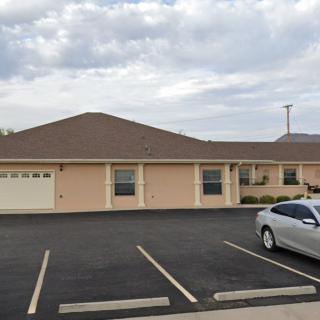
8230 Mt Latona, El Paso, TX 79904
For more information about senior living options: (866) 208-4318
Overall Review of Los Abuelos Assisted Living
Pros
 The staff at Los Abuelos are very professional and patient.
- Julie is commended for doing a great job with everything she handles daily.
- The staff are very nice and appreciated for all they do.
- Their motivation and dedication are evident, making a hard job seem easy.
- They are wished a Happy New Year with blessings of prosperity and abundance.
Cons
 They doubt that Julia is properly certified to perform her duties, as she was unable to answer basic questions about the mother-in-law's condition.
- They contend that keeping Guadalupe at the facility is inappropriate, allegedly motivated by insurance payments rather than resident welfare.
- They state that Julia lacks the credentials and qualifications required for her position.
- They describe a recent interaction where Julia could not answer essential questions and abruptly terminated the call, deeming the conduct unprofessional and unacceptable.
- They characterize Julia's attitude as appalling, disrespectful, and wholly unprofessional, including hanging up during a discussion about the mother’s health.
- They claim that if staff cannot answer basic questions about a resident's well-being, there is no confidence in the care provided at the facility.
Review
Los Abuelos Assisted Living in El Paso is best suited for families that want hands-on, resident-facing care delivered by dedicated front-line staff and are ready to stay actively involved in oversight. The community’s strength lies with the caregivers who actually interact with residents every day and who can provide patient, attentive daily support. In the right hands, residents may experience dependable daytime attention and a warm, personable care team. However, this suitability comes with a heavy caveat: leadership and communication at the top of the operation appear unstable, and that instability directly colors every family’s experience.
Families who prioritize credentialed, stable administration and proactive, professionally managed care should seriously consider alternatives. The most salient warning from these reviews is not about the day-to-day acts of care, but about governance: questions about the owner’s credentials, inconsistent communication, and the impression that financial considerations could take precedence over resident welfare. If assurance that the administrator is properly qualified and responsive is non-negotiable, this facility is likely not the right fit. The risk is not the care delivered by caregivers, but the trust and reliability of the leadership overseeing that care.
The core positives, professional, patient caregivers who handle daily tasks and routine needs, do appear to be present. One caregiver, Julie, is singled out for doing a great job day in and day out, which signals that the frontline team can be capable, respectful, and diligent. Yet these strengths are not enough to neutralize the principal drawbacks: an owner described as uncredentialed or uncertainly qualified to supervise, coupled with communication breakdowns, and an abrupt, dismissive communication style that undermines family confidence. In short, the on-site care can be solid, but the overarching oversight and communication framework areOperator-driven weaknesses that undermine sustained trust.
The most difficult tension in these reports is the clash between positive daily care and problematic management. While staff may be kind and competent in their duties, families cannot ignore the serious concerns raised about oversight, proper qualifications, and the legitimacy of the care plan when questions are raised. The pattern of unresolved questions about a resident’s condition, a perceived prioritization of payment over care, and the decision to remove a resident under dispute all point to a governance environment that may jeopardize continuity and dignity of care if left unaddressed. These dynamics, more than any single caregiver interaction, shape perceived risk and should guide every decision.
For families moving forward with Los Abuelos, practical safeguards matter. Demand transparent documentation of staff credentials and licensure of the administrator, insist on written care plans with measurable milestones, and establish direct, regular lines of communication with a designated care coordinator or administrator who can provide timely updates. Consider engaging an external guardian or advocate to monitor care milestones and to document interactions, and be clear about guardianship rights from the outset. If any red flags reappear, unresponsiveness, refusals to acknowledge essential questions, or managers who cannot articulate care details, two options become clear: pause admissions and reassess, or pursue a facility with consistently accountable leadership.
Overall, the facility presents a mixed value proposition. On one hand, the day-to-day caregiving environment can be supportive and respectful, with frontline staff doing meaningful, personable work. On the other hand, leadership concerns, questionable administration qualifications, and a troubling pattern of communication issues significantly dilute the reliability of care over time. For most families, the risk-to-benefit balance tips toward seeking alternatives with demonstrably stable governance and proactive, accountable management. If choosing Los Abuelos, enter with a rigorous oversight plan, explicit credential verification, and a commitment to ongoing, structured communication to counterbalance the governance fragility evident in these reviews.
 15 resident community capacity
 Assisted Living
 Board and Care Home
 Cable or satellite TV
 Dining room
 Fully furnished
 Garden
 Housekeeping services
 Move-in coordination
 Outdoor space
 Telephone
 Wi-Fi/high-speed internet available
 El Paso International (5 miles away)
 24-hour supervision
 Activities of daily living assistance
 Assistance with bathing
 Assistance with dressing
 Assistance with transfers
 Diabetes diet
 Meal preparation and service
 Medication management
 Special dietary restrictions
 Transportation arrangement (medical)
 Transportation to doctors appointments







 Choosing the Right Senior Care: A Detailed Exploration of Assisted Living and Nursing Homes
 Understanding the True Cost of Assisted Living in 2025: A Comprehensive Guide
 Understanding Medicaid Coverage for Assisted Living: A Comprehensive Guide