
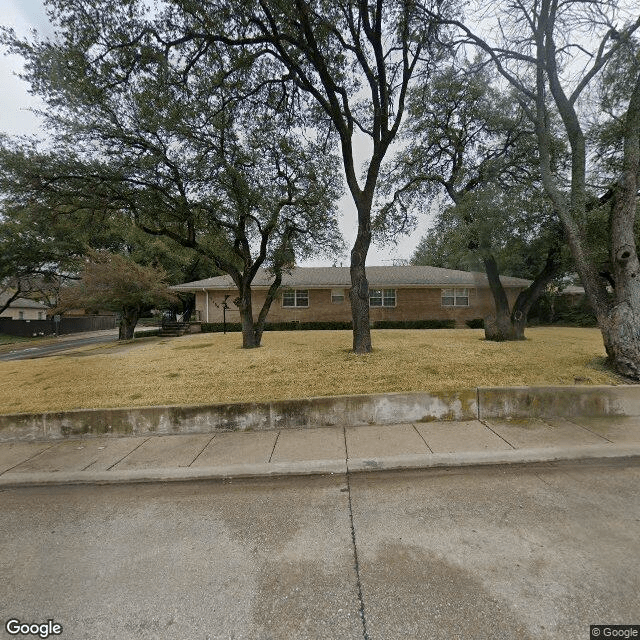
11240 Hillcrest Rd., Dallas, TX 75230
To contact a resident: (972) 805-7406
For more information about senior living options: (866) 208-4318
Jacksons Place Costs & Pricing
Jacksons Place offers competitive pricing in comparison to both Dallas County and the broader Texas market. For a semi-private room, residents can expect a monthly cost of $3,500, which is slightly below the county average of $3,535 and significantly lower than the state average of $3,680. Similarly, for private rooms, Jacksons Place charges $4,000 per month - more economical than Dallas County's rate of $4,702 while remaining comparable to the state average of $4,096. This positioning allows Jacksons Place to provide quality care and accommodations at accessible price points, appealing to those seeking value without compromising on service.
| Floor plans | Jacksons Place | Dallas County | Texas |
|---|---|---|---|
| Semi-Private | $3,500 | $3,535 | $3,680 |
| Private | $4,000 | $4,702 | $4,096 |
Senior living communities with a similar price nearby
-
from +$300 / mo
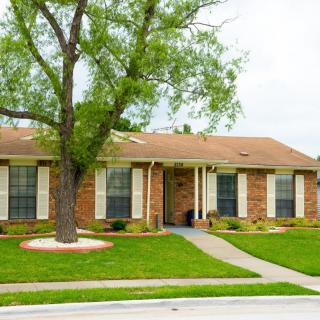
Silver Oaks Residential Assisted Living
$3,800 / month8.9 miles away -
from +$500 / mo

A Caring Home with Friends
$4,000 to $4,250 / month8.5 miles away -
About the same

Avalon Memory Care - Allen
$3,466 to $6,475 / month16.2 miles away -
About the same

Locardia Homecare Living
$3,500 to $4,500 / month9.0 miles away -
from -$500 / mo
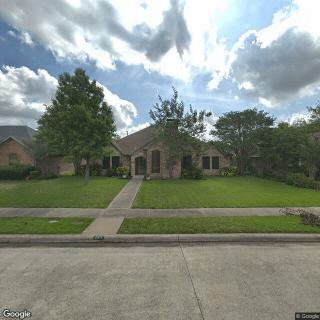
My Family Care Home I
$3,000 to $3,500 / month7.3 miles away
Overall Review of Jacksons Place
Pros
 The father has been there almost two months and is happy with the house and care he has received.
- The staff is very responsive when needed.
- The house has never been in disarray.
- The reviewer was glad that A Place for Mom referred them to the facility.
Cons
 Kelly thought the appointment was cancelled and did not meet them.
- All residents were asleep in various chairs.
- The clients were low functioning and probably not a fit for the husband.
Review
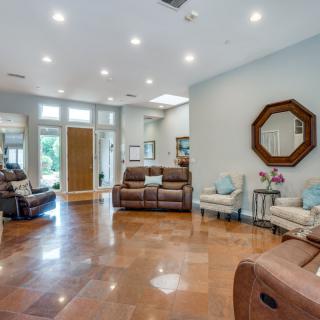
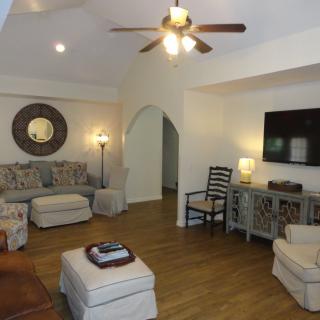
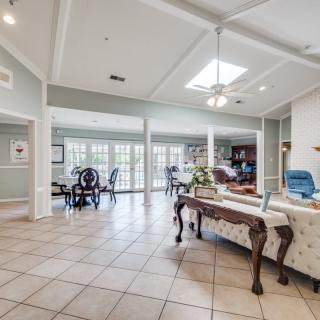
Jacksons Place in Dallas is best suited for families seeking a small, home-like assisted living option with consistently responsive staff and clean, orderly common areas. This community works well for seniors who are relatively self-sufficient or require light to moderate daily support rather than 24/7 medical oversight or highly structured memory-care programming. Families prioritizing quick problem resolution, a calm, non-institutional atmosphere, and a sense that staff know residents by name will find this setting reassuring. It is not a fit for those needing intensive clinical care, complex dementia programming, or highly demanding medical schedules.
Careful consideration should be given to who may want to explore alternatives. For loved ones with high-acuity needs, frequent nursing intervention, or specialized memory care, options with dedicated memory-care wings, higher staff-to-resident ratios, and more robust, on-site clinical support will likely deliver the level of oversight those conditions require. If a family places a premium on highly active programming, expansive social calendars, or more expansive clinical services, other Dallas-area communities may deliver those features more consistently. In short, Jacksons Place shines as a quieter, intimate setting; it may fall short for residents who require intensive daily structure or frequent, advanced care.
The strongest positives here emerge as practical assurances: staff responsiveness is repeatedly highlighted, translating into timely assistance and a sense of security for families. The home-like environment also matters, with reviewers noting orderly, well-kept spaces that feel less institutional than larger facilities. Those factors combine to make daily life predictable and safe for residents who do not demand round-the-clock clinical interventions. A favorable external reference (a well-known placement service) adds a layer of credibility for families beginning their search, suggesting that the community meets a recognized threshold for quality in interpersonal care and the physical environment.
However, several clear cautions temper the appeal. Scheduling and appointment logistics appear to be a weak point in some family experiences, with reports that tours or communications did not go as expected. This can add stress at a vulnerable stage of decision-making, when families are trying to obtain clarity and a sense of control. More importantly, the resident mix in some observations leaned toward individuals with relatively lower levels of functioning or engagement, leaving prospective residents to wonder about how well the community sustains activity, stimulation, and purpose for those who still want or need meaningful daytime programs. In practice, this raises the question of fit: a resident who requires more intensive daily engagement or who benefits from structured, purpose-built activities may find the current rhythm insufficient.
These contrasting signals matter for decision-making because the key strengths, responsiveness and a clean, homey setting, do provide meaningful protection against common concerns in senior living: unnoticed needs and chaotic environments. When offset against the persistence of scheduling hiccups and potential mismatches in resident acuity, the calculus becomes practical and precise. For families prioritizing peace of mind, clear and quick access to help, and a dignified, residential atmosphere, Jacksons Place delivers. For those whose loved one needs more robust activity programming or higher levels of daily care, alternatives with stronger memory-care offerings or larger care teams are likely to be better investments of time and resources.
In the end, the decision hinges on care goals and risk tolerance. Jacksons Place convincingly serves older adults who want a quiet, well-kept, responsive home and who can function with moderate supervision in a small-group setting. It is a sensible choice for families prioritizing comfort, cleanliness, and staff attentiveness over high-intensity programming or advanced medical oversight. Those evaluating a move for someone with significant cognitive impairment or complex medical needs should systematically contrast Jacksons Place with facilities that offer more structured activity schedules, specialized dementia care, and more predictable administrative processes. The right fit will feel clear: a calm, caring environment that aligns with the resident’s capabilities and the family’s expectations for governance and communication.
 Board and Care Home
 Activities off-site
 Bath tubs
 Beautician on-site
 Devotional services on-site
 Indoor common areas
 Outdoor common areas
 Private
 Private bathrooms
 Respite or short term stays offered
 Wheelchair accessible showers
 Dallas Love (5 miles away)
 Ambulatory care
 Diabetic care
 High acuity care
 Incontinence care
 Medication management
 Meals provided




 Caring for Those Who Care: Recognizing, Understanding, and Overcoming Caregiver Burnout
 Caregiver Exhaustion: Recognizing the Signs and Restoring Your Well-Being
 Understanding Hospice Care at Home: Comprehensive Services, Key Benefits, and Eligibility